
 Mold remediation
 Water damage drying
 Fire & smoke cleanup
 Storm response
 Sewage cleanup
 Reconstruction
Free visual inspection and a written scope of work before any mitigation begins - photos, moisture readings, and drying logs go in your claim file
The scope we write is the scope we bill. Anything new gets shown to you, in writing, before we touch it.
Get your free estimateFast, Reliable Mold Remediation Across San Joaquin Hills
Mold remediation in San Joaquin Hills typically costs between $1,800 and $6,500 depending on how far the growth has spread into wall cavities, HVAC runs, and custom finishes. Most jobs in the 92657 zip code are completed within three to five days, with containment set up on the first visit. If you’ve spotted staining, caught a musty smell, or had water intrusion anywhere in your home, call (833) 589-7005 and we’ll get a certified crew to San Joaquin Hills fast.
Allen Burkhart leads our IICRC-certified teams, and our work in San Joaquin Hills is built around one reality these homes don’t forgive shortcuts. The same marine layer that cools the hills also keeps exterior stucco damp through much of the year. When wind-driven rain pushes into window framing or around roof penetrations, the moisture doesn’t just dry out on its own inside a 6,000-square-foot custom estate. It feeds mold behind imported stone, inside multi-zone ductwork, and behind millwork that costs more to replace than most tract homes’ entire drywall budget.
Why OC Restoration Co Is San Joaquin Hills’s Preferred Mold Remediation Company
Most mold problems in San Joaquin Hills start quietly. A pinhole leak in a second-floor bathroom supply line. Condensation on a wine cellar wall. Water that found a seam in the stucco during a week of heavy marine drizzle. By the time you see staining on a ceiling or smell something off in a hallway, the colony has usually been growing inside the cavity for weeks.
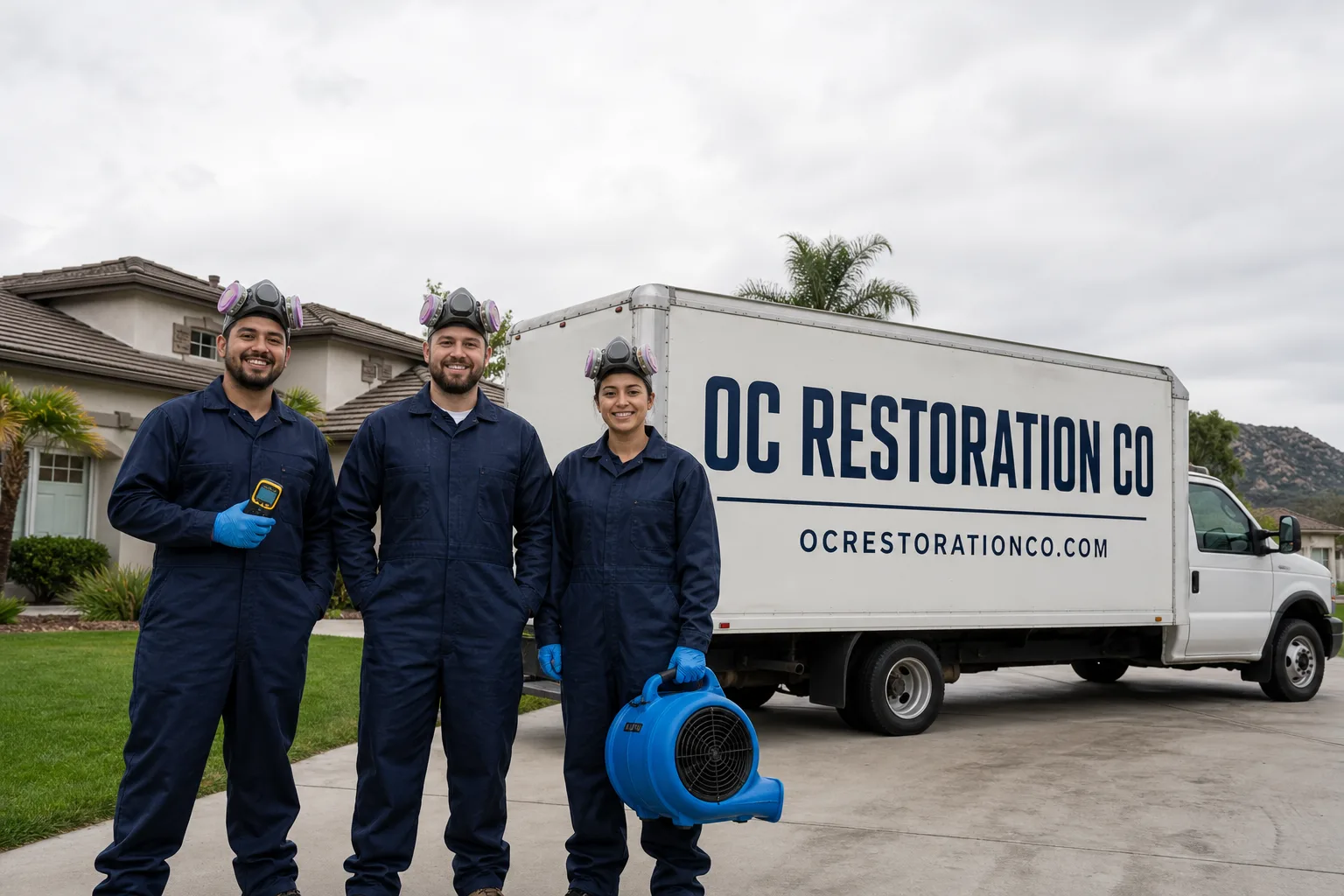
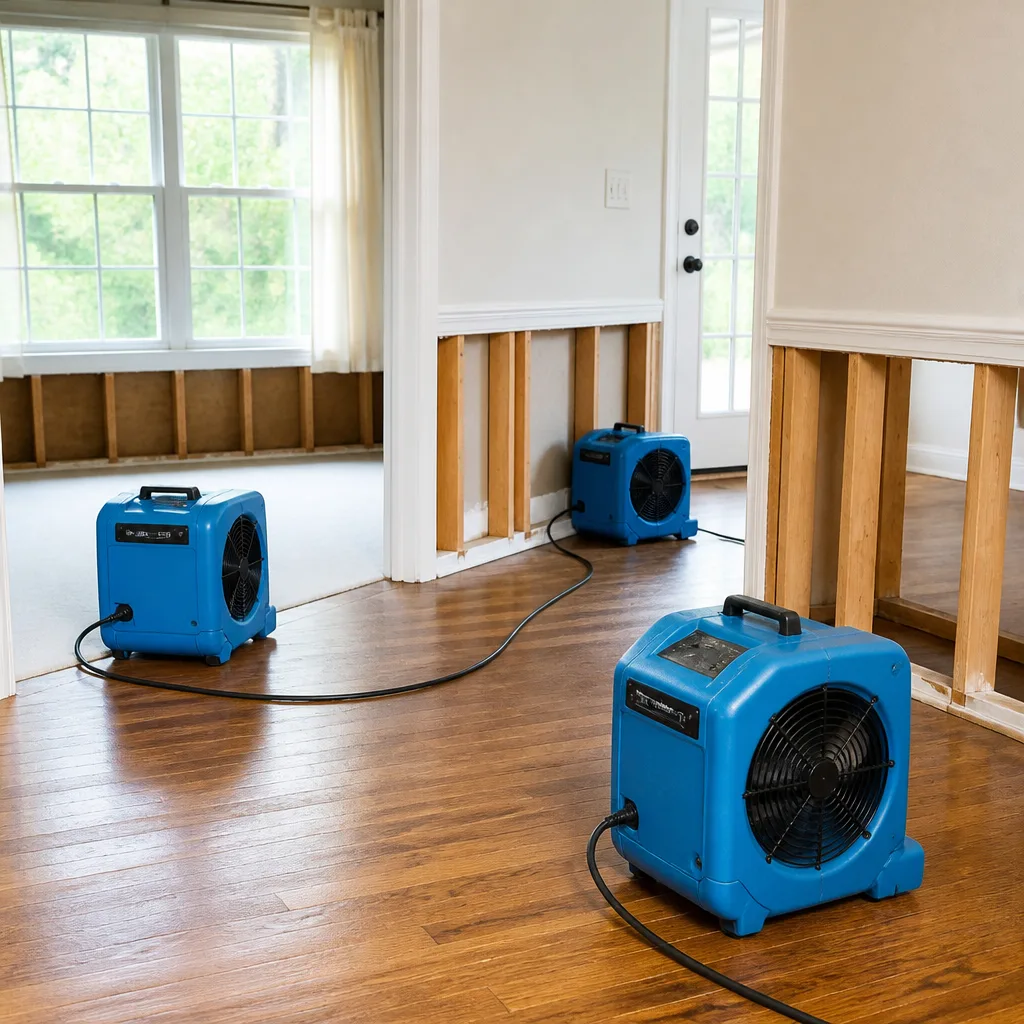
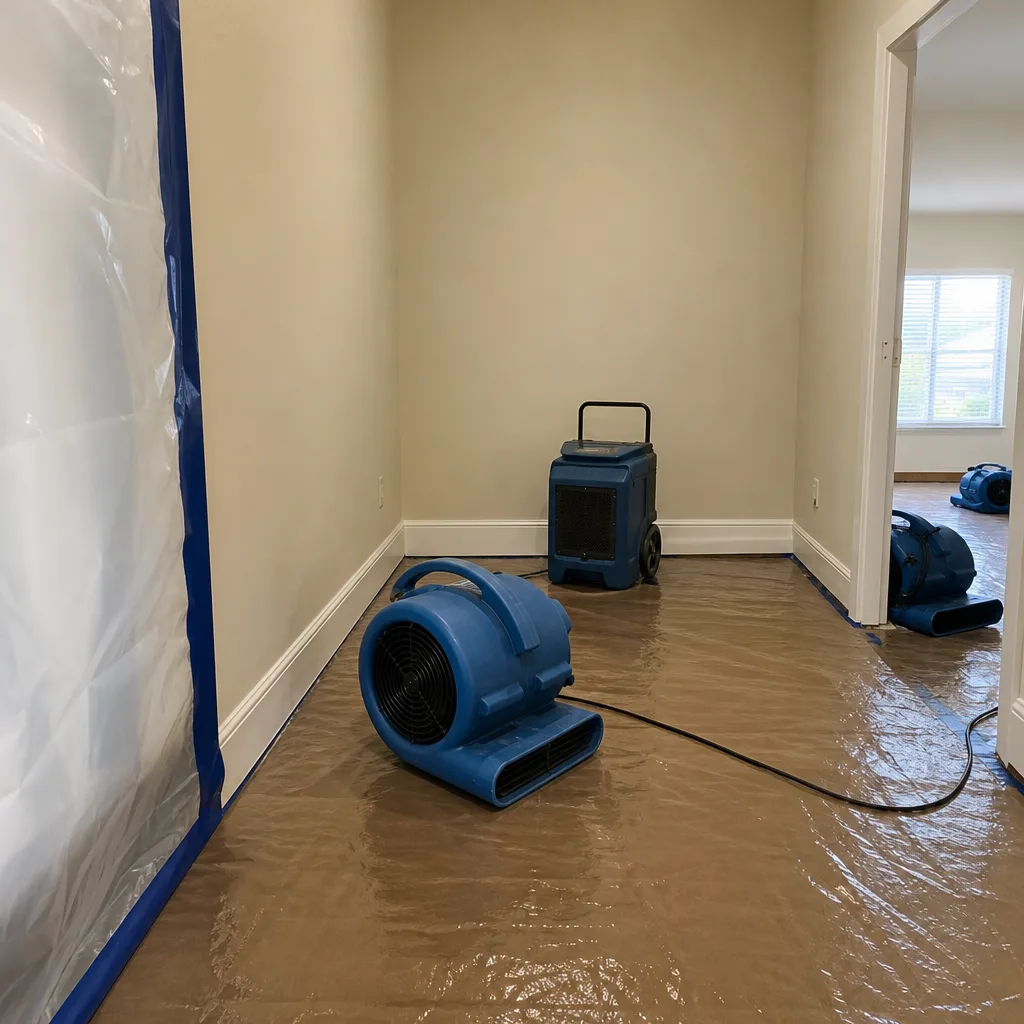
We’ve worked in The Summit, Crystal Cove, and the custom estates off Newport Coast Drive long enough to know what these homes demand. Our crews arrive with commercial-grade Dri-Eaz and Phoenix air movers, HEPA-filtered negative air machines, and Injectidry systems for drying wall cavities without opening up hand-troweled plaster. That matters when the wall in question was finished by an artisan, not a production drywall crew.
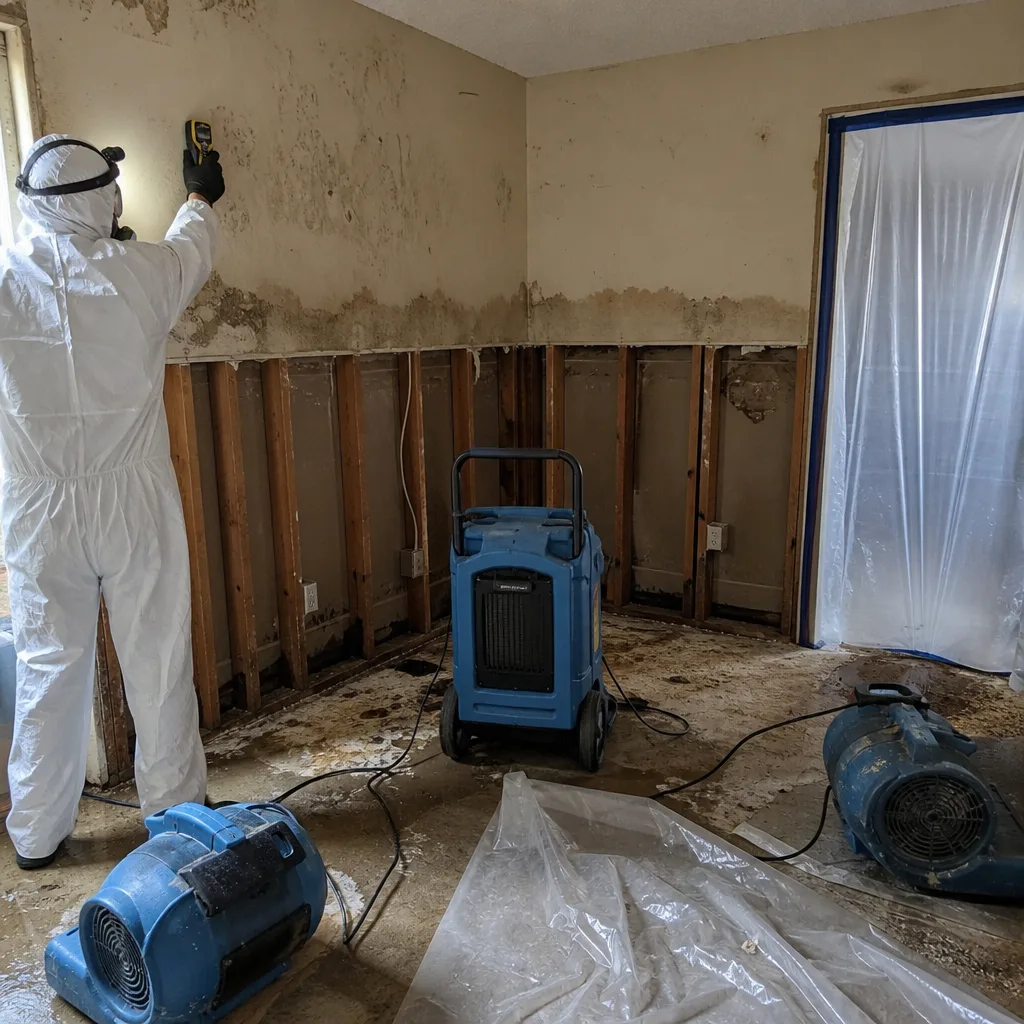
Every job gets documented from day one: moisture mapping, daily drying logs, photo evidence, and a written scope before any demolition happens. Insurance adjusters in San Joaquin Hills appreciate that. So do HOA architectural committees that want confirmation the work was done to standard without altering sightlines or exterior finishes. Our Mold Remediation experience covers the full range from isolated bathroom colonies to whole-home contamination, but the common thread is the same: find the water source, contain the spread, dry the structure, remove what can’t be saved, and verify clearance with post-remediation testing.
Local Reputation Built on Discretion and Precision
San Joaquin Hills homeowners don’t want a parade of trucks on the street. Our crews work in unmarked or lightly marked vehicles when requested, set up containment discreetly, and coordinate access with property managers or household staff. We understand that some of these homes have art collections, wine inventories, and smart-home systems that need to keep functioning during remediation.
Response Times to San Joaquin Hills
We dispatch from the Corona area and can typically reach San Joaquin Hills within an hour to ninety minutes for an assessment. For active water loss that’s feeding mold growth, same-day containment is often possible. The faster we get containment up, the less likely mold spreads through the HVAC system into unaffected wings of the house.
Restoration work we handle
Black Mold Removal in San Joaquin Hills
Black mold removal in San Joaquin Hills home typically runs $2,500 to $8,000 depending on the affected square footage and whether the colony has reached structural framing or duct interiors. Stachybotrys, the species most people mean when they say “black mold,” loves the cellulose in drywall paper and wood. In a hillside estate where one leak can stay hidden behind custom cabinetry for a month, by the time you see it, there’s usually more behind the surface than in front of it.
This is not surface cleaning. Black mold removal requires full containment, negative air pressure, HEPA vacuuming of all surfaces in the work zone, and removal of porous materials that cannot be mechanically cleaned. In San Joaquin Hills, that often means carefully cutting drywall around custom baseboards or working behind freestanding tubs without scratching handmade tile. Antimicrobial application follows removal, then we verify the space with air sampling before taking down containment.
When Custom Finishes Complicate Removal
Imported stone floors don’t tolerate standing equipment. We lay protective coverings and use containment walls that seal to surfaces without tape residue damaging wall finishes. If mold has reached a hand-carved wood beam, we assess whether soda blasting or HEPA sanding can save it before recommending replacement. Preserving what’s salvageable is always the first choice in San Joaquin Hills.
HVAC and Smart-Home Coordination
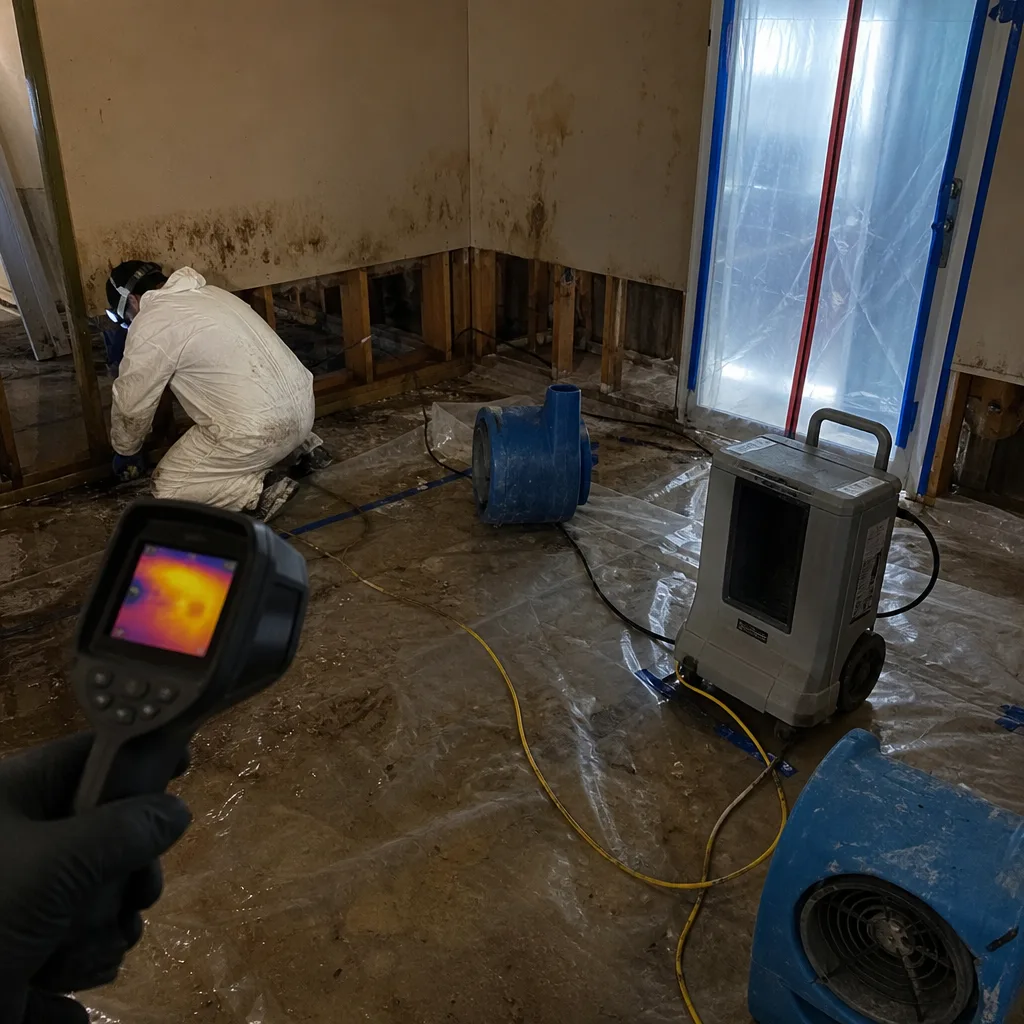
Before we cut into any wall or ceiling, we map the systems behind it. Multi-zone HVAC runs, whole-home audio wiring, motorized shade conduits, security sensor lines. Cutting through a smart-home bundle turns a $4,000 remediation into a $40,000 electronics replacement. We use thermal imaging and moisture mapping to identify exactly where the mold stops, then design containment so contaminated air never reaches a return vent.
Mold Removal Contractor in San Joaquin Hills
Hiring a mold removal contractor in San Joaquin Hills means choosing someone who treats third-floor ocean-view walls with the same precision they’d apply to a hospital isolation room. Our team does both. The difference is that one of those jobs has panoramic windows, imported limestone, and an HOA that will ask questions about every visible change to the exterior envelope.
A competent mold removal contractor starts with diagnostics, not demolition. We run moisture meters across the suspect area, map the water source, and identify the extent of colonization before writing a scope. Only then do we build containment, establish negative air, and begin removal. In San Joaquin Hills, we regularly coordinate with the homeowner’s insurance carrier, providing photo documentation and moisture logs that adjusters can actually use.
Precision Moisture Mapping Before Cutting
We don’t guess where mold stops. Infrared cameras and penetrating moisture meters tell us whether the colony ends at the drywall or has traveled into the stud bay, the sill plate, or the subfloor. In a custom home, that information determines whether we remove two square feet of drywall or eight. It also determines whether your imported stone floor can stay in place while we dry underneath it from the crawl space.
Crawl Space and Hillside Drainage
A surprising number of mold problems in San Joaquin Hills start in the crawl space. Hillside runoff that doesn’t get directed away from the foundation enters through stucco weep screeds or cracks in foundation walls. Once moisture is in the crawl space, the stack effect pulls that humid air up through the house. We treat the crawl space as part of the mold system: dry it, treat surfaces, install or recommend vapor barriers, and coordinate with your geotechnical contact if the water source is structural drainage.
Trusted Brands We Service in San Joaquin Hills
San Joaquin Hills homes contain equipment from every major manufacturer, and we’re equipped to work around all of it. The homes here commonly have Trane, Carrier, and Lennox multi-zone systems, whole-home dehumidifiers from AprilAire or Honeywell, and smart thermostats integrated into security platforms. We service and protect these systems during remediation rather than treating them as obstacles. We also carry commercial drying equipment from Dri-Eaz and Phoenix so your space dries to IICRC standards, not guesswork. Our shop stocks HEPA filters, containment supplies, and antimicrobial treatments sized for the large square footage common in San Joaquin Hills, which means fast turnaround even on multi-level properties.
See the difference
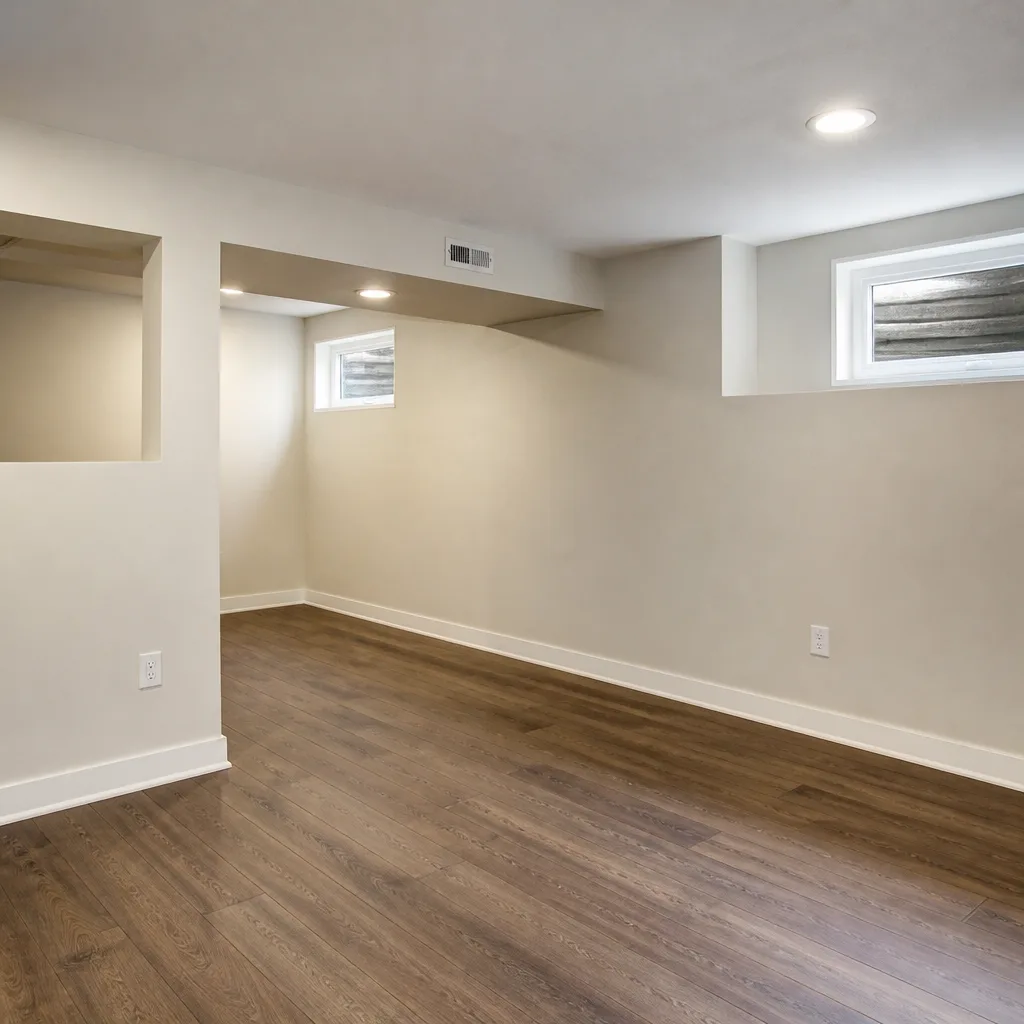
 Before
 After
 Before
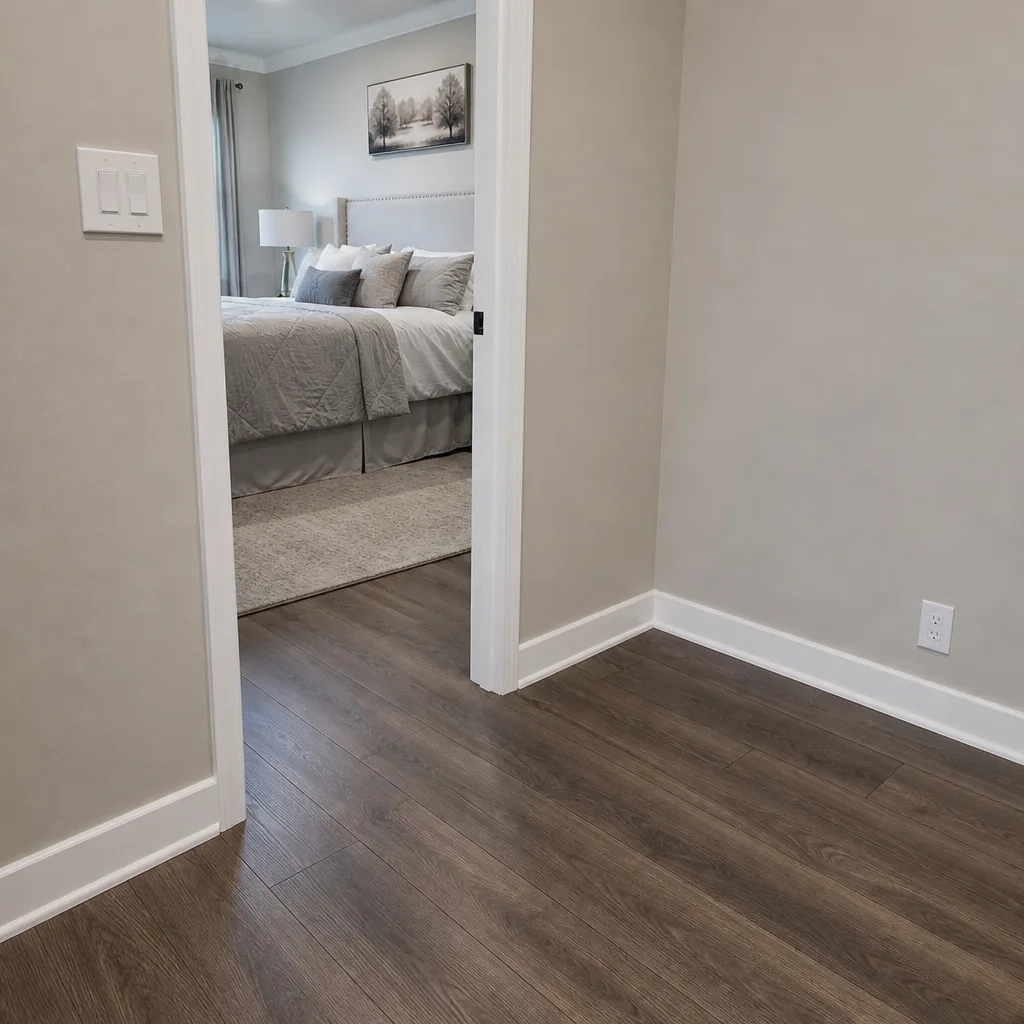 After
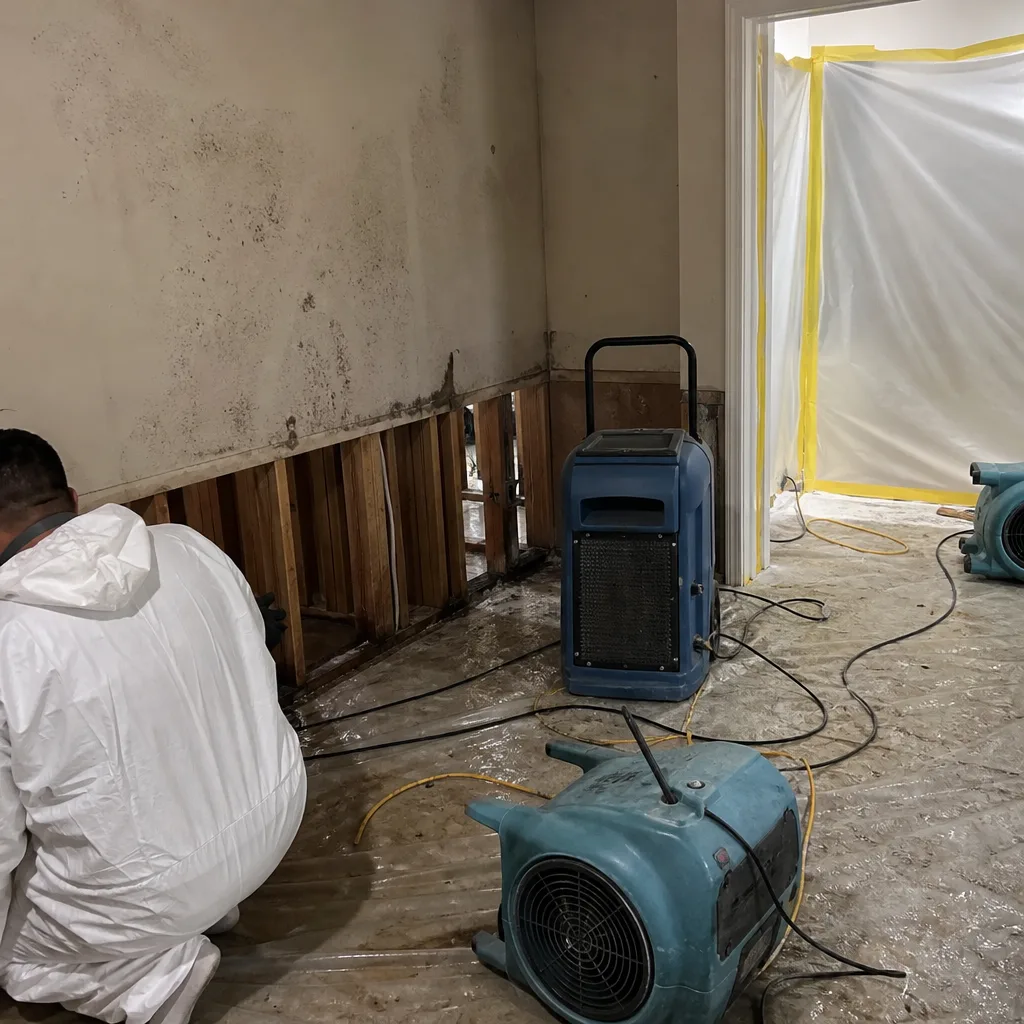 Before
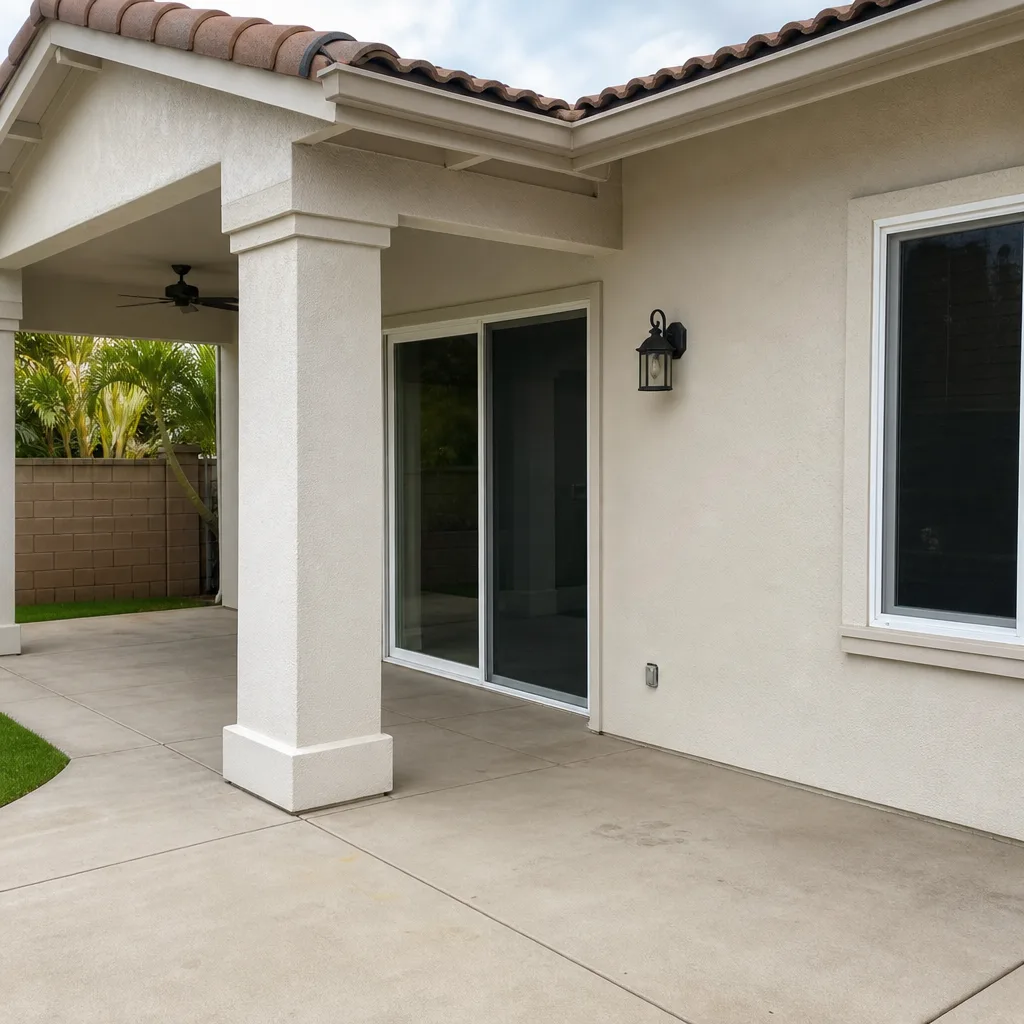 After
Common Mold Remediation Problems We See in San Joaquin Hills Homes
- Wind-driven rain through stucco around windows. The hilltop exposure that gives homes in The Summit their views also puts them directly in the path of Santa Ana-driven storms. Water enters around window flashing, saturates the rough opening, and mold forms inside the wall cavity where you can’t see it.
- Condensation in wine cellars and below-grade spaces. Many San Joaquin Hills estates include wine cellars built into the hillside. Without proper vapor barriers and dehumidification, those spaces stay cool and damp, creating conditions where mold on wood racks and walls appears within weeks.
- Multi-zone HVAC spreading spores unseen. When mold grows near a return plenum or inside a duct run, the HVAC system distributes spores to every zone in the house. We regularly find contamination in bedrooms three floors away from the original source because the system spread it.
- Water intrusion behind retained hillside walls. Drainage systems behind retaining walls fail or get overwhelmed during heavy rain. Water channels into foundation walls and up through slab penetrations. The mold problem is usually the visible symptom of a drainage problem that needs coordination with a geotechnical engineer.
Pricing for Mold Remediation in San Joaquin Hills, CA
Mold remediation in San Joaquin Hills runs higher than neighboring cities for one simple reason: the homes are bigger, the finishes are more expensive, and the margin for error is smaller. Here are the ranges we typically see in the 92657 zip code:
- Containment and air filtration setup: $600 – $1,200 per floor
- Small isolated mold removal (bathroom, closet, single wall section): $1,800 – $3,500
- Multi-room mold remediation with HVAC cleaning: $4,000 – $9,000
- Whole-home or large-scale remediation including crawl space: $9,000 – $20,000+
- Post-remediation verification (air sampling and lab analysis): $400 – $800
What drives cost in San Joaquin Hills is rarely the mold itself. It’s the surface protection, the precision work around custom finishes, the HVAC coordination, and the documentation your insurer and HOA will request. Call (833) 589-7005 for a free estimate. We’ll walk the property, map the moisture, and give you a written scope before any work starts.
We Also Serve Cities Near San Joaquin Hills
Our crews regularly work throughout the coastal hills and adjacent communities. From San Joaquin Hills we serve Aliso Viejo, Newport Beach, Laguna Beach, and Irvine. If you own property in multiple areas or manage estates across the coastal corridor, we can coordinate service across all of them under one contract and one documentation stream.
Serving San Joaquin Hills, CA — Our Local Coverage Area
We’re based in the San Joaquin Hills area and know this community well. Use the map below to see our service coverage — if you’re nearby, we can almost certainly help.
FAQs About Mold Remediation in San Joaquin Hills
The marine layer keeps exterior stucco damp for long stretches, especially on north-facing elevations and shaded canyon walls, while Santa Ana winds drive rain horizontally through window flashing and stucco cracks. Together they create a pattern where exterior moisture works its way into wall cavities from outside while interior HVAC keeps the home comfortable enough for mold to colonize. If you notice musty smells that intensify after rain events, the source is likely wind-driven water intrusion rather than a plumbing leak.
Yes, and that’s a primary reason San Joaquin Hills homeowners call us specifically. We use floor protection systems rated for heavy foot traffic, build containment with low-tack materials that won’t mark custom wall finishes, and choose drying methods that leave finishes untouched wherever possible. The Injectidry system dries wall cavities through small access points rather than removing entire drywall sheets, which often means your custom millwork and stone stays in place. When demolition is unavoidable, our cuts are made to minimize impact on adjacent finishes and preserve what can be reattached.
Category 1 is clean water from a supply line or faucet; Category 2 contains some contamination from sources like washing machine discharge or shower overflow; Category 3 is grossly contaminated water from sewage, exterior flooding, or seawater. The category determines what can be dried versus what must be removed. In San Joaquin Hills, exterior flooding and hillside runoff usually fall into Category 3 because the water travels across soil and picks up bacteria. If Category 3 water touched a wall or floor, that material typically can’t be salvaged, and mold growth becomes the secondary concern after proper disinfection. We classify every job before writing a scope so you know exactly what’s being removed and why.
When hillside drainage fails, the mold is only the symptom. We document where water entered, photograph the foundation walls and retaining structures in the affected area, and flag anything that suggests slope or drainage issues for your geotechnical engineer. If your HOA requires specific vendors for exterior work or wants architectural committee sign-off on any changes, we provide the technical documentation they request so you’re not the one translating moisture readings into committee language. The sequence is usually: contain the interior mold, dry the structure, identify the entry point, then bring in the drainage specialist with our findings in hand.
We run Dri-Eaz and Phoenix dehumidifiers and air movers, the same commercial-grade equipment used by national restoration firms, not rental-center gear. For wall cavities and structural drying, we use Injectidry systems that dry from the inside of the cavity without stripping finishes. For air filtration during containment, we use HEPA-filtered negative air machines sized to the square footage of the affected zone. Large multi-level estates require more air movement and more dehumidification capacity than a standard home, and our equipment inventory is built for that scale. Call (833) 589-7005 and we’ll walk you through the exact setup we’d use for your property.
Written by Allen Burkhart, Owner at OC Restoration Co, serving San Joaquin Hills and surrounding coastal communities since 2005.