
 Water damage drying
 Fire & smoke cleanup
 Mold remediation
 Storm response
 Sewage cleanup
 Reconstruction
Free visual inspection and a written scope of work before any mitigation begins - photos, moisture readings, and drying logs go in your claim file
The scope we write is the scope we bill. Anything new gets shown to you, in writing, before we touch it.
Get your free estimateFast, Reliable Water Damage Restoration Across Costa Mesa
A water event in Costa Mesa rarely announces itself politely. You come home to a cold puddle spreading across the hallway floor in Mesa del Mar, or you open the garage door on the eastside and find the water heater has been leaking against drywall for two days while you were at work. Within hours, water has wicked into baseboards, under vinyl plank, and into the wall cavity where you cannot see it. That is exactly when most Costa Mesa homeowners call us. Our Water Damage Restoration crews know the difference between a westside 1957 tract home and an eastside 1984 condo on a slab, and that local knowledge changes how we scope the job before demolition starts. If you are standing in water or watching a stain spread, call (833) 589-7005 now. We answer live, and we dispatch to Costa Mesa from our Corona base with equipment already loaded.
Why OC Restoration Co Is Costa Mesa’s Preferred Water Damage Restoration Company
There are fewer restoration companies in Costa Mesa than you might think once you filter for actual certification. We hold IICRC certification, and that matters because it means our technicians work to documented industry standards, not in-house habits. Allen Burkhart runs our operations, and he has built the company around a simple rule: every water loss gets the same protocol-driven process whether it is a 500-square-foot apartment near Triangle Square or a 3,200-square-foot eastside home off Santa Ana Avenue. Homeowners in Costa Mesa repeatedly tell us the same thing: we showed up with commercial equipment, we documented everything, and we did not turn a mitigation into a demolition just to pad the scope. That reputation carries. Our crews know the city’s streets, its slab-on-grade construction patterns, and its two very different housing profiles. That is why adjusters here call us back too.
We operate the same equipment brands the national firms run: Dri-Eaz and Phoenix extraction and drying units, XPOWER air movers, and Injectidry for targeted drying inside wall and floor cavities. When a Costa Mesa homeowner calls us at 2 a.m. with a supply-line break, the truck that rolls carries what the job needs before we ever see the damage.
Restoration work we handle
Emergency Water Damage Restoration in Costa Mesa
Emergency Water Damage Restoration in Costa Mesa means getting standing water out fast, mapping where water has traveled, and making sure hidden moisture does not become a mold problem two weeks after the visible mess is gone. The first priority on any Costa Mesa emergency call is extraction, containment, and structural drying on a timeline that prevents secondary damage. In Costa Mesa’s mild climate, water can sit behind drywall or under flooring and remain warm enough for microbial growth to start within 48 to 72 hours, which is precisely why “it looks dry” is a bad way to judge a slab home.
Extraction and Containment Protocols
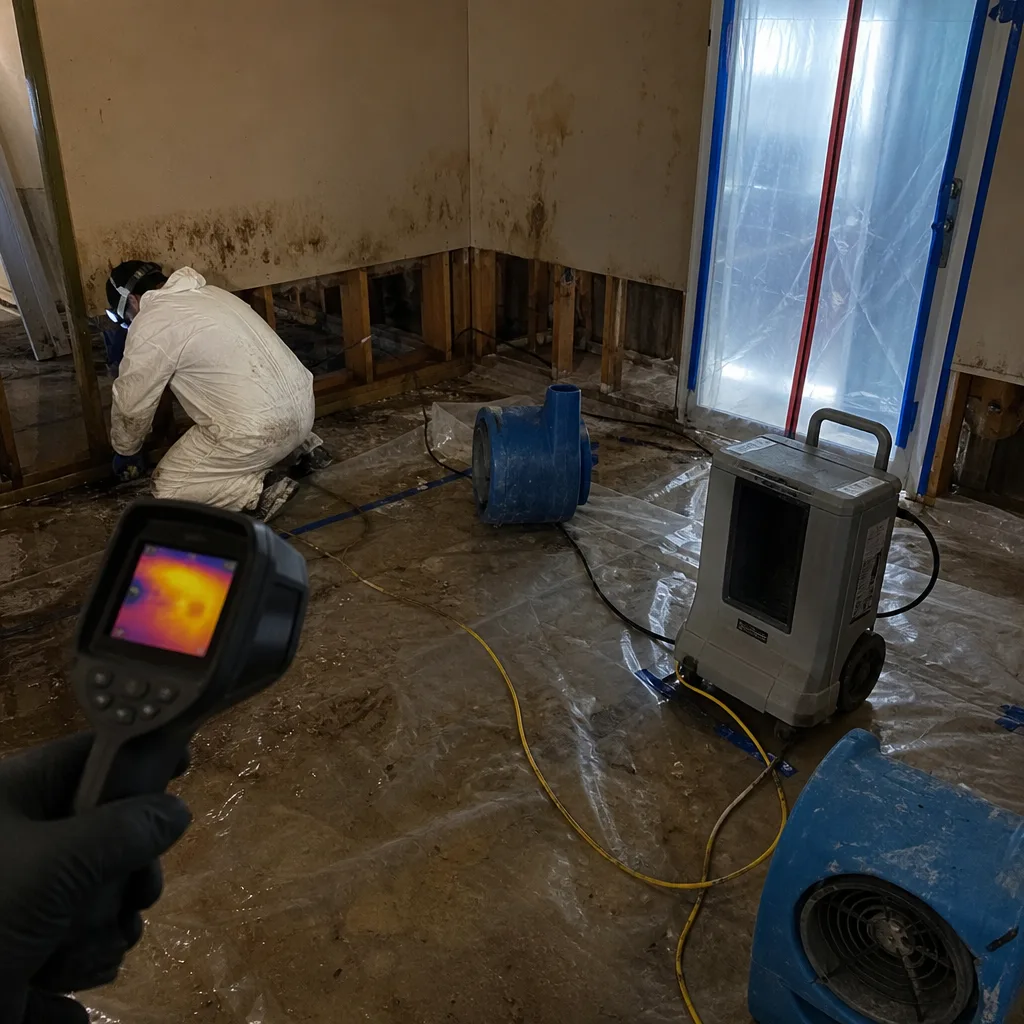
Every emergency extraction in Costa Mesa starts with moisture mapping. On a slab home, water does not drain downward like it does in a raised foundation, so it migrates sideways along the concrete and wicks into walls, cabinetry, and flooring up to twenty feet from the visible puddle. We set containment with negative air pressure where water is category 2 or 3. A typical emergency extraction in Costa Mesa runs $1,800 to $4,200 depending on how far water has migrated and how many rooms are involved.
Slab-Focused Structural Drying
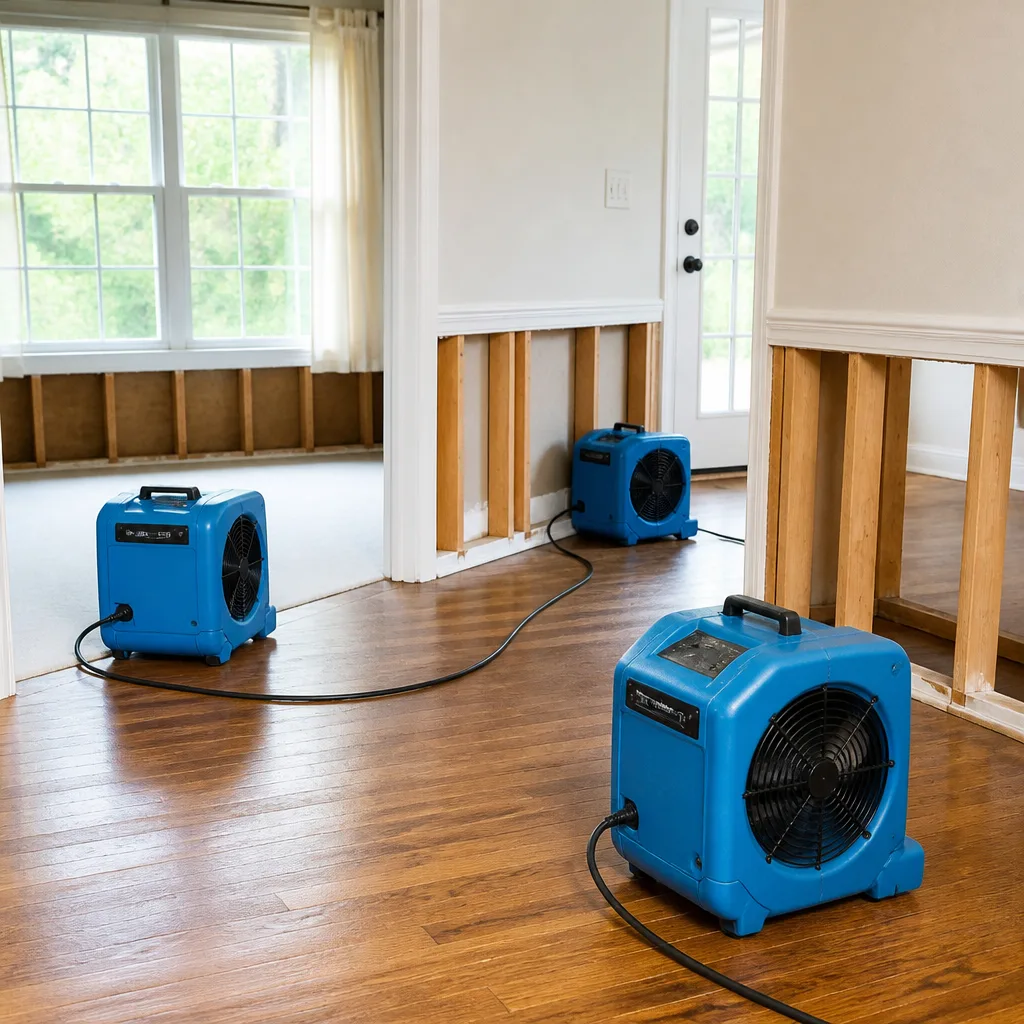
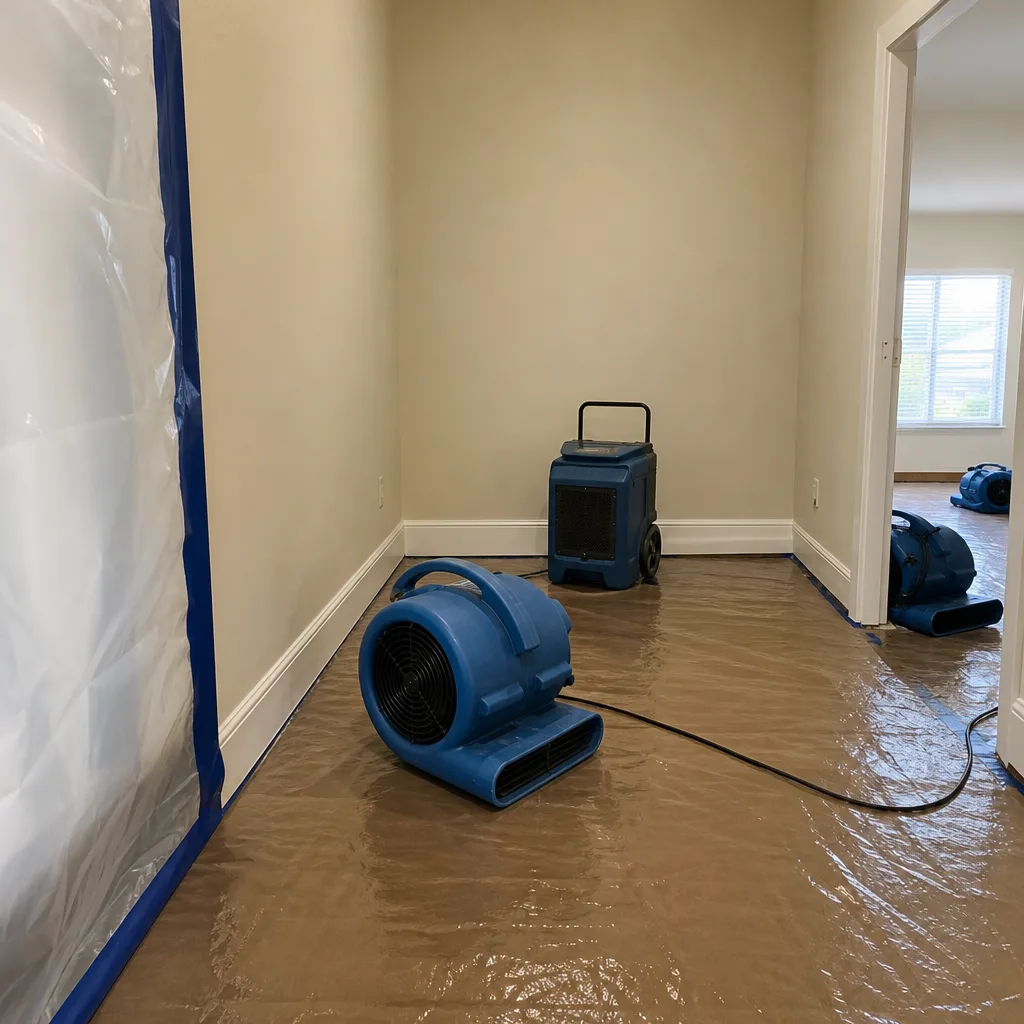
After extraction, we run Dri-Eaz and Phoenix dehumidifiers and XPOWER air movers in a controlled drying environment. For water trapped inside wall cavities or under slab-adjacent flooring, Injectidry systems pull air through the cavity without ripping out every sheet of drywall. This reduces demolition scope and protects more of your original 1960s plaster or 1980s drywall. Structural drying in Costa Mesa typically adds $1,400 to $3,600 to the bill depending on cavity count and whether hardwood flooring is involved.
Water Damage Repair in Costa Mesa
Water Damage Repair in Costa Mesa is the rebuild that follows mitigation. It is where the city’s permitting and inspection process comes into play, especially in the older westside neighborhoods where any structural work triggers city documentation requirements. Costa Mesa has some of the strictest building department paperwork in Orange County. If you skip that step, you risk a lien on the property when you sell. We handle that for you.
Drywall, Baseboard, and Flooring Restoration
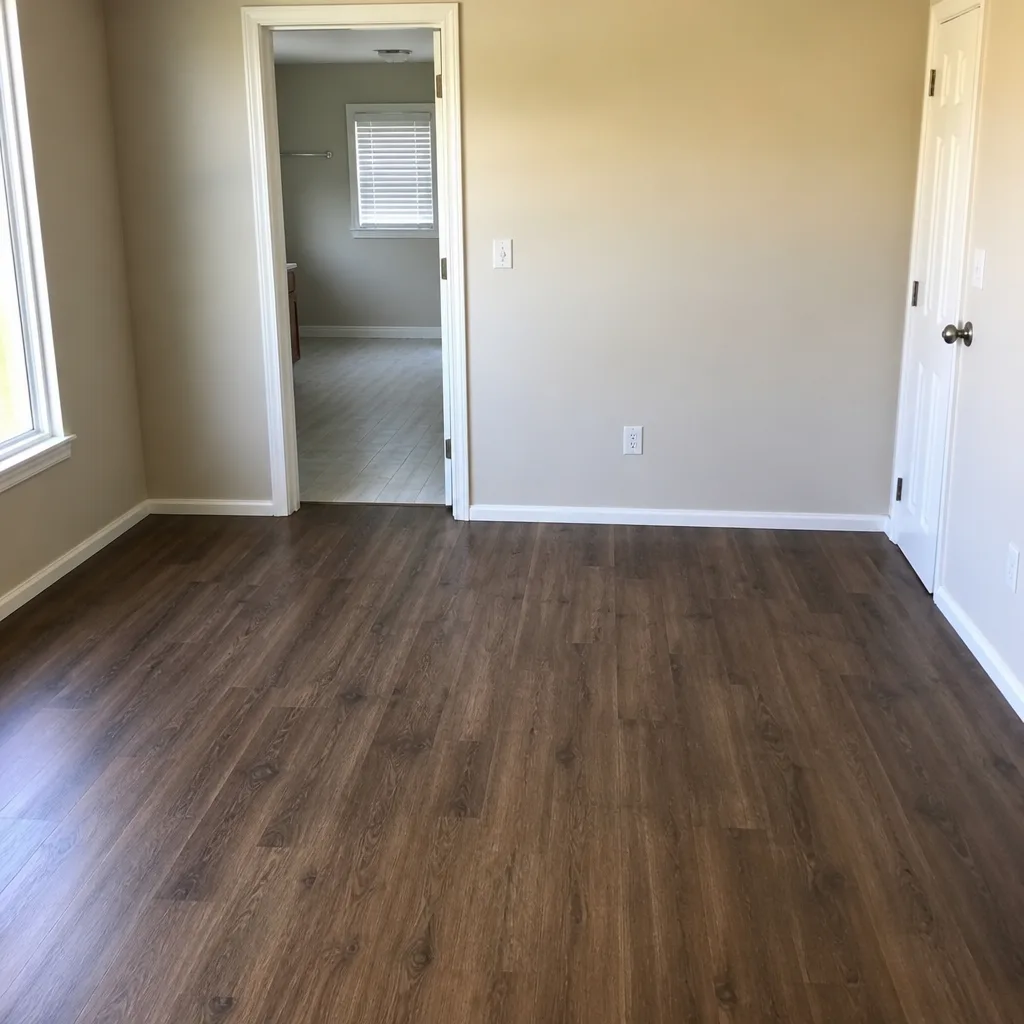
Once the structure is dry and moisture readings are stable, repair work begins. In a Costa Mesa westside tract home, that often means matching 1960s-era wall texture or sourcing period-appropriate baseboard profiles so the repaired room does not look patched. Eastside homes with newer materials are simpler. Typical drywall and baseboard repair after a water loss runs $900 to $3,200 depending on linear feet of affected wall and whether we are matching older textures or working with clean modern finishes.
Post-Mitigation Rebuild and Paint-Match
After drywall and trim, we handle paint matching and finish work so the room comes back together without an obvious seam line down the wall. We have built a working relationship with paint suppliers in the Costa Mesa area who can spectro-match faded 1960s enamel or modern satin latex from a chip. The repair phase is where a written scope protects you: we agree on the full line-item plan before pick-up tools, and nothing gets added unless you approve it in writing. That is the only way we work.
Trusted Brands We Service in Costa Mesa
We service homes in Costa Mesa that carry trusted restoration equipment brands like Dri-Eaz and Phoenix dehumidifiers, XPOWER air movers, and Injectidry drying systems. Because we operate the same equipment lines, we are not waiting on third-party parts or someone else’s service schedule. When we pull a Phoenix unit out of a Costa Mesa home and the tenant asks if we can start drying the next unit before the weekend, we can. Local parts access and a stocked truck mean faster turnaround for Costa Mesa property managers juggling multiple units in 92627.
See the difference
 Before
 After
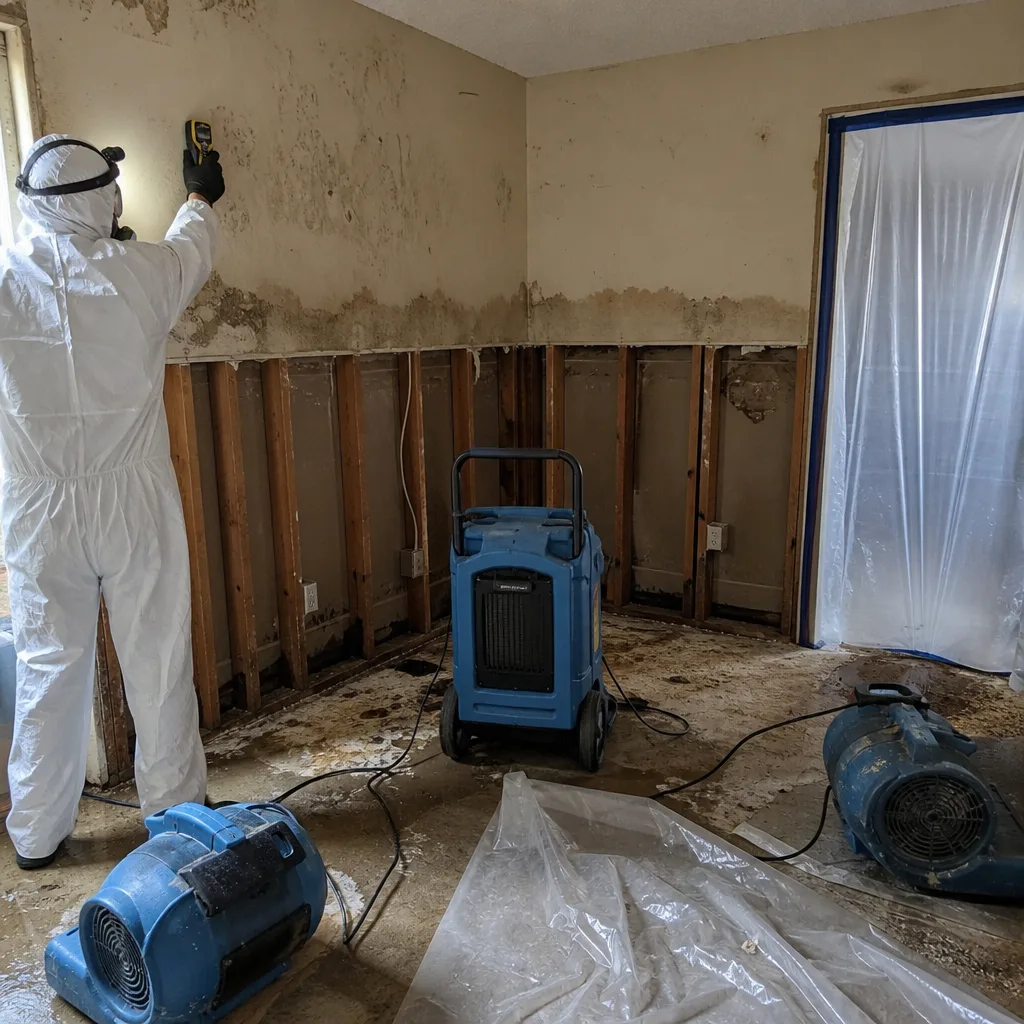 Before
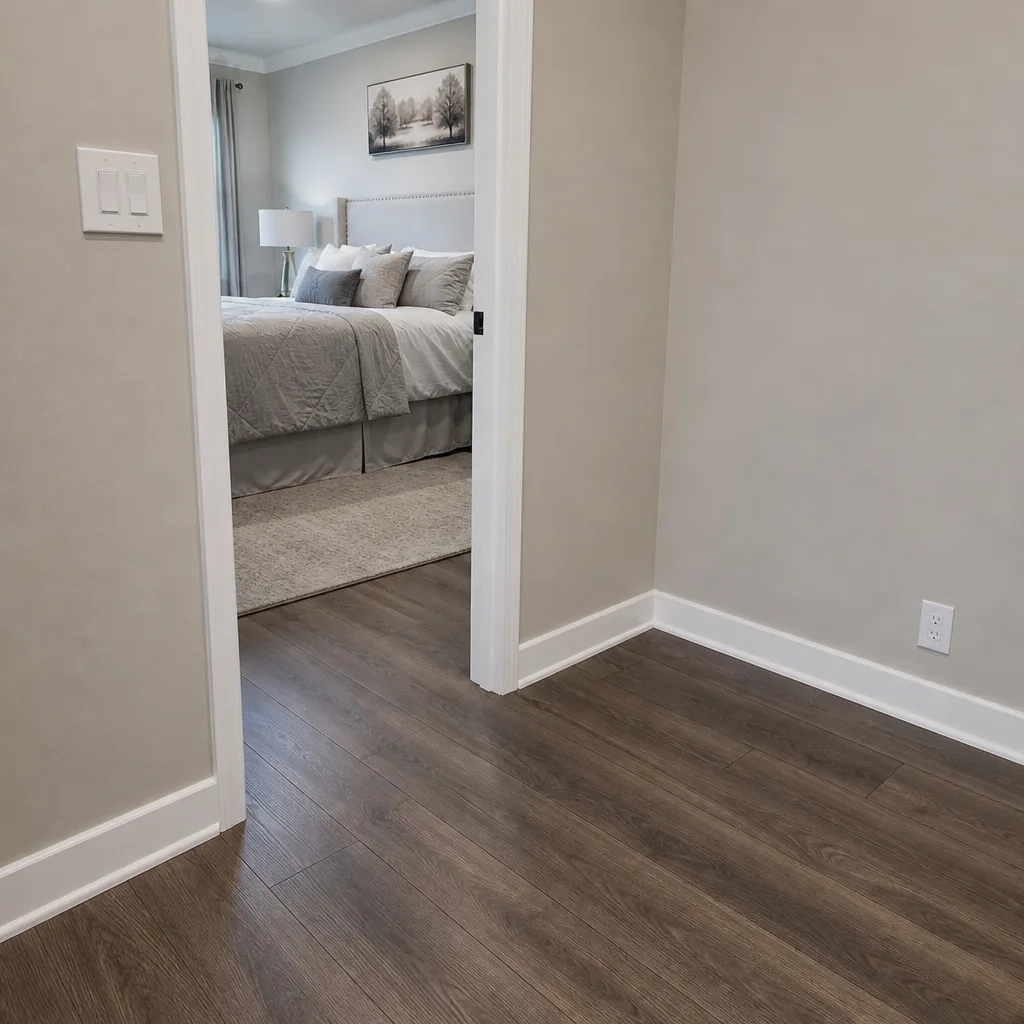 After
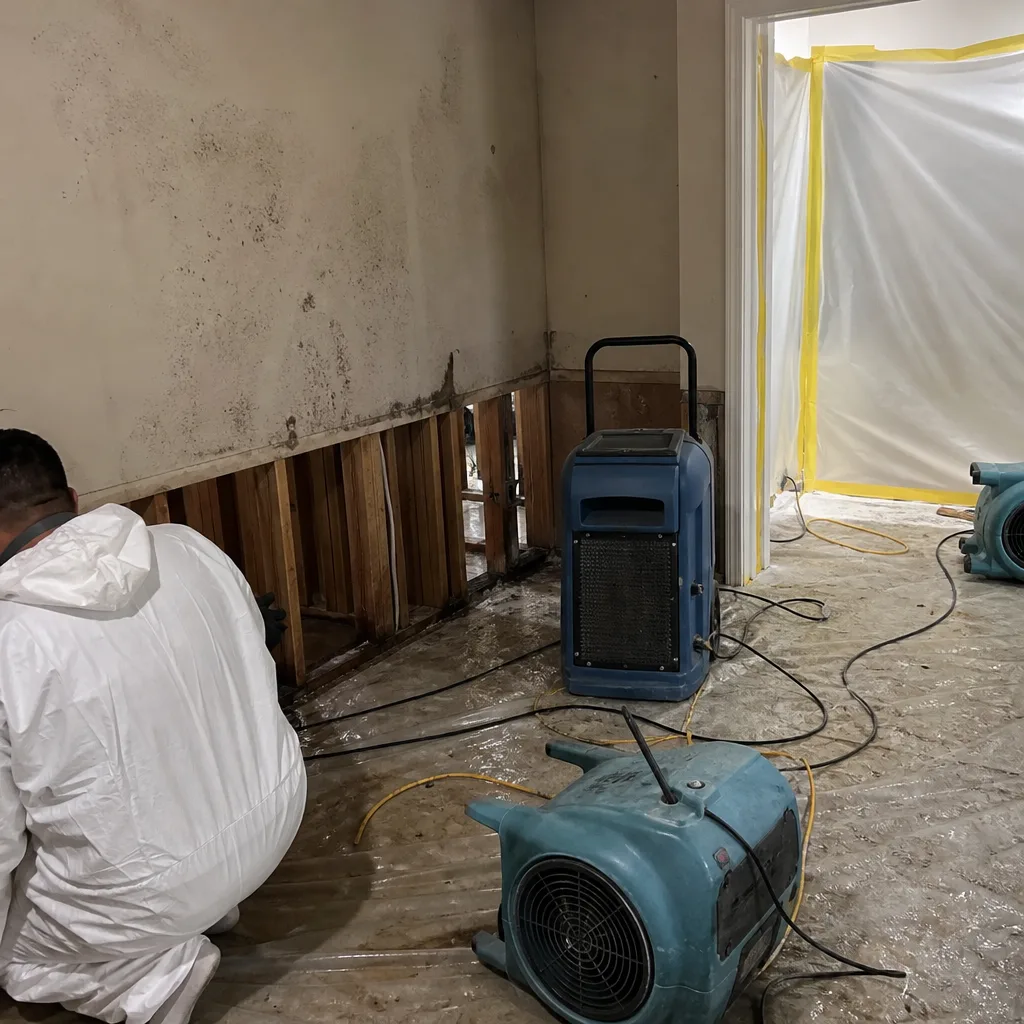 Before
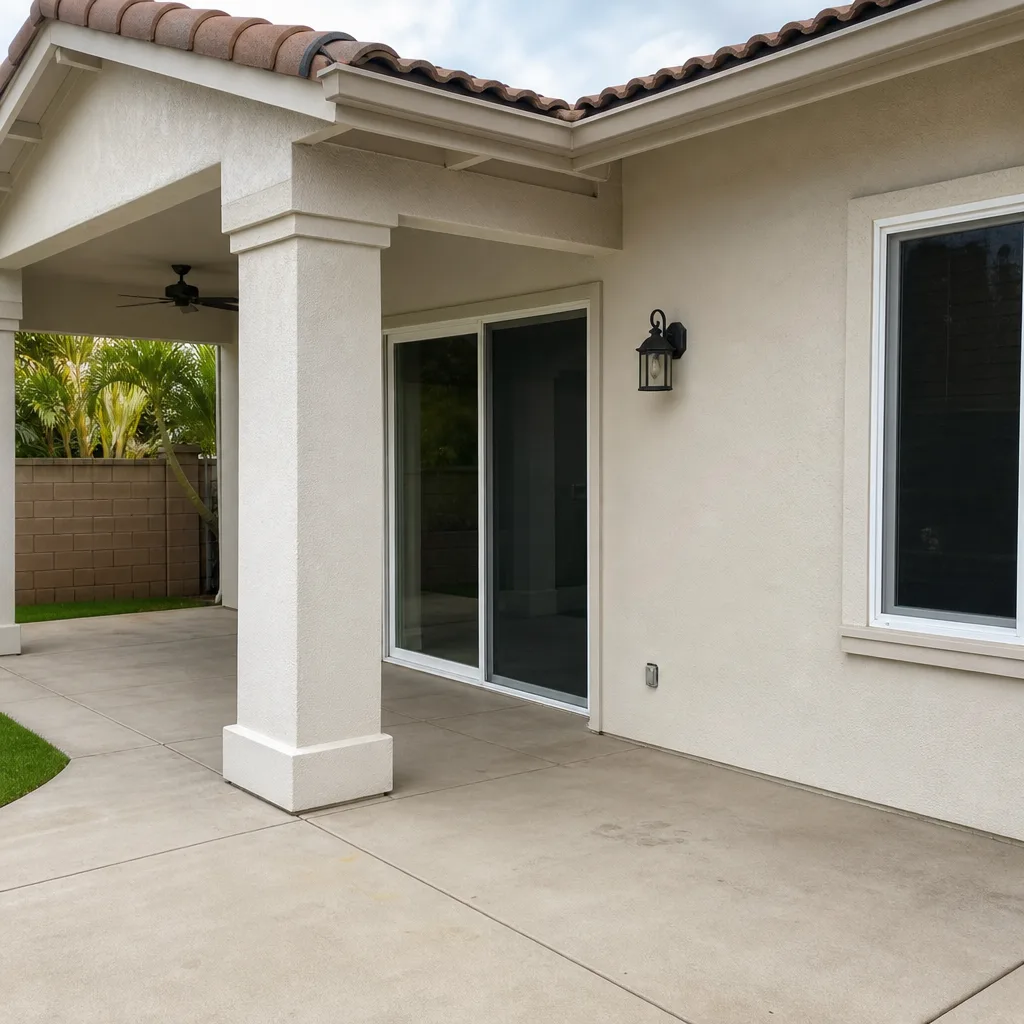 After
Common Water Damage Restoration Problems We See in Costa Mesa Homes
- Corroded cast-iron drain lines under westside slabs. Homes built in the 1950s and 60s in neighborhoods like Mesa del Mar and Westside Costa Mesa still sit on original cast-iron waste lines. Those pipes rust from the inside out, and when they fail, sewage or category 3 water backs up into the slab. What looks like a plumbing stain is often a failing drain line.
- Slab leaks in 1970s-80s eastside homes. The copper pipe in 92626-era construction is generally sound, but the slab itself shifts over decades. A pinhole leak in copper under a slab can run for weeks before moisture reaches the flooring surface. By the time you see it, the slab has been wicking water laterally for a while.
- Winter rain intrusion through old roofing and flashing. Costa Mesa’s mild, wet winters push water into aging roof penetrations, especially on original 1960s composition roofs and flat sections over additions. The damage shows up on ceiling drywall in the living room, but the source is up top.
- Hidden crawl space and attic moisture. Because Costa Mesa summers run dry, surfaces read dry quickly, and homeowners assume the structure is fine. Moisture hides in crawl spaces and attics, where stagnant air traps humidity. We routinely find elevated moisture readings in cavities that no one opened for years.
Pricing for Water Damage Restoration in Costa Mesa, CA
We Also Serve Cities Near Costa Mesa
We regularly roll trucks to Water Damage Restoration in Costa Mesa and the surrounding communities within twenty minutes of our Corona yard. That includes Newport Beach with its beachside condos, Fountain Valley and its slab-heavy 1970s tracts, Huntington Beach with similar coastal moisture challenges, and San Joaquin Hills where hillside drainage creates its own failure patterns. Same crews, same equipment, same protocols. If you are anywhere in the area, call and ask for dispatch times to your ZIP.
Serving Costa Mesa, CA — Our Local Coverage Area
We’re based in the Costa Mesa area and know this community well. Use the map below to see our service coverage — if you’re nearby, we can almost certainly help.
FAQs About Water Damage Restoration in Costa Mesa
Why does water damage in a 92627 westside home so often trace back to the slab?
In Costa Mesa’s westside neighborhoods, the original cast-iron drain lines and galvanized supply pipes were buried under the slab when the tract went in during the 1950s and 60s. Those materials corrode from the inside after six or seven decades, and when a drain line fails, it releases water directly into the soil under the house. That water rises through the slab by capillary action and saturates flooring and walls from below. What you see on the hallway carpet is often the top of a much deeper problem. If you live in 92627 and the moisture keeps coming back after a surface dry-out, the slab is almost certainly involved. Call (833) 589-7005 and we will trace it with thermal imaging before demo begins.
Does Costa Mesa’s dry climate mean I can skip structural drying after a leak?
No. That is one of the most expensive assumptions we see in Costa Mesa. The city’s semi-arid climate makes surfaces dry fast, so a homeowner touches the drywall, feels it is dry, and decides the problem is solved. But water trapped inside wall cavities, under vinyl plank, or in the crawl space stays warm and humid long after the surface reads dry. Mold colonizes in those hidden cavities, and by the time you smell it, the rebuild is twice as expensive. Skip drying after a leak and you have bought yourself a reconstruction job in six weeks. We dry every cavity, not just the surface.
How do you tell category 1, 2, and 3 water apart in a Costa Mesa cleanup?
Category 1 is clean water from a supply line or failed appliance hose. Category 2 carries contaminants and comes from things like dishwasher overflow or washing machine discharge. Category 3 is grossly contaminated water: sewage, seawater intrusion near the coast, or standing water that has sat long enough to grow bacteria. In Costa Mesa, we see category 3 most often from the failed cast-iron drain lines under westside slabs and from backed-up plumbing during winter storm events. Category determines whether we can dry materials in place or must cut and dispose of them. Our crews document the determination with photos and moisture readings for insurance adjusters.
What documentation does Costa Mesa permitting require after a water loss?
Costa Mesa’s building department requires documented proof of pre-loss condition, moisture readings before and during drying, a dated scope of work, and photos of every affected area before any structural work begins. If you are repairing behind walls or replacing flooring after a category 3 event, the permit process will demand a drying log that shows the structure reached the proper moisture content before the city signs off. We build that documentation into every job from day one, because we know the inspectors here and we know exactly what they will ask to see. That is one of the reasons adjusters in Orange County request us by name.
Do eastside 92626 homes with copper pipe and slab foundations fail differently than westside homes?
They do. Eastside homes from the 1970s and 80s were built with copper supply lines and slab foundations, and the copper itself usually holds up. But the slab moves over time, and pinholes form where the pipe exits the slab or where shifting concrete has put stress on a bend. Those leaks are slow and silent, often running for weeks before water reaches the surface. The bigger footprints in 92626 also mean water travels farther before anyone notices. You will not see the same cast-iron failures that define the westside, but the hidden slab leak is the eastside’s signature problem. Both profiles demand the same response: moisture mapping before demo, and documentation that meets Costa Mesa’s permit standards.
Written by Allen Burkhart, Owner at OC Restoration Co, serving Costa Mesa and Orange County with IICRC-certified water, mold, and fire restoration since 2010.