
 Water damage drying
 Fire & smoke cleanup
 Mold remediation
 Storm response
 Sewage cleanup
 Reconstruction
Free visual inspection and a written scope of work before any mitigation begins - photos, moisture readings, and drying logs go in your claim file
The scope we write is the scope we bill. Anything new gets shown to you, in writing, before we touch it.
Get your free estimateFast, Reliable Water Damage Restoration Across Woodcrest
Water damage in Woodcrest moves fast, and so do we. A ruptured well pressure tank, a failed supply line inside a stucco wall, a backed-up septic line after heavy rain: each one soaks flooring, wicks into drywall, and starts degrading framing within hours. We respond to Woodcrest properties the same day you call, with truck-mounted extraction, commercial drying equipment, and an IICRC-certified team led by Allen Burkhart. Need help now? Call (833) 589-7005 and we’ll get a crew rolling toward your 92508 property. Our Water Damage Restoration service covers emergency extraction, structural drying, mold prevention, and full documentation for your insurance claim, from the first moisture reading to final clearance.
Key Takeaways:
- Same-day emergency response to Woodcrest, including Mockingbird Canyon Road, Cactus Avenue, and all of 92508.
- We inspect well houses, pressure tanks, and outbuildings, not just the room where you see water.
- IICRC-certified technicians run the drying protocol; commercial Dri-Eaz and Phoenix equipment does the physical work.
- Written scope of work and daily drying logs give you and your adjuster a document trail from day one.
Why OC Restoration Co Is Woodcrest’s Preferred Water Damage Restoration Company
Woodcrest homeowners call us because we understand how an unincorporated, well-and-septic estate property fails when water gets loose. We’ve worked homes off Washington Street, Van Buren Boulevard, and back along Mockingbird Canyon Road long enough to know the failure patterns: aging pressure tanks in pump houses, stucco walls that hide wet framing behind a dry outer coat, and detached shops whose roof leaks never get noticed until the slab is already saturated. Our response time to Woodcrest is under two hours in most cases because we stage from nearby Riverside corridors and keep extraction and drying equipment loaded on trucks, ready to dispatch.
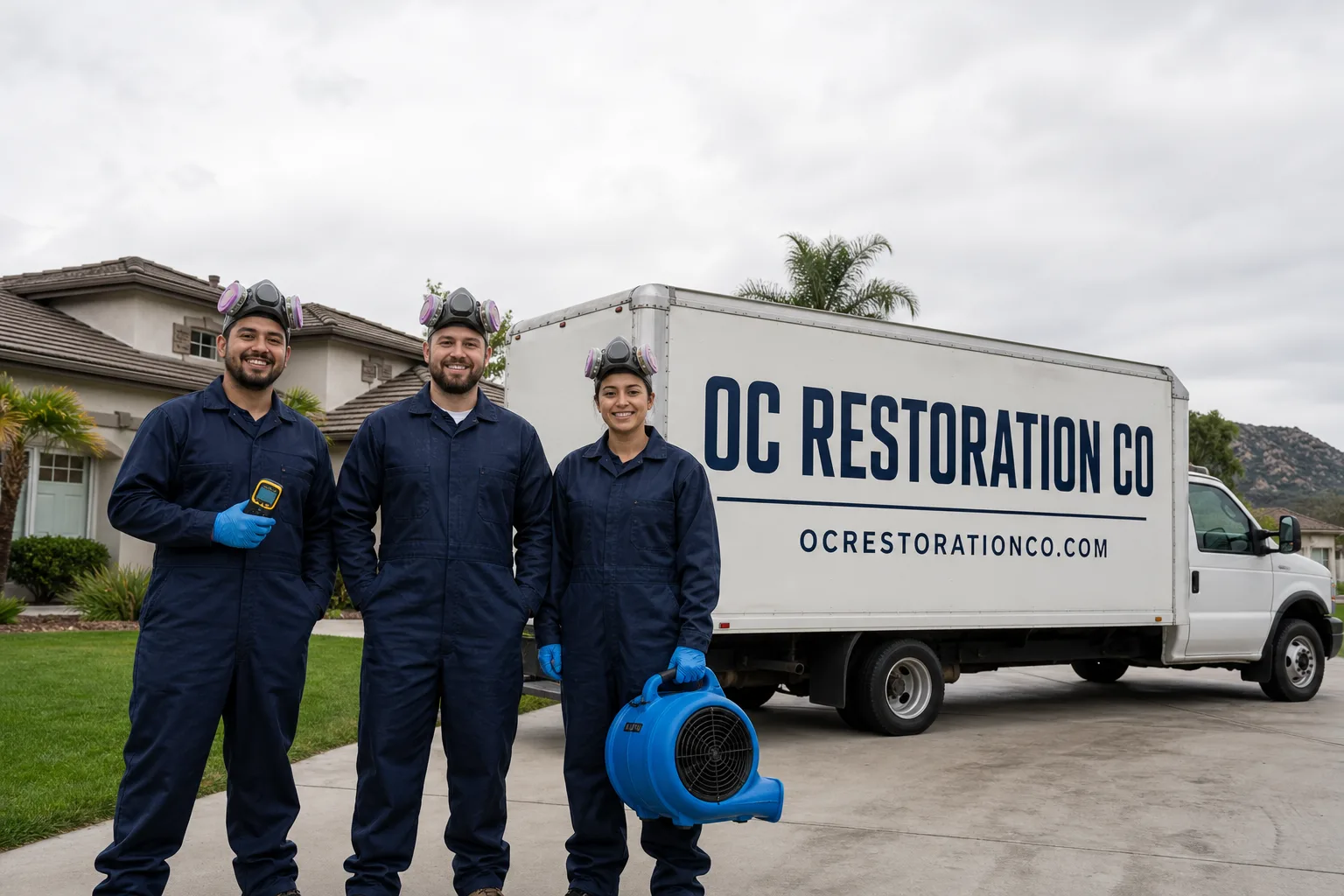
What sets us apart is the credential behind the work. Every technician on a Woodcrest job is IICRC-certified, meaning they follow the restoration industry’s documented standards, not informal company habits. OC Restoration Co holds active membership in the Restoration Industry Association (RIA) and IFA, which keeps us inside professional networks that enforce ethics, continuing education, and current best practices. Allen Burkhart leads the company with the same expectation he’s held for years: if it’s not documented, it didn’t happen. That’s why adjusters who handle Woodcrest claims keep sending us back.
We’ve earned our reputation in Woodcrest one drying job at a time. You’ll find our name in local insurance referral lists and among neighbors who’ve dealt with a slab leak or a flooded pump house. The review pattern is consistent: homeowners say the crew showed up fast, explained the moisture readings, and didn’t push extra demolition when structural drying could save the material.
Restoration work we handle
Water Mitigation in Woodcrest
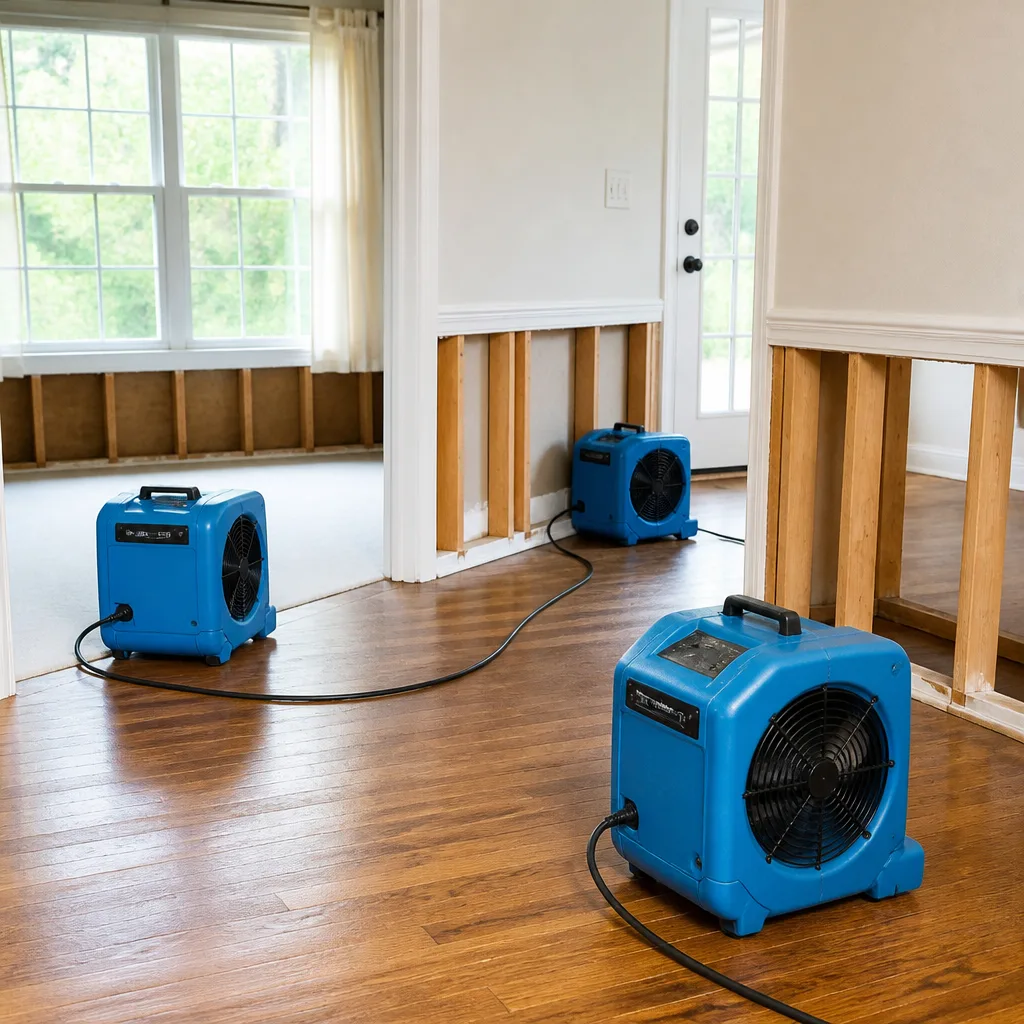
Water Mitigation in Woodcrest is about stopping the loss at its source and drying the structure fast enough to prevent secondary damage, and on these well-fed estate properties, finding the source is half the job. A pressure tank lets go in a pump house, the well pump line weeps under the slab, and without a municipal meter to flag the flow, the water simply keeps moving until someone notices a damp wall or a warped floor. We start every Woodcrest mitigation by walking the well house, checking exterior hose bibs, and running thermal imaging across interior walls and slab edges. The mitigation itself includes truck-mounted extraction, removal of saturated drywall and insulation where necessary, and placement of commercial air movers and dehumidifiers with daily monitoring until drying goals are met.
A typical water mitigation in Woodcrest runs $2,800 to $6,500 depending on the square footage affected, the water category, and how much building material must be removed. Smaller contained losses near a water heater fall at the low end. A pressure tank failure that wicks into an adjoining garage and guest quarters pushes toward the higher figure.
Source Tracing and Containment
Before any drying starts, we locate every affected area. That means moisture mapping walls, slab edges, and ceiling cavities, then setting containment where needed to keep the drying environment controlled. On a Woodcrest estate, that often includes detaching the shop or guest quarters from the main house’s scope so no secondary loss goes undocumented.
Structural Drying Documentation
Every drying job gets a daily log of moisture readings, psychrometric conditions, and equipment placement. Your adjuster receives that log. When the structure meets drying standards, we run final verification with moisture meters, not visual checks. Surface dryness means nothing if the wall cavity still reads 18% moisture content.
Flooded Basement in Woodcrest
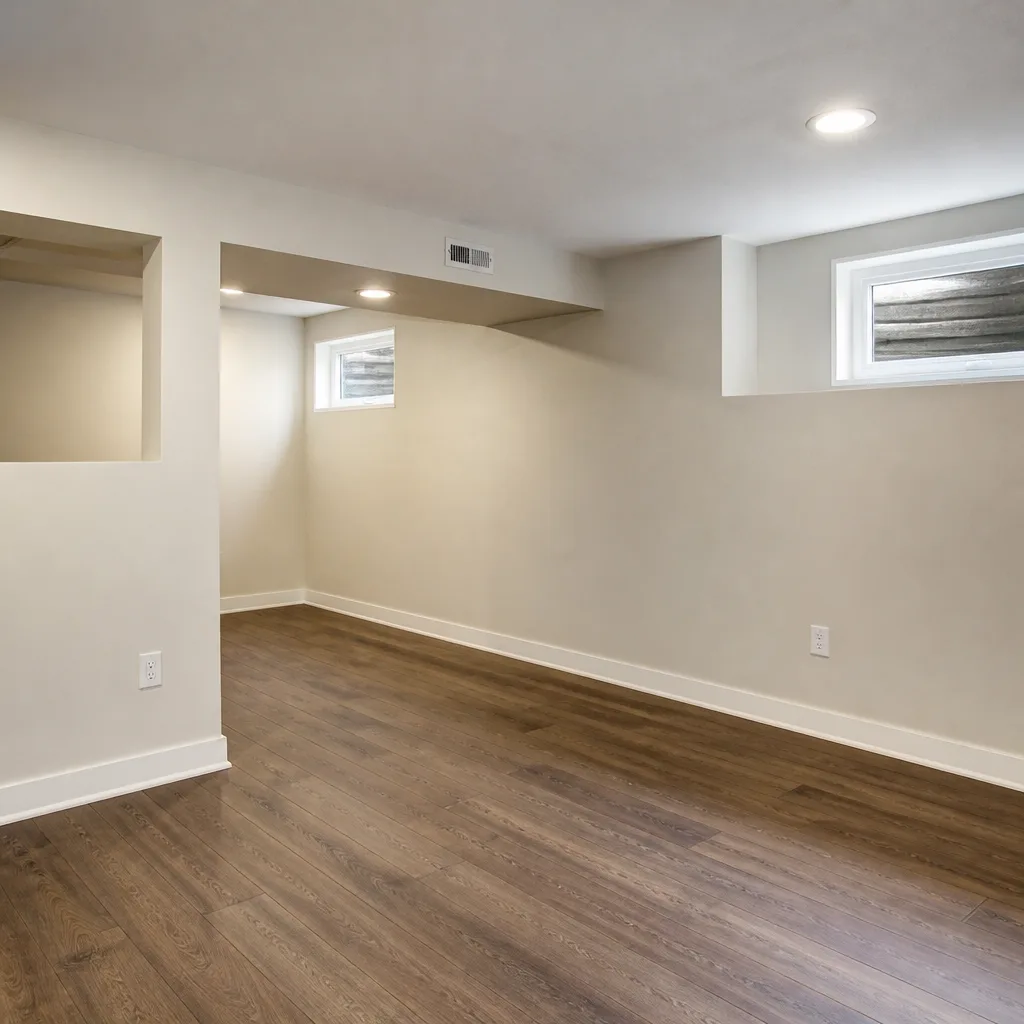
Flooded Basement in Woodcrest work looks different here than it does in a tract-home suburb. Some Woodcrest homes built into hillsides have true basements; others have split-level lower floors or below-grade garages that flood when a septic line backs up or a well system over-pressurizes the plumbing. Because 92508 sits on a patchwork of clay and decomposed granite, water against a below-grade foundation doesn’t drain away quickly. It sits there, finds the path of least resistance, and seeps in through cold joints, window wells, and foundation cracks.
Flooded basement extraction in Woodcrest typically runs $3,200 to $7,800. The variance comes from how much water entered, whether sewage is involved, and whether the lower level has finished drywall and flooring that must be removed. A clean-water supply line break in an unfinished basement stays at the lower end. Category 3 backup water in a finished lower level with carpet and drywall runs toward the top.
Below-Grade Drying Protocol
Basements dry differently than above-grade spaces. Concrete retains moisture long after the standing water is removed, and without dehumidification sized to the cubic footage, moisture keeps re-wetting flooring and drywall. We use Phoenix and XPOWER dehumidifiers rated for commercial use and will run them for three to five days on a typical lower-floor loss, checking readings daily and repositioning equipment as the moisture gradient shifts.
Contents and Flooring Decisions
When a Woodcrest basement floods, stored contents are often half the story. We photograph everything before we touch it, run a contents inventory for your adjuster, and separate salvageable from non-salvageable items. Carpet pad almost always goes in a flooded lower level. The carpet itself may survive if extraction happens within hours and drying starts immediately. Hardwood will likely cup; we’ll tell you honestly what can be saved and what cannot.
Trusted Brands We Service in Woodcrest
We don’t use consumer-grade equipment on Woodcrest drying jobs, and we’re particular about the brands on our trucks. Our fleet includes Dri-Eaz dehumidifiers and air movers, Phoenix extraction and drying systems, and Injectidry targeted structural drying panels that pull moisture from inside wall cavities without ripping out all the drywall. For Woodcrest customers, we stock replacement parts and filters for these systems in our local service vehicles, which means less downtime waiting on a supplier when a dehumidifier needs service mid-job. The equipment matters because the drying standard matters: an IICRC-certified protocol is only as good as the machines executing it. RIA and IFA membership holds us accountable to that standard.
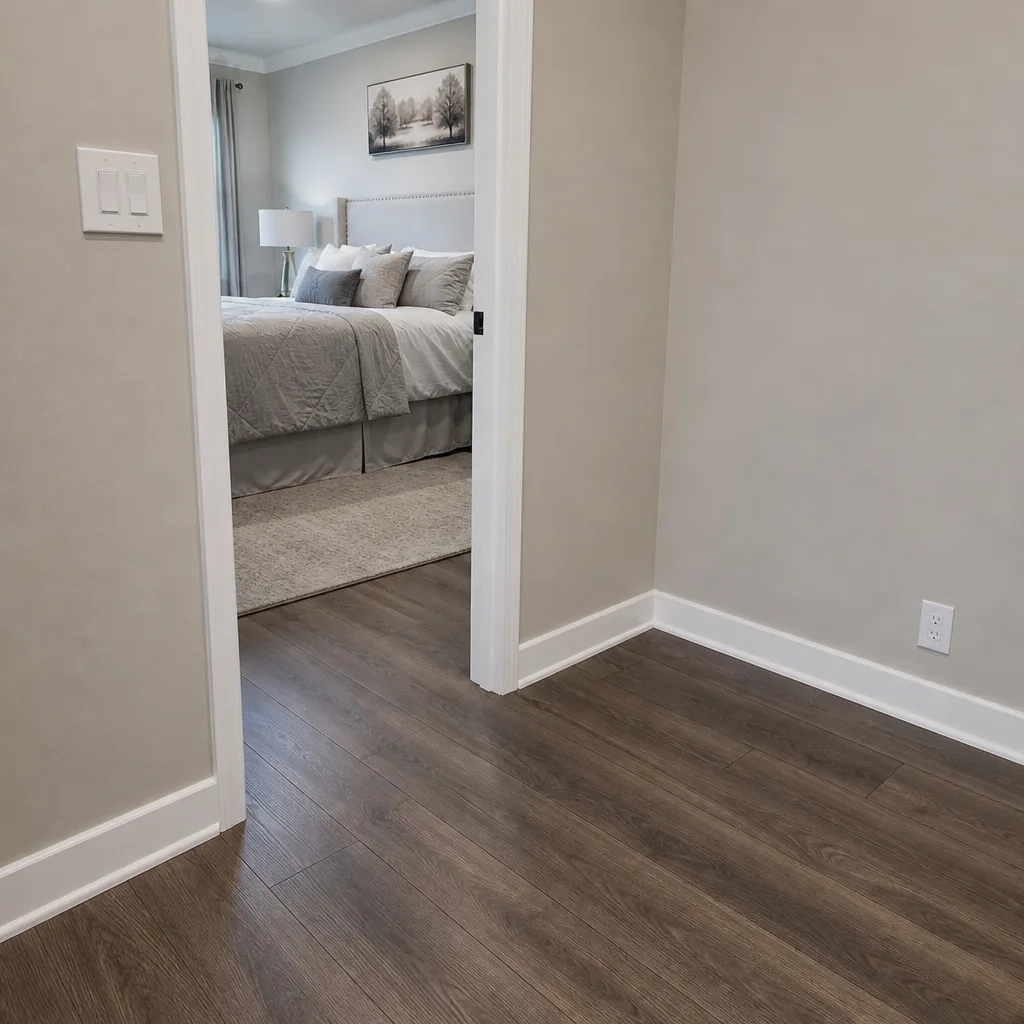
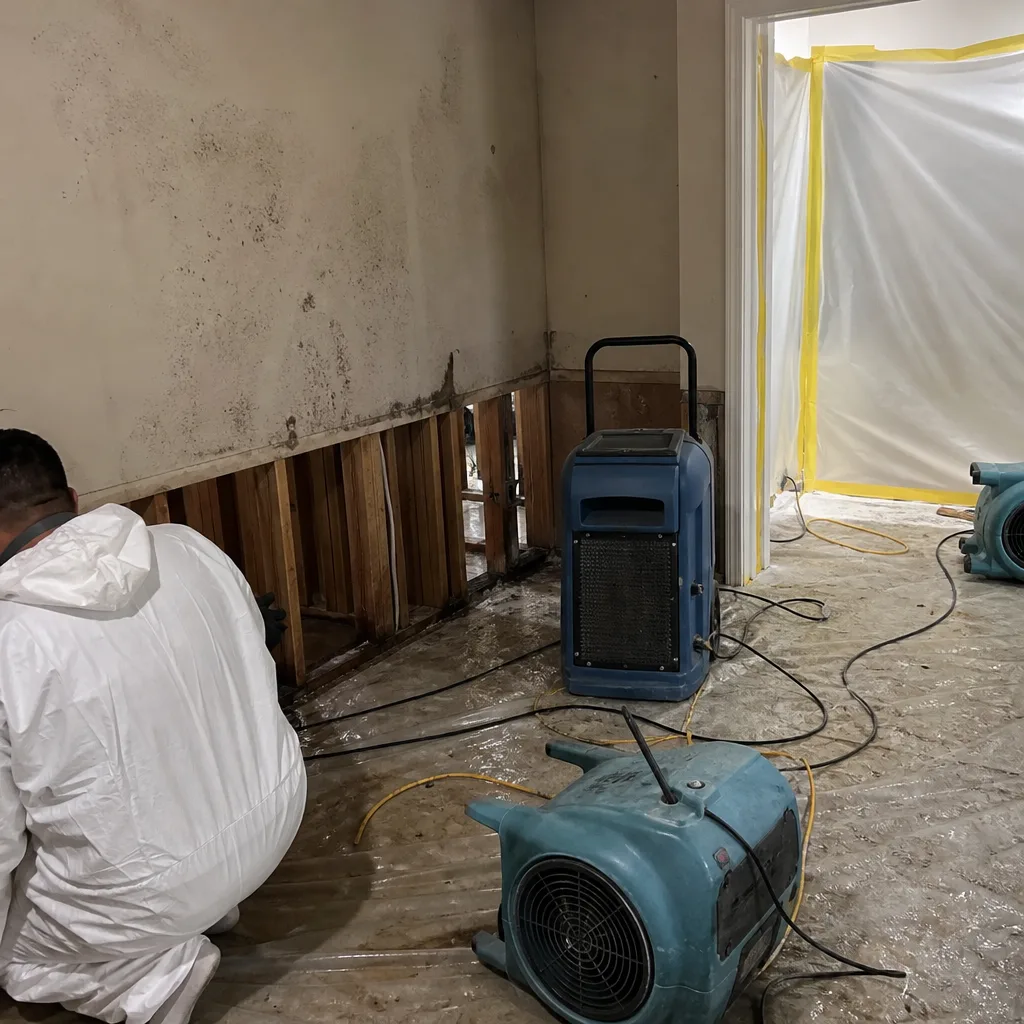
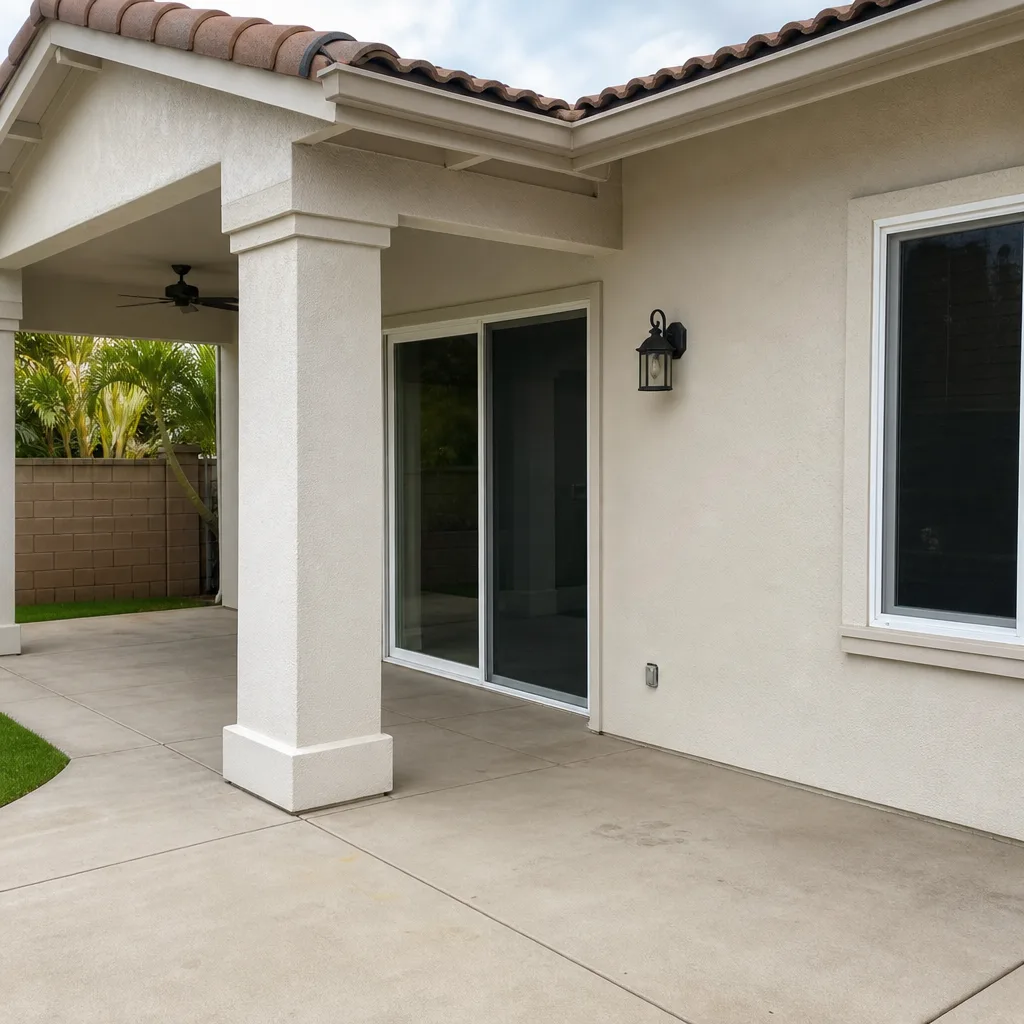
See the difference
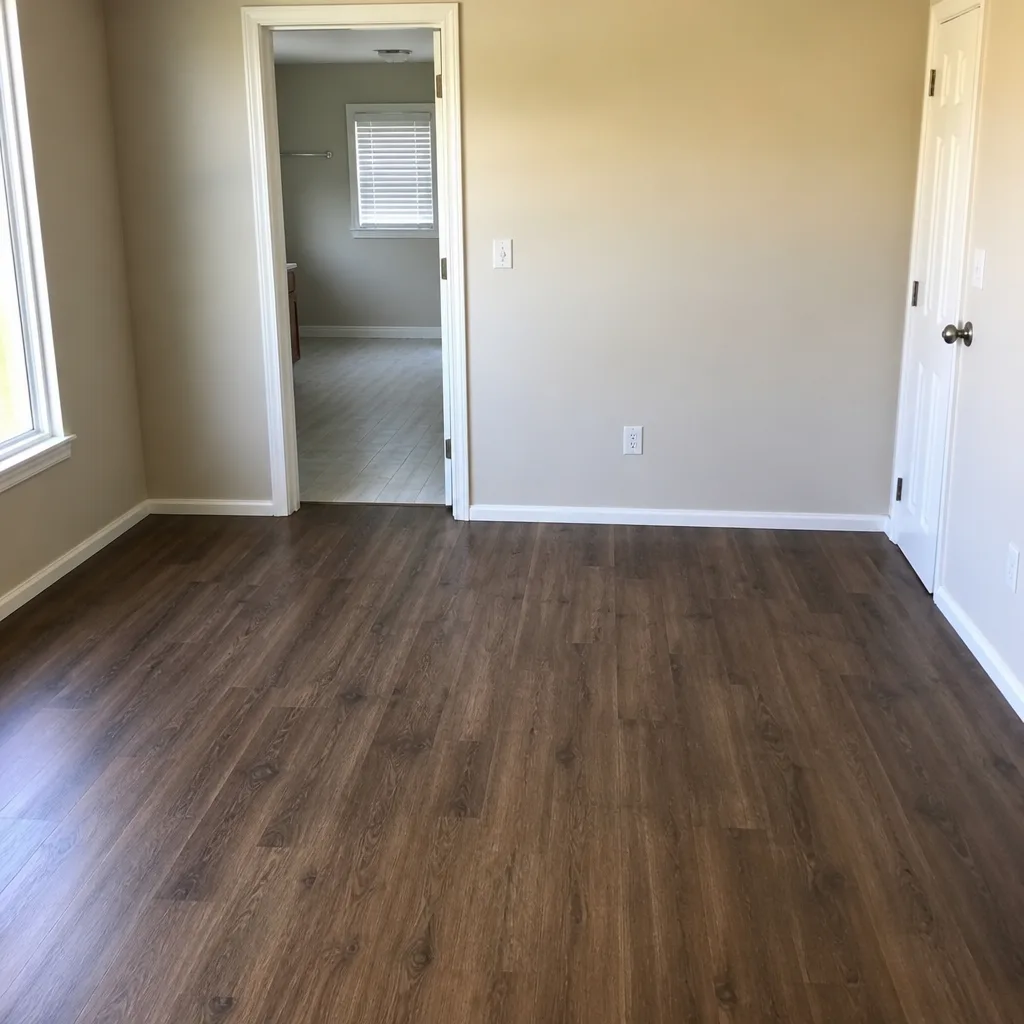
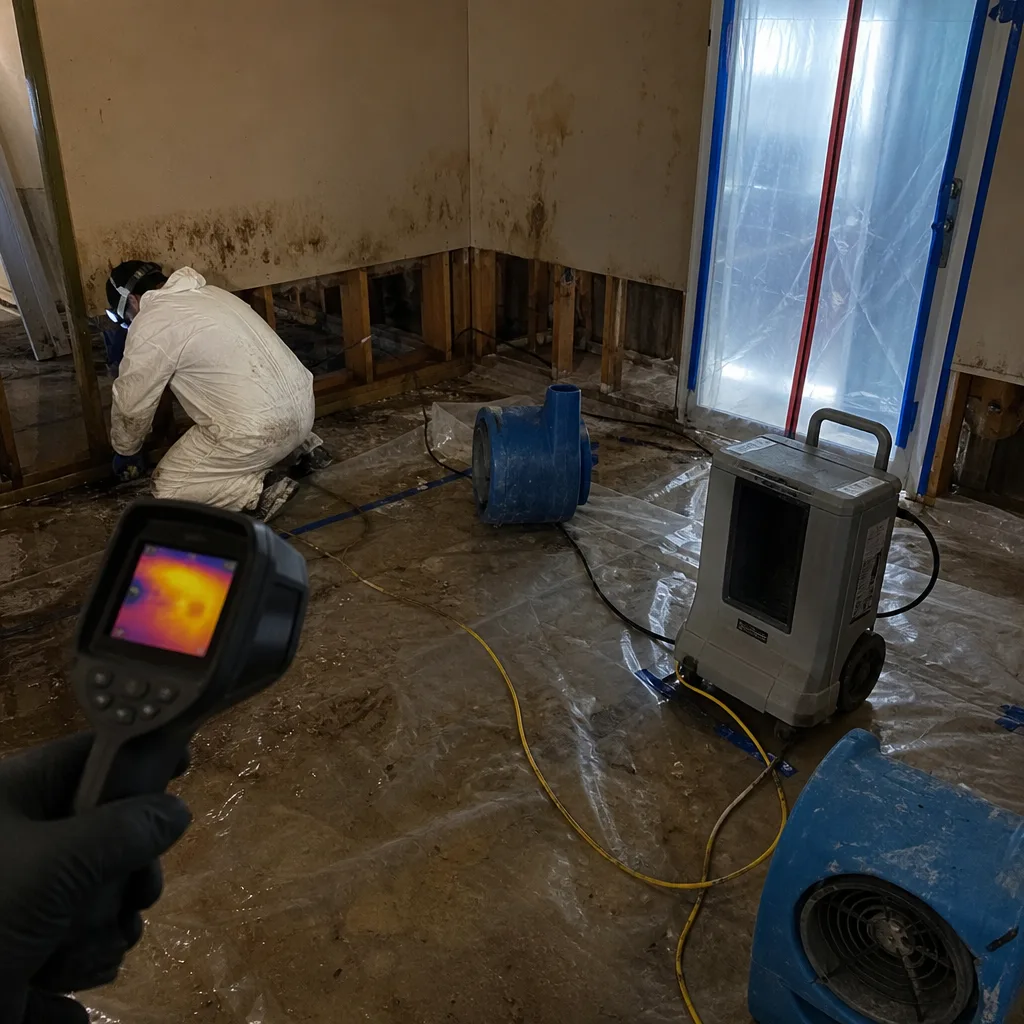 Before
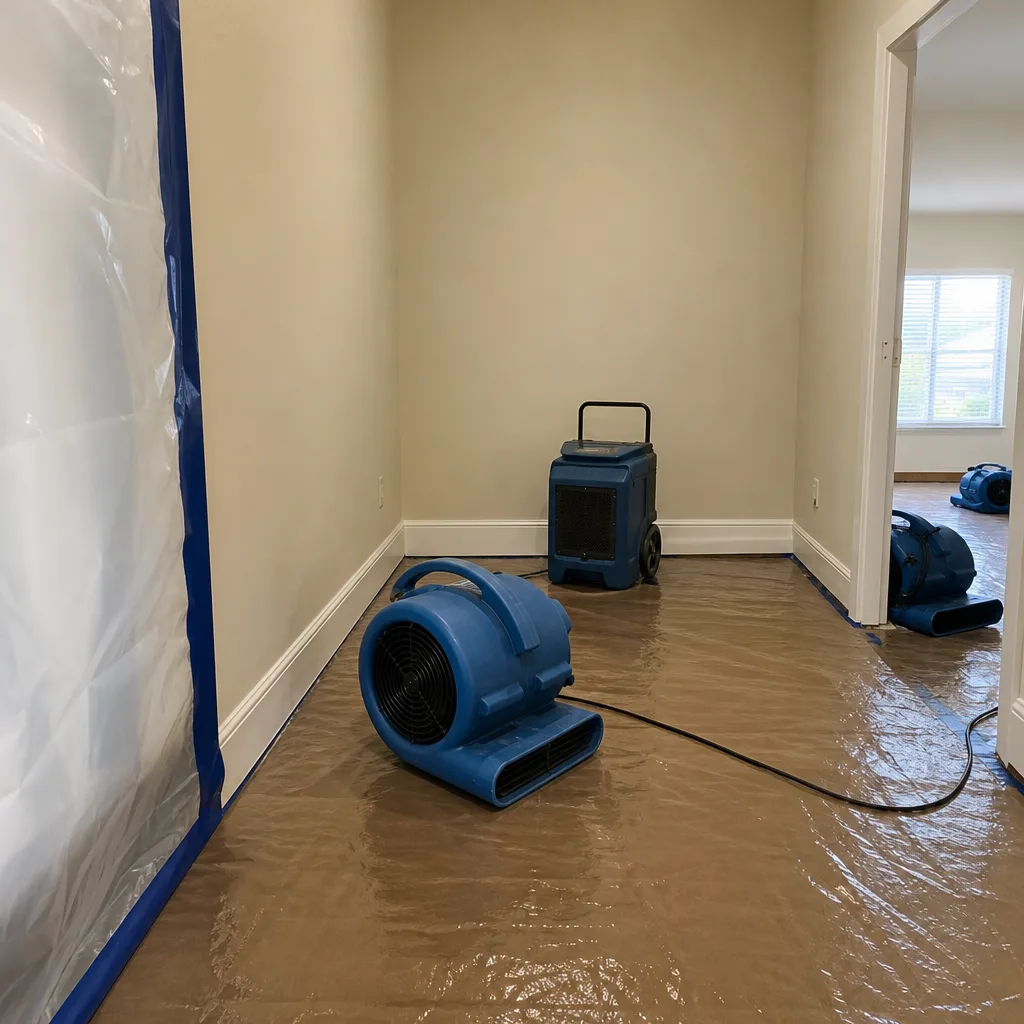 After
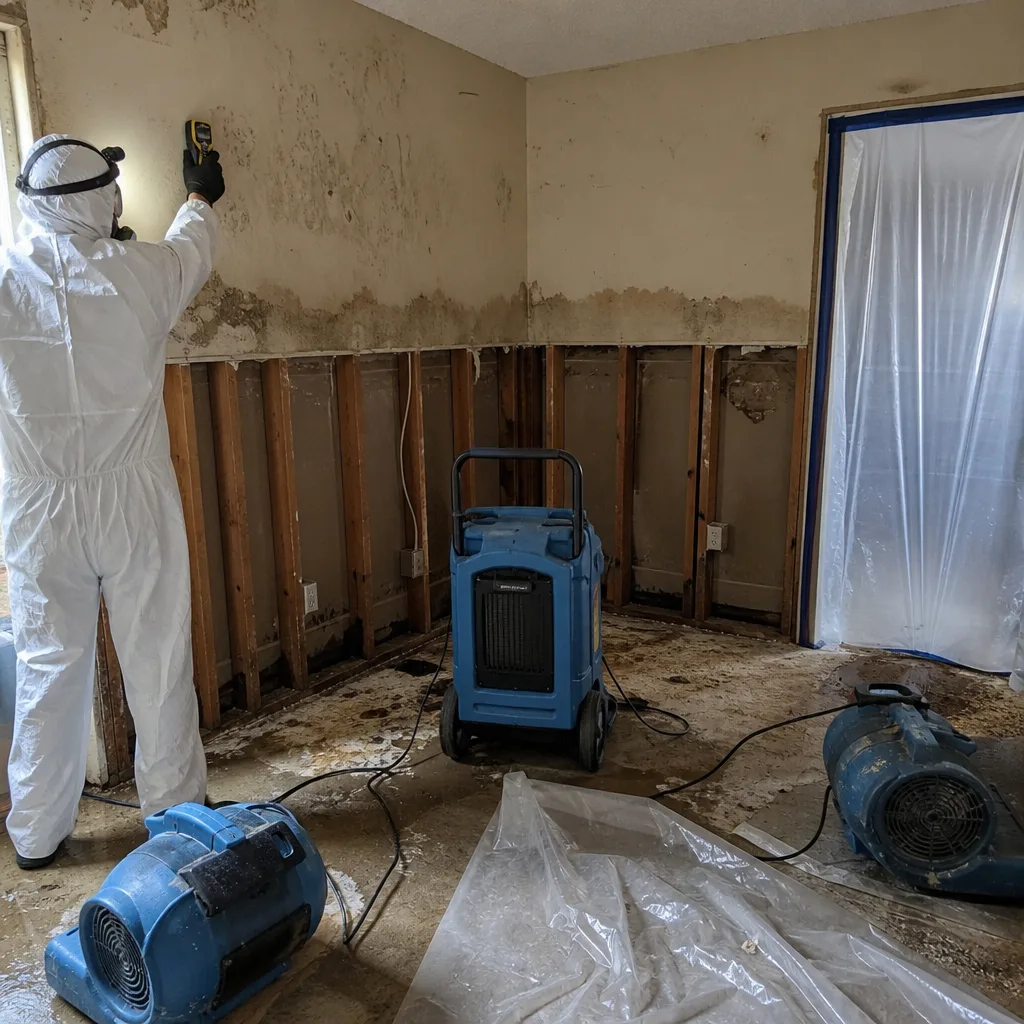 Before
 After
 Before
 After
Common Water Damage Restoration Problems We See in Woodcrest Homes
- Silent well-house failures. A ruptured pressure tank line or a failing well pump fitting can weep water onto a slab for weeks. By the time the homeowner notices a damp adjoining wall or a musty smell, the pump house floor and the nearest interior wall base are already saturated. We check the well house on every Woodcrest water loss, even when the visible damage is inside the main residence.
- Flash-dried surfaces hiding wet cavities. Inland Riverside County’s hot, dry air pulls moisture from the surface layer fast. Stucco, drywall, and concrete feel dry to the touch while the cavity behind them reads above 20% moisture. We trust the meters over the touch test, and we’ve seen premature dry-out calls from homeowners who relied on what their hand could feel.
- Outbuildings left off the scope. Detached shops, barns, and guest quarters on multi-acre Woodcrest properties have their own roofs, slabs, and supply lines. A loss in the main house often means a secondary issue in an outbuilding that nobody checks. We map every structure on the property, because an unaddressed outbuilding leak becomes a separate claim after the main one closes.
- Aging stucco and flashing failures. Most Woodcrest homes were built between the 1980s and the 2000s, and that means roofing underlayment, window flashing, and stucco paper have all reached the age where water intrusion after a Santa Ana wind event or a rare winter storm is common. Wind-driven rain finds the gap, and the water runs inside the wall cavity before it ever shows as a ceiling stain.
Pricing for Water Damage Restoration in Woodcrest, CA
Here are the honest ranges for 92508, based on what we actually see on these estate properties, not a national averages chart. Emergency water extraction alone runs $1,200 to $2,800. Structural drying after extraction typically runs $1,800 to $4,200 depending on the affected square footage and how many rooms need containment. A full water mitigation package, including source repair coordination, demolition of unsalvageable materials, structural drying, and final documentation, runs $3,500 to $8,500 on a typical Woodcrest estate home with a detached garage or shop in play. Category 3 sewage involvement, multiple structures, or finished lower levels push toward the top of that range. Every estimate is free, in writing, and includes a line-item scope so you can see exactly what’s proposed before any work begins. Call (833) 589-7005 for a site assessment.
We Also Serve Cities Near Woodcrest
Our Water Damage Restoration in Woodcrest team also covers the communities around it, including March Air Force Base, Moreno Valley, Riverside, and Mead Valley. If you manage a rental property or a family home in any of these areas, the same IICRC-certified crews and the same Dri-Eaz and Injectidry systems respond. One call handles the whole region. We quote every job in writing, and our documentation meets adjuster standards across Riverside County.
Serving Woodcrest, CA — Our Local Coverage Area
We’re based in the Woodcrest area and know this community well. Use the map below to see our service coverage — if you’re nearby, we can almost certainly help.
FAQs About Water Damage Restoration in Woodcrest
Check the well house first. If the pressure tank feels hot from constant cycling, or if the pump is running when no water is being used inside, that’s a sign of a leak in the pressure tank, a failed tank bladder, or a weeping fitting. Wet soil around the pump house slab, a damp stucco base where the supply line enters the home, or water staining on the floor inside the well house all point to the well system. Our techs start every Woodcrest inspection at the well house before moving inside, because a cabinet-only inspection misses the most common source on these properties. Call (833) 589-7005 and we’ll trace the full supply path.
Mold can begin colonizing wet organic materials within 24 to 48 hours, and in Woodcrest’s inland heat, that window can compress. The dry air slows surface mold, but the warm conditions keep the interior of walls and subfloor at exactly the temperature mold likes. Once the structure is wet, the clock runs whether you see mold or not. That’s why we dispatch same-day to Woodcrest and why structural drying starts immediately after extraction, with dehumidification set to hit target moisture content within 72 to 96 hours in most cases.
Because Woodcrest’s low humidity pulls moisture out of the surface layer fast, leaving the material behind the surface saturated. This is the classic flash-dry trap: your hand feels dry stucco, but the cavity behind it reads 22% moisture. If you stop drying based on touch, the trapped moisture stays in the wall cavity, feeds mold inside the framing, and re-wets the surface within a day or two. We run moisture meters at multiple depths and don’t call a job done until the readings say the structure is actually dry, not just comfortable to the touch. That’s a measurable difference, and it’s exactly why we document every reading in the drying log your adjuster sees.
Category 1 comes from a clean source like a broken supply line or a failed pressure tank fitting. Category 2 contains some contamination, like washing machine overflow or sump pump discharge. Category 3 is grossly contaminated water from sewage, septic backups, or storm flooding that carries bacteria. In Woodcrest, septic backups are the most common source of Category 3 water, and they’re common enough on these properties that we treat every below-grade backup as contaminated until testing proves otherwise. Category 3 means more demolition, not just more drying: saturated carpet pad, drywall, and insulation in the affected area generally go. The category affects the cleanup protocol, the PPE our crew wears, and the line items on your insurance scope. Call (833) 589-7005 and we’ll explain what category your loss falls into and what the protocol means for your home.
Yes. Every structure on the property gets inspected and moisture-mapped when we respond to a Woodcrest water loss. Detached shops, guest quarters, barns, and even the pump house itself are separate structures with their own roofs, slabs, and supply lines, and a loss in one does not mean the others are dry. We include every structure in the written scope of work and submit the full moisture map to your adjuster. An outbuilding loss that gets missed during the main claim becomes a separate claim later, with a separate deductible. Our walk-through includes a roof check and slab-edge reading on every outbuilding, not just the one where you saw water.
Written by Allen Burkhart, Owner at OC Restoration Co, serving Woodcrest and greater Riverside County with IICRC-certified water, mold, and fire restoration since 2009.