
 Mold remediation
 Water damage drying
 Fire & smoke cleanup
 Storm response
 Sewage cleanup
 Reconstruction
Free visual inspection and a written scope of work before any mitigation begins - photos, moisture readings, and drying logs go in your claim file
The scope we write is the scope we bill. Anything new gets shown to you, in writing, before we touch it.
Get your free estimateFast, Reliable Mold Remediation Across Grand Terrace
Mold in a Grand Terrace home almost never starts where you find it. On the hillside streets climbing toward the bluff edge, it starts uphill, where a neighbor’s saturated slope or a failing retaining wall channels water into your lower level during a Santa Ana storm. Our Mold Remediation team has worked enough of these jobs to know the pattern. We check the drainage before we dry the wall. If you’re seeing discoloration on drywall, a musty smell that won’t leave, or water staining in a downstairs room, call (833) 589-7005. We’ll send an IICRC-certified crew that understands Grand Terrace’s hillside hydrology as well as its mold.
Why OC Restoration Co Is Grand Terrace’s Preferred Mold Remediation Company
Grand Terrace is a small city. That works in our favor, because word travels fast here. Homeowners on the streets above Barton Road and along the I-215 corridor have called us after watching a downhill neighbor go through a mold claim that dragged on for months because no one addressed the slope behind the house. We’ve built our reputation in Grand Terrace on that single insight: the mold is downstream of the water, and the water is usually upstream of the house.
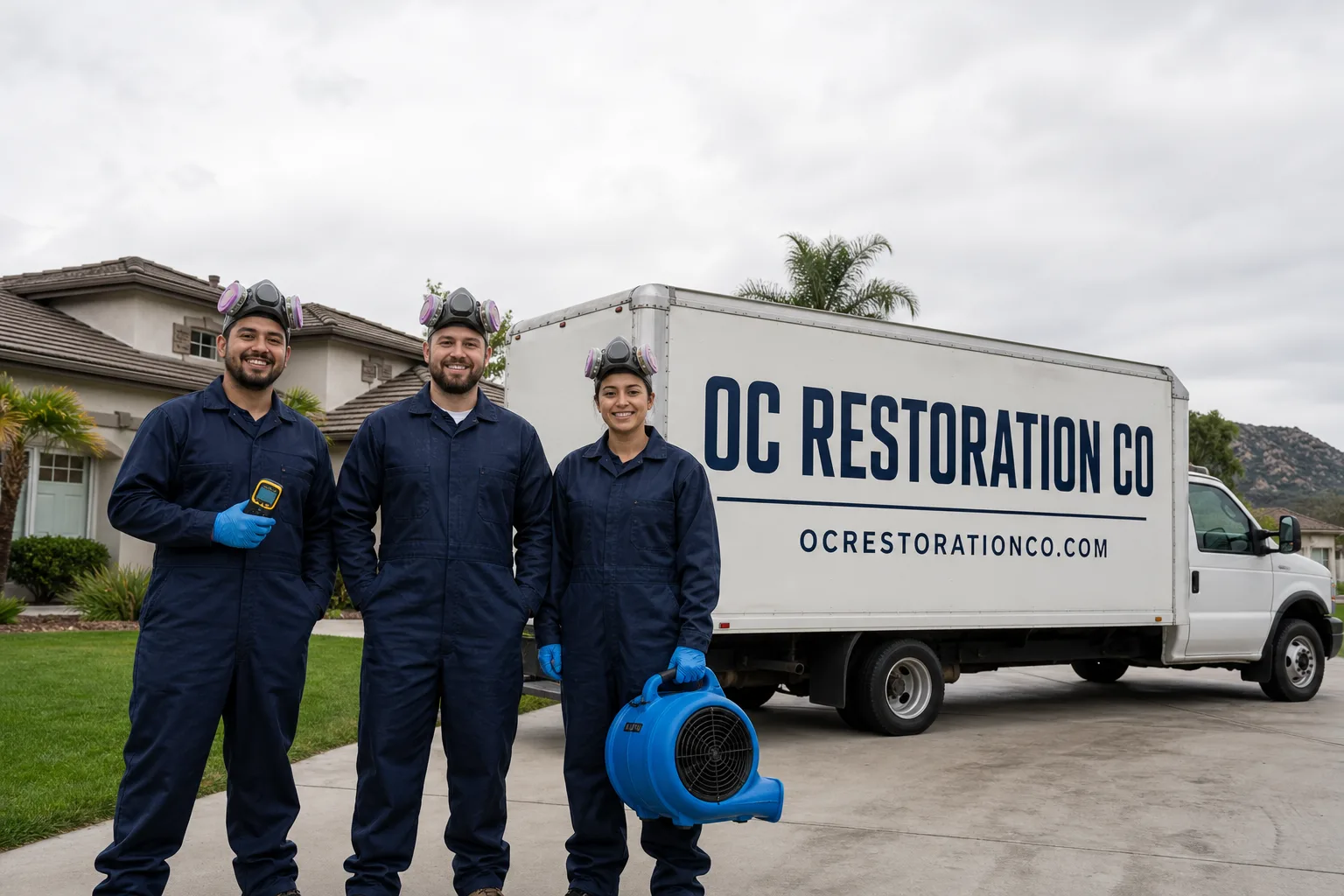
Allen Burkhart leads our restoration operations, and he’s made one thing clear to every technician: in hillside towns like Grand Terrace, you don’t start remediation by opening walls. You start by walking the uphill property line. That approach, combined with our IICRC certification and active membership in the Restoration Industry Association, is why adjusters and property managers in 92313 keep our number handy. We show up quickly when Grand Terrace needs us, and we bring commercial-grade equipment, not rental-store fans.
We’re also one team for the full damage cascade. When a Grand Terrace home takes on hillside runoff, the mold problem usually arrives weeks after the water problem. We handle both, plus any fire or smoke damage, under one roof. No handoffs between contractors, no gap in the protocol chain.
Restoration work we handle
Professional Mold Removal in Grand Terrace
Professional Mold Removal in Grand Terrace means more than cutting out visible growth. It means finding the water source first, because in this city, that source is often a neighbor’s saturated slope above your property line. In our experience across Grand Terrace, mold jobs here start with a moisture map of the uphill drainage, the retaining wall, and the foundation, then move to containment, air filtration, and removal of colonized materials.
When a Grand Terrace homeowner calls us with mold blooming behind a downstairs wall, they’re usually looking at a loss that began weeks earlier during a dry spell, then exploded after a storm. The cost for mold removal here reflects the hillside reality: a straightforward single-room remediation typically runs $1,800 – $3,400, while a multi-room lower-level job with contaminated insulation and framing can reach $7,000 – $12,000. We document every step with moisture readings and photos, because your adjuster will want that paper trail.
Containment and Removal
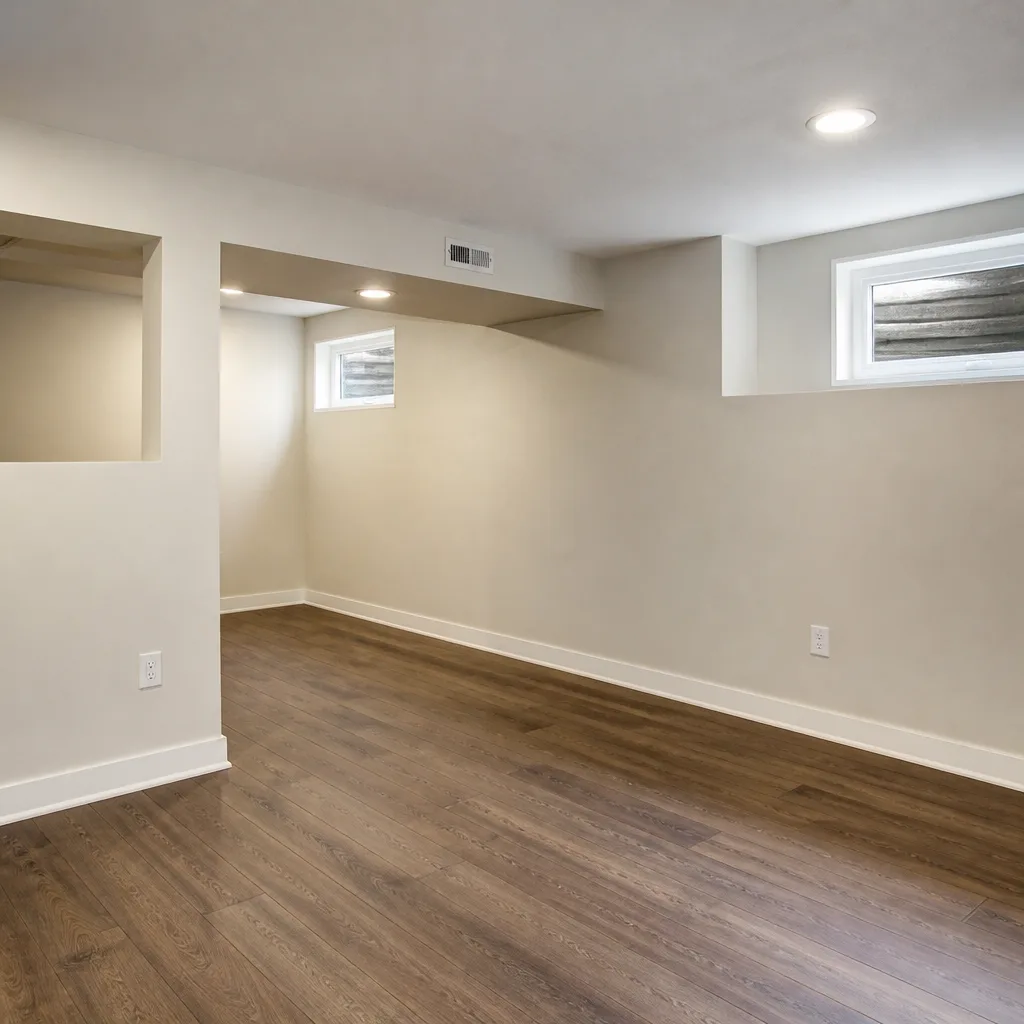
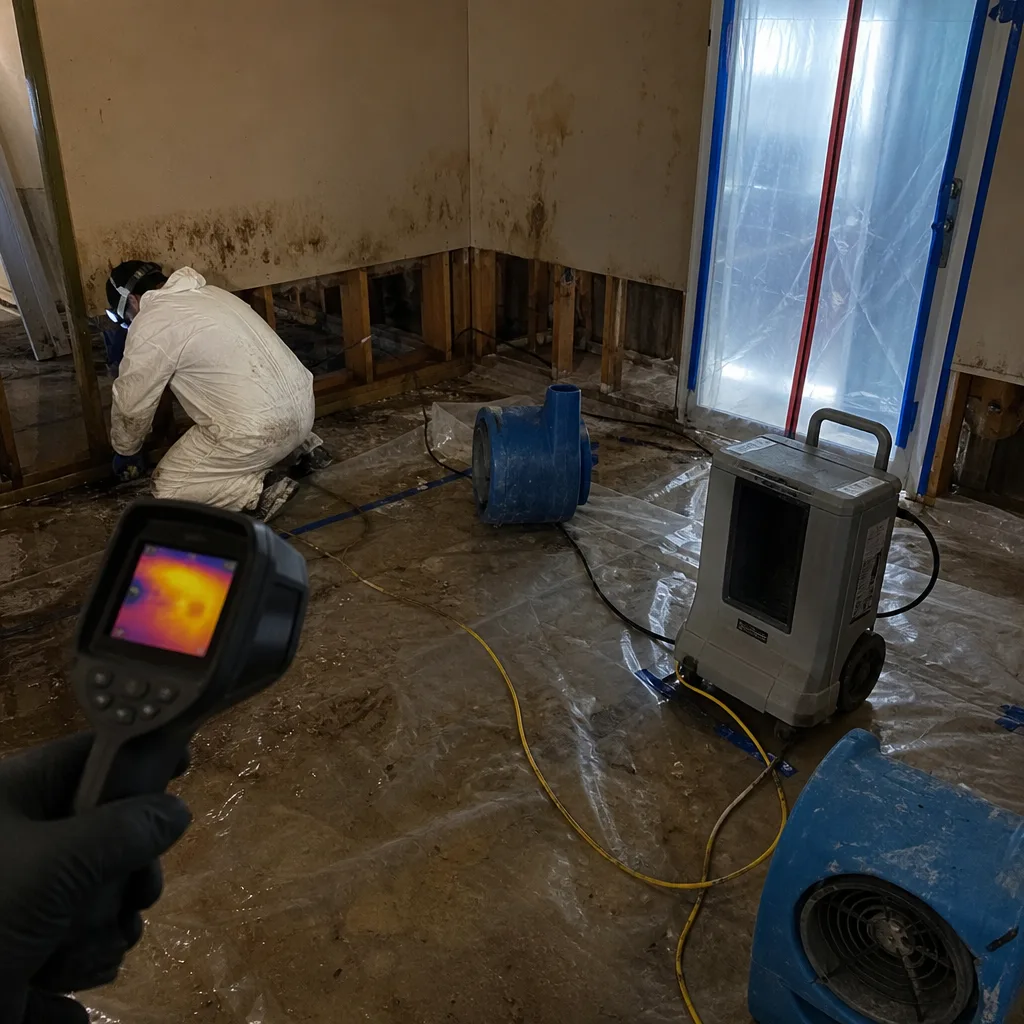
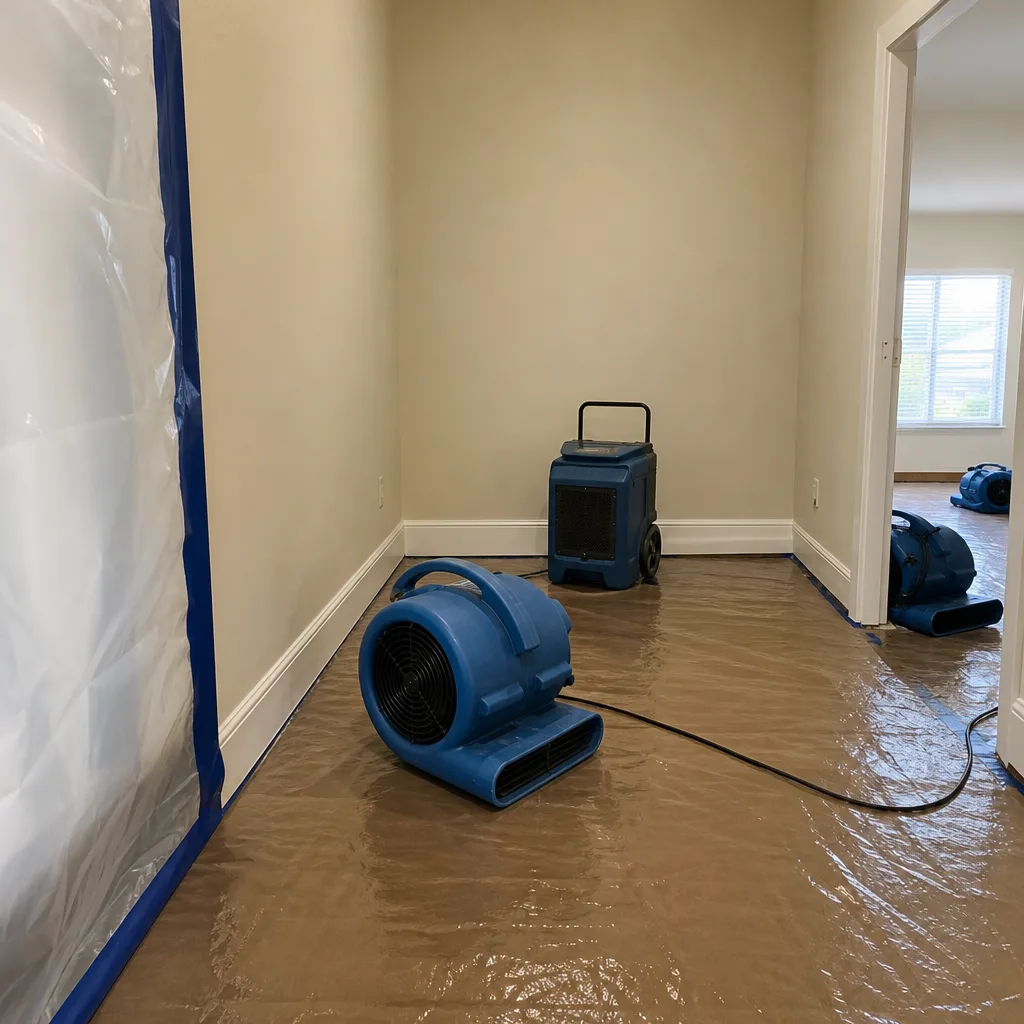
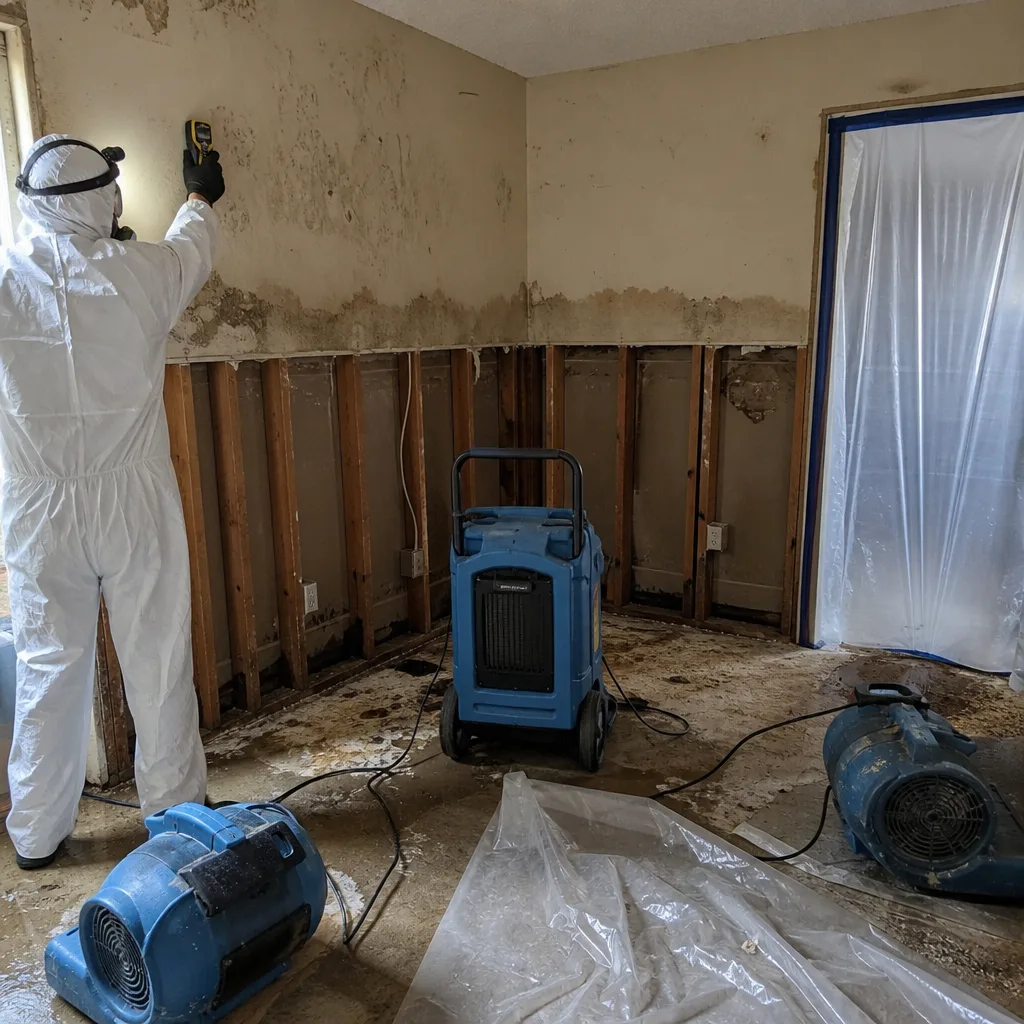
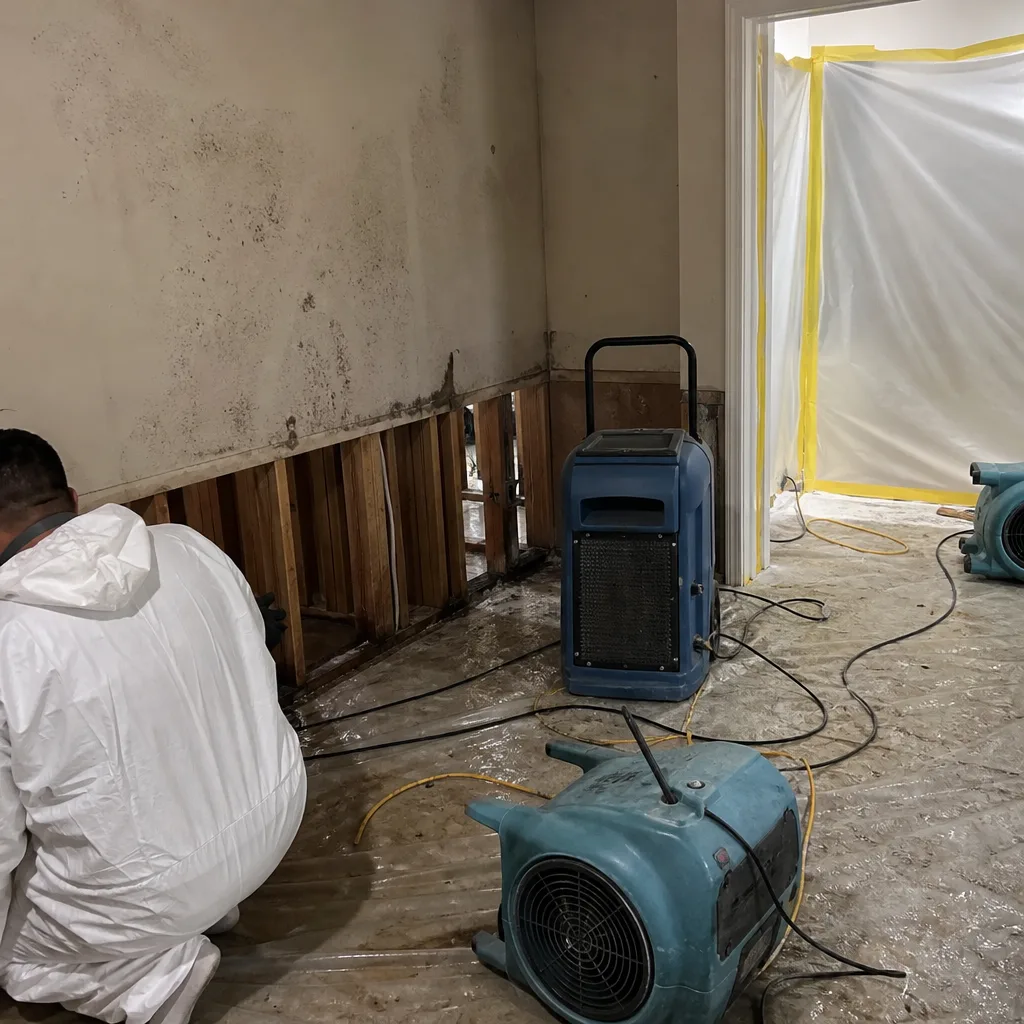
We build negative-air containment around the affected area before disturbing any colonized material. In Grand Terrace’s mid-century and 1970s-80s homes, that often means sealing off a lower-level family room or a converted garage where drywall has wicked moisture from the slab or the uphill foundation wall. Then we remove what can’t be saved, treat the framing, and run HEPA air scrubbers until air quality clears.
Structural Drying Before Rebuild
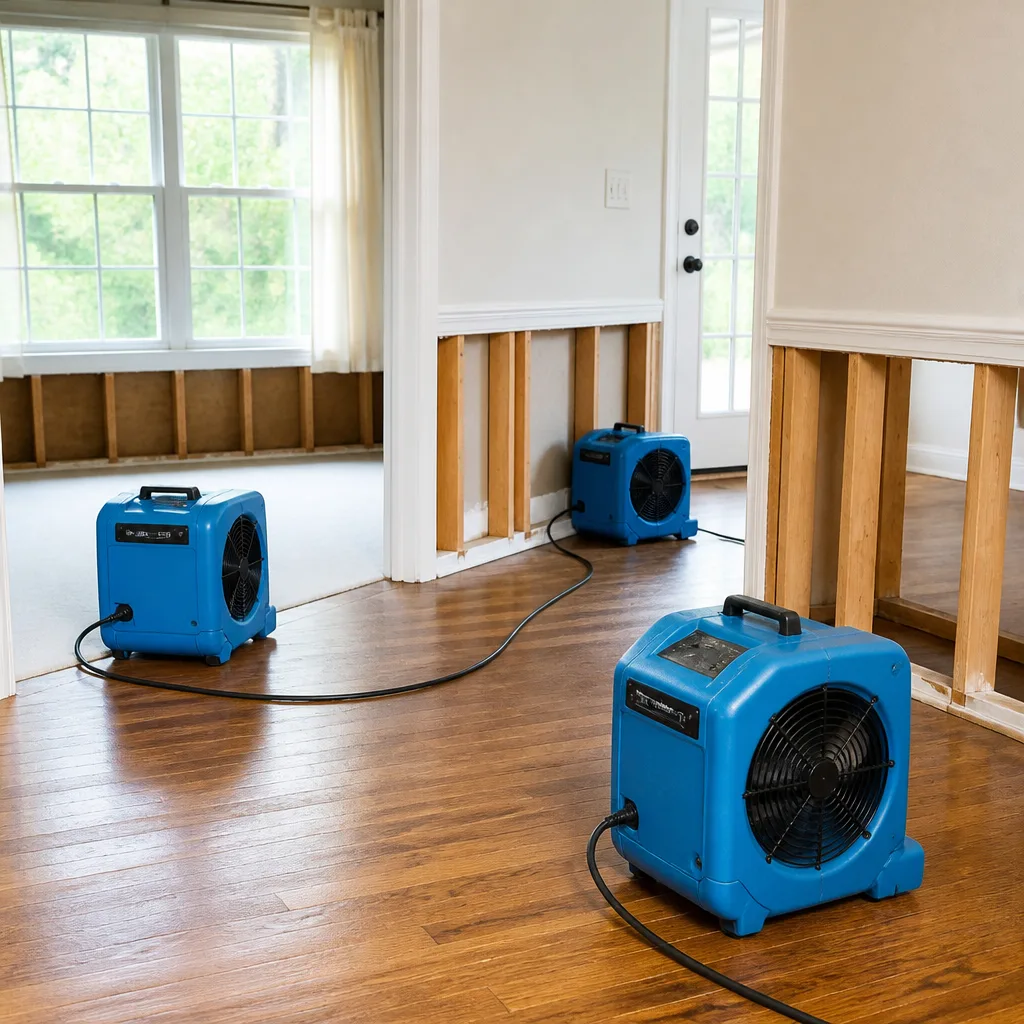
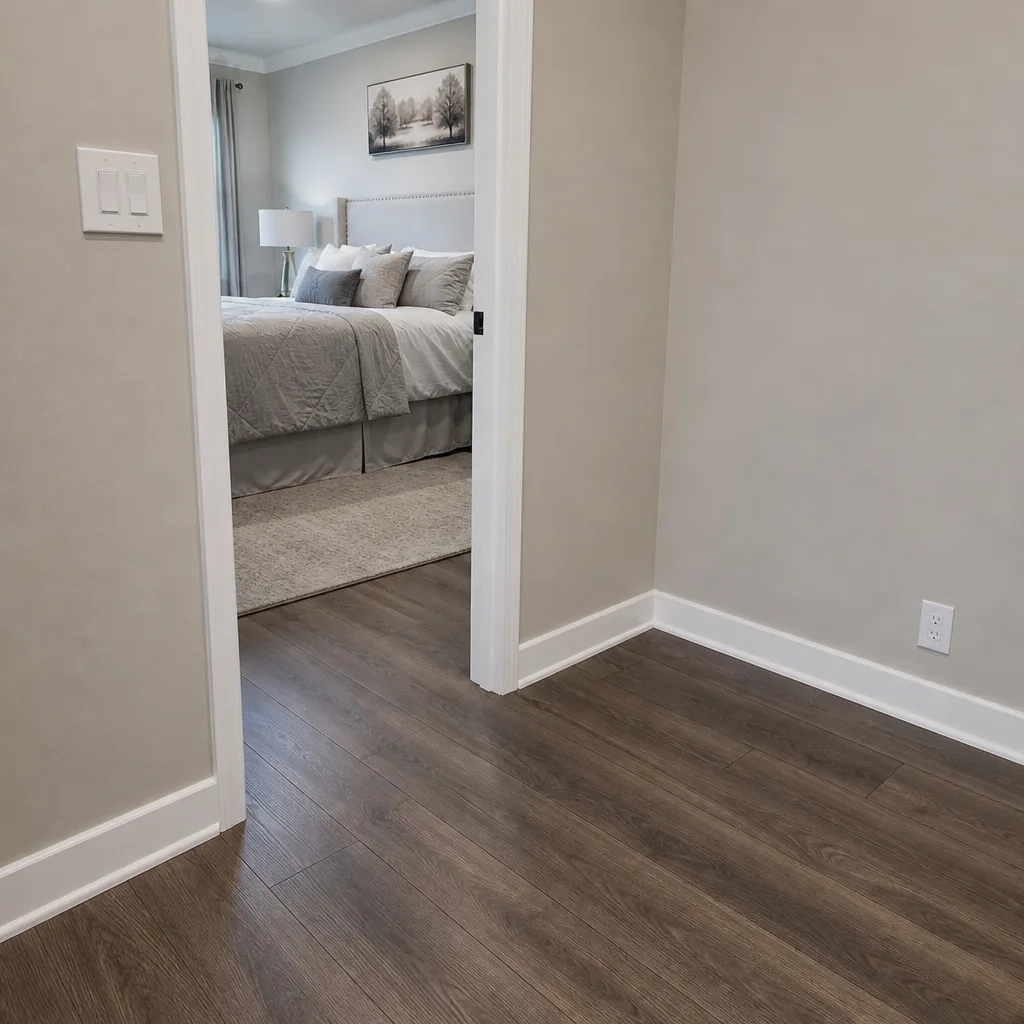
Here’s where the Injectidry systems earn their keep. On a Grand Terrace hillside home, wet wall cavities behind original plaster or drywall don’t dry out on their own. Our Injectidry mats and Dri-Eaz dehumidifiers pull moisture from inside the assembly, which means we can often save studs and sheathing that a less-equipped crew would tear out and replace. Less demolition, faster restoration, and a stronger argument to your insurance carrier.
Mold Inspection in Grand Terrace
Mold Inspection in Grand Terrace is not a visual walkthrough with a flashlight. It’s a moisture-and-spore investigation that follows the water path from the bluff edge down to your foundation, because in this city, the mold you see inside is nearly always fed by water you can’t see outside. We inspect from the uphill side first, checking slope drainage, retaining walls, gutter discharge, and the foundation’s uphill face before we ever open a wall.
A mold inspection in Grand Terrace typically runs $350 – $650, depending on the size of the home and whether lab sampling is needed. If you’re in escrow on a 1970s ranch below the bluff, or you just discovered staining after a storm sequence, that inspection tells you whether you’re dealing with surface growth or a deeper problem hiding in the stud bays.
Moisture Mapping and Sampling
We walk the property with moisture meters and thermal imaging, logging readings from the uphill exterior walls, the slab, and any wall cavity that shows suspicious humidity. When lab confirmation is needed, we take air or surface samples and send them to a certified lab. You get a written report with the numbers, not a sales pitch.
Post-Storm Mold Assessment
After a Santa Ana wind event or an atmospheric-river storm, Grand Terrace homeowners sometimes notice a musty smell before any visible staining appears. That’s the mold clock already running behind the drywall. A post-storm assessment catches it early, before the colonized area spreads from one wall cavity to a whole lower level. If you suspect storm intrusion, don’t wait for the discoloration to show up.
Trusted Brands We Service in Grand Terrace
Our techs run Dri-Eaz, Phoenix, XPOWER, B-Air, and Injectidry equipment on Grand Terrace jobs every week. These are the same commercial-grade brands used by national restoration firms, not the rental-grade gear you can pick up at a hardware store. For Grand Terrace customers, that means faster drying on hillside homes where trapped moisture in wall cavities is a stubborn problem. We keep a full stock of replacement filters, antimicrobial treatments, and containment materials in our Corona facility, so a Grand Terrace dispatch doesn’t wait on a parts order from out of state. If it’s a brand we run, we service it and we know what it can do on a 1970s hillside ranch. Allen Burkhart’s rule is simple: if the equipment isn’t commercial grade, it doesn’t go on the truck.
See the difference
 Before
 After
 Before
 After
 Before
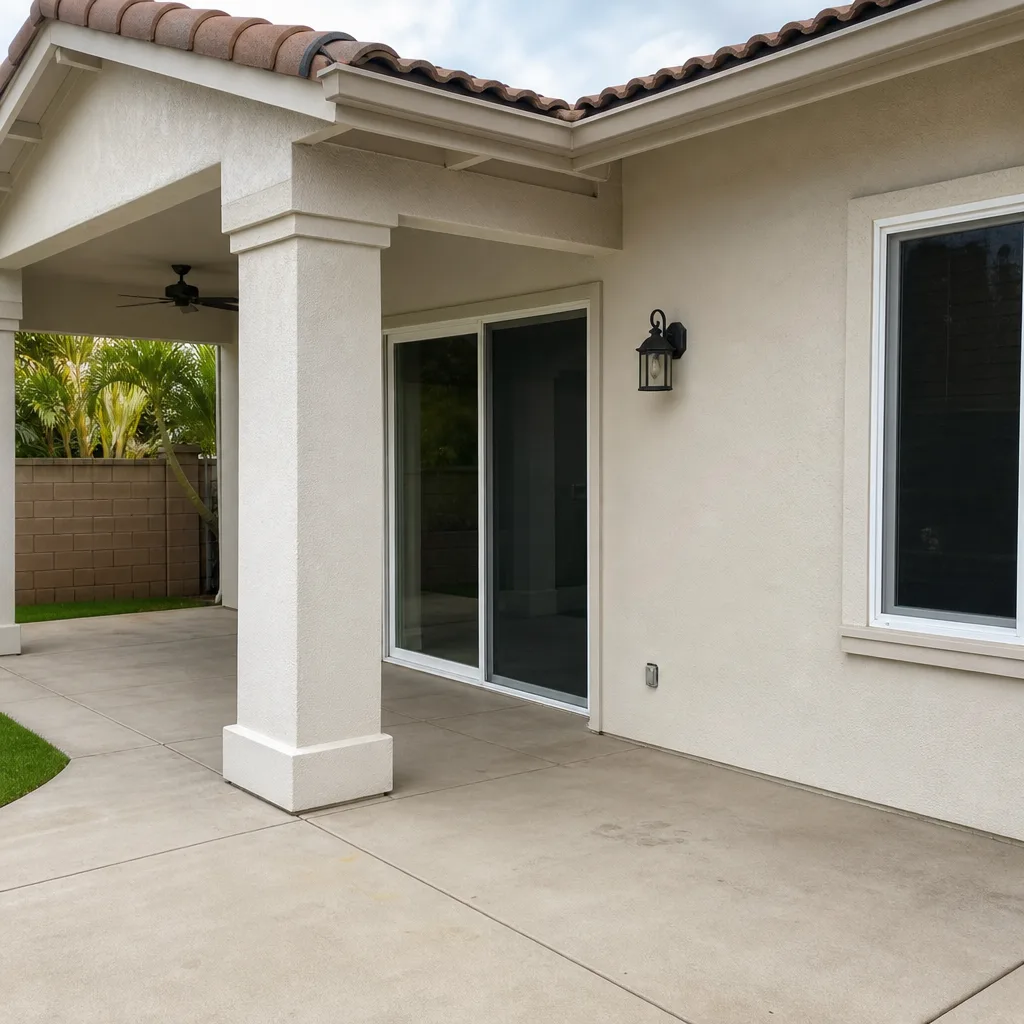 After
Common Mold Remediation Problems We See in Grand Terrace Homes
- Uphill runoff saturating lower-level walls. On the streets climbing toward the bluff edge, a neighbor’s slope drains onto the downhill lot during winter storms. The water pools against the uphill foundation wall and wicks into drywall and framing, and mold follows within days or weeks.
- Original plumbing from the 1960s and 1970s failing inside walls. Grand Terrace is largely built out with mid-century and 1970s-80s homes, many still on original supply lines. A slow pinhole leak behind a kitchen or bathroom wall can feed mold for months before anyone notices.
- Santa Ana wind-driven rain finding every old window and roof penetration. When wind pushes rain horizontally against a hillside home, it enters through aging windows, roof flashing, and stucco cracks. That moisture gets trapped in wall cavities that never see direct sunlight on the downhill side.
- Retaining walls channeling water toward the house instead of away from it. A cracked or poorly drained retaining wall on an uphill lot can direct runoff straight into a downhill neighbor’s foundation. We’ve seen mold blooms in lower-level bedrooms that traced directly back to a failing wall two lots up.
Pricing for Mold Remediation in Grand Terrace, CA
Mold remediation in Grand Terrace reflects the city’s hillside reality, so expect pricing that accounts for drainage investigation, not just drywall work. A contained single-room remediation with moisture mapping typically runs $1,800 – $3,400. A lower-level remediation that requires removing contaminated drywall, treating framing, and structural drying with Injectidry systems runs $5,000 – $9,000. A full multi-room hillside job, including retaining wall assessment and rebuild after remediation, can reach $12,000 – $18,000. What moves the number: whether the water source is still active, whether Category 3 runoff has contaminated the materials, and how much framing can be saved. We give you a written scope before any work starts, with photo documentation for your adjuster. Call (833) 589-7005 for a free estimate, and we’ll tell you honestly what needs to come out and what can be dried in place.
We Also Serve Cities Near Grand Terrace
Our Mold Remediation in Grand Terrace coverage extends to the surrounding Inland Empire communities. We routinely dispatch crews to Highgrove, Colton, Loma Linda, and Rubidoux, bringing the same IICRC-certified process and commercial-grade equipment to every job. If you’re in one of those cities and dealing with hillside runoff or storm-driven water intrusion, call us at (833) 589-7005.
Serving Grand Terrace, CA — Our Local Coverage Area
We’re based in the Grand Terrace area and know this community well. Use the map below to see our service coverage — if you’re nearby, we can almost certainly help.
FAQs About Mold Remediation in Grand Terrace
Because the water that feeds it is still working its way downhill. When a Santa Ana storm saturates the bluff above your home, the soil holds that moisture and releases it slowly over days and weeks, keeping the uphill side of your foundation and wall cavities damp long after the rain stops. That sustained moisture is exactly what mold needs to colonize hidden drywall and framing. By the time you smell it or see staining, the colony has been growing for a while. Call (833) 589-7005 and we’ll map the moisture before it spreads further.
Yes. Every time. We won’t remediate a mold problem in Grand Terrace without first walking the uphill property line, checking retaining walls, gutter discharge, and slope drainage. If the water source is still active, drying the inside is wasted effort. We find the source, document it for your insurance claim, and then build containment and begin drying. Skipping the uphill check is how mold jobs fail twice.
We follow IICRC S520 standards. Porous materials like drywall, insulation, and carpet that are visibly colonized get removed, because you can’t clean mold out of them. Structural wood, metal framing, and some hard surfaces can be treated with antimicrobials and dried in place if they haven’t lost structural integrity. On a Grand Terrace hillside home, our goal is to save as much original framing as possible, using Injectidry mats and Dri-Eaz dehumidifiers to hit a dry standard that satisfies both you and your adjuster.
No. Here’s why: every additional week of moisture means more colonized drywall, more contaminated insulation, and a bigger containment area. A job that starts as a $2,000 single-room remediation can become a $9,000 multi-room rebuild by spring. And in Grand Terrace, the hillside keeps releasing moisture long after the rain stops, so the mold clock doesn’t pause between storms. If you suspect mold, call (833) 589-7005 before the next rain event adds more water to the equation.
It depends on your policy, but in many Grand Terrace claims the answer is yes if the mold is a direct result of a covered water loss from storm damage. The claims process goes smoother when the restoration contractor documents everything: moisture readings, containment protocols, hourly drying logs, and photos of the uphill drainage that caused the intrusion. We coordinate directly with your adjuster and provide the paperwork they need. Call (833) 589-7005 and we’ll walk you through what your policy likely covers.
If you’re seeing mold in a Grand Terrace home, whether it’s a hillside ranch below the bluff or a 1970s original near Barton Road, call (833) 589-7005. We’ll inspect the uphill drainage, map the moisture, and give you a written scope before any work starts. This is what we do, every week, in 92313.
Written by Allen Burkhart, Owner at OC Restoration Co, serving Grand Terrace and the Inland Empire since 2018.