 Water damage drying
 Fire & smoke cleanup
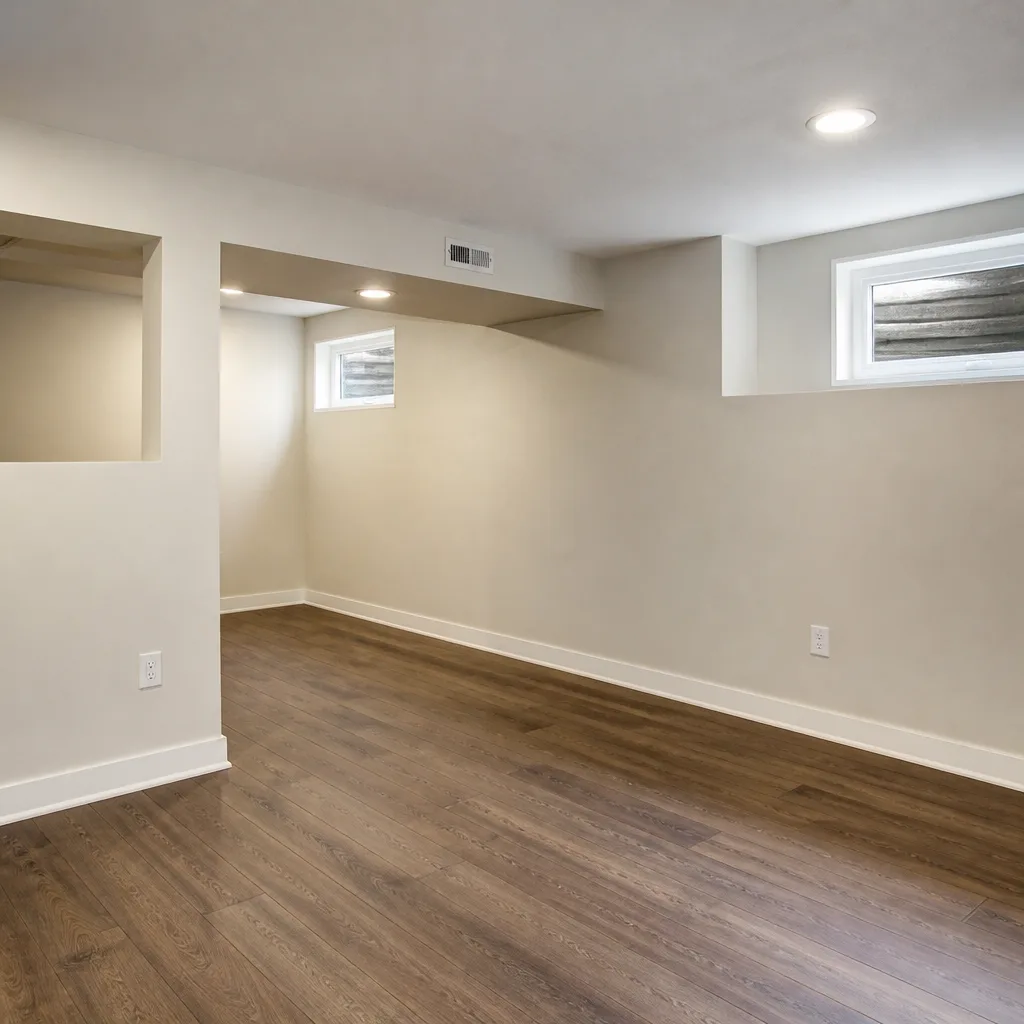 Mold remediation
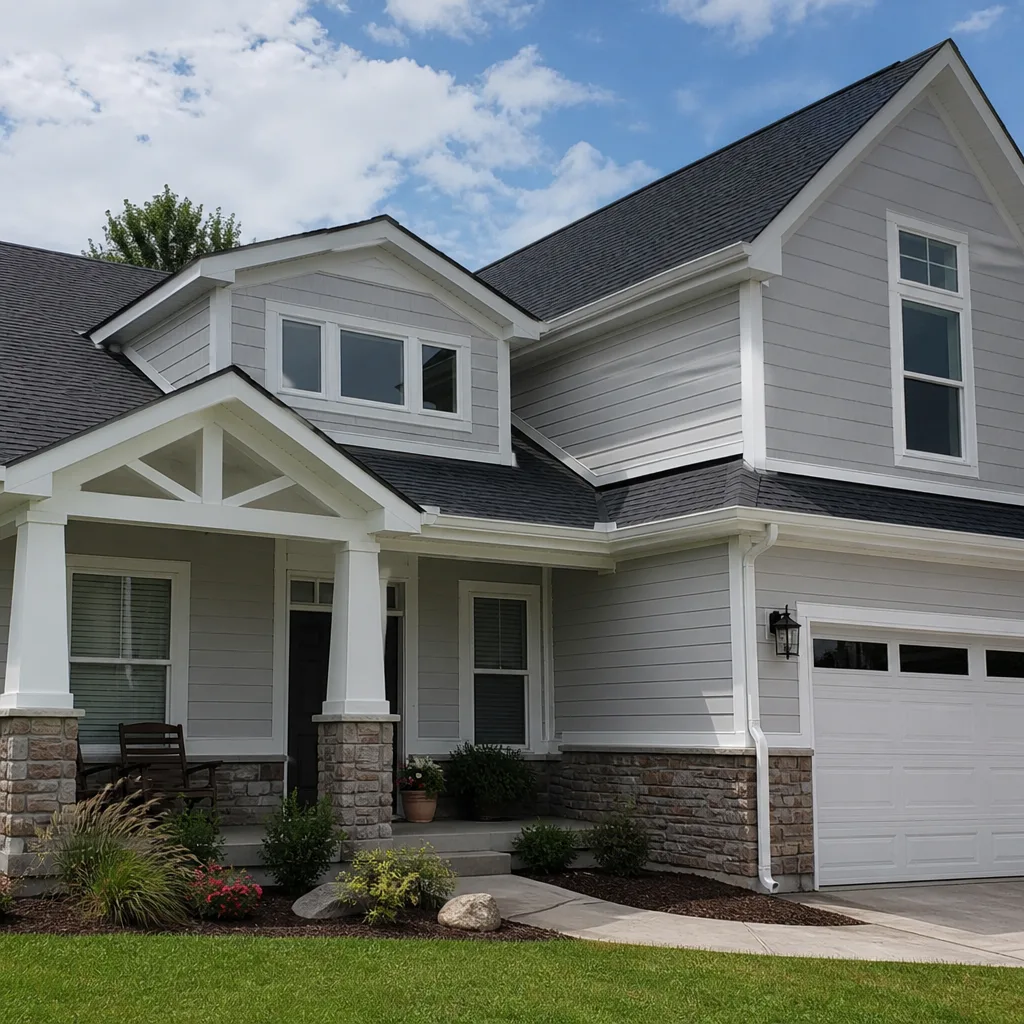 Storm response
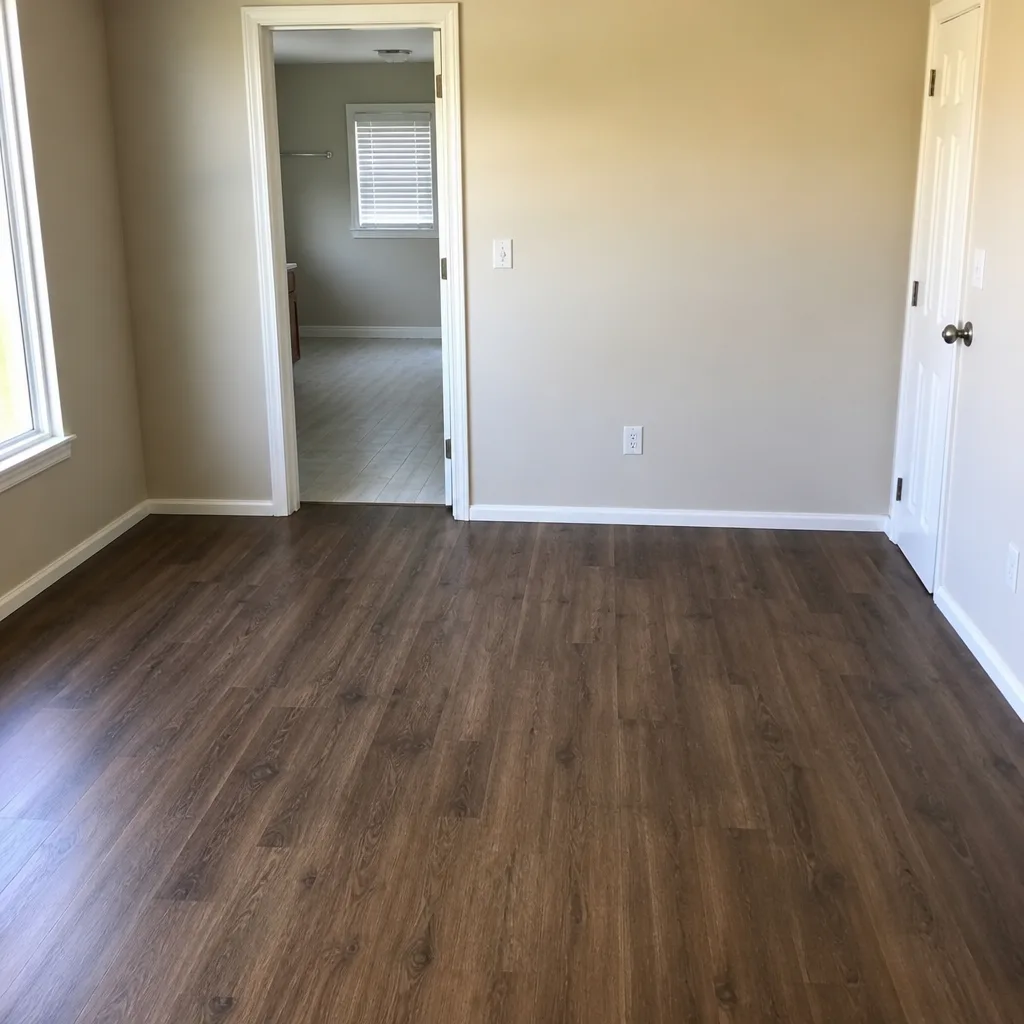 Sewage cleanup
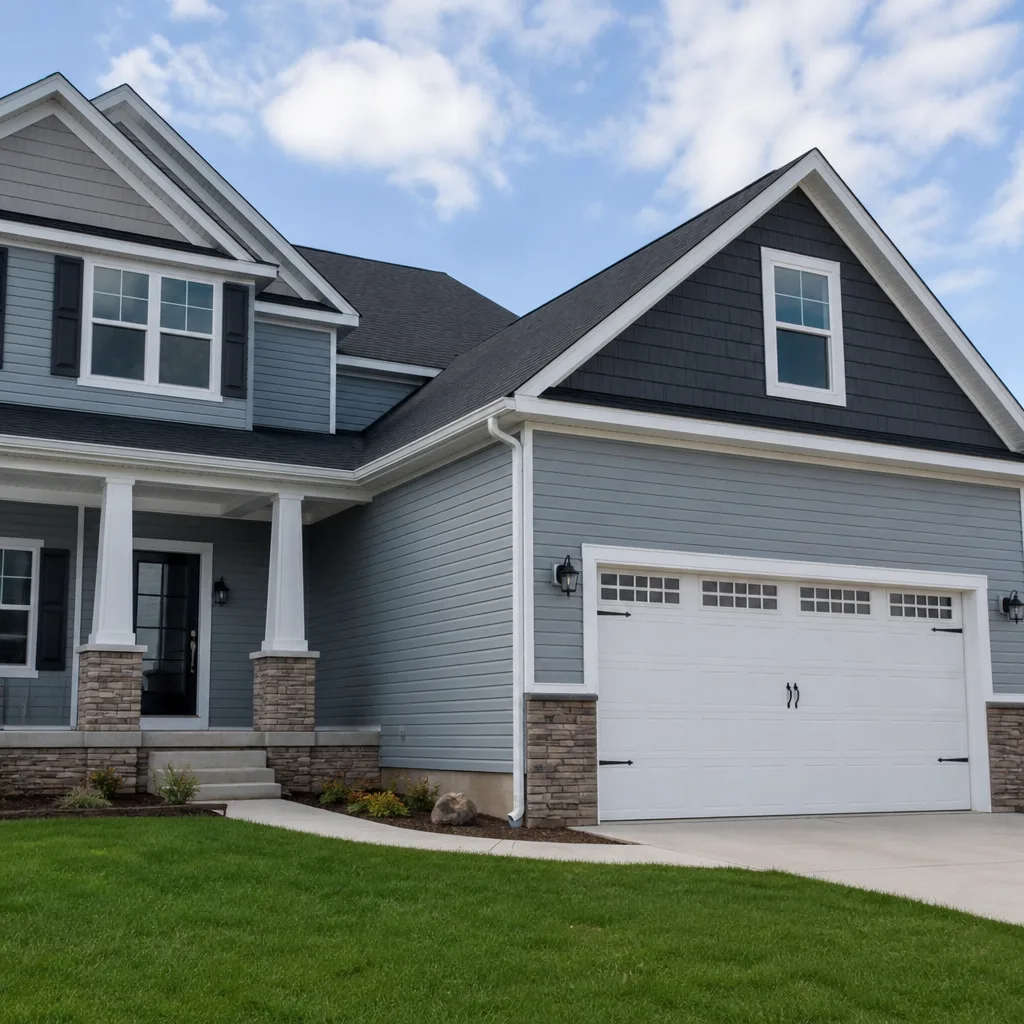 Reconstruction
Free visual inspection and a written scope of work before any mitigation begins - photos, moisture readings, and drying logs go in your claim file
The scope we write is the scope we bill. Anything new gets shown to you, in writing, before we touch it.
Get your free estimateWater Damage Restoration in Corona, CA: What It Costs and What to Do First
Water damage restoration in Corona typically runs $1,800 to $6,500 for a standard single-room water loss, with full mitigation and structural drying. Emergency extraction alone usually lands between $450 and $900, while a slab leak that has wicked under flooring across multiple rooms can push past $9,000 before reconstruction even starts. If you’re standing in water right now, shut off the main valve and call us at (833) 589-7005 – the sooner extraction starts, the less demolition you’ll face.
Corona’s housing stock creates damage patterns we don’t see in newer Inland Empire cities. This page explains why, what it costs here specifically, and how our Water Damage Restoration process handles the city’s particular mix of slab leaks, storm intrusion, and wildfire-adjacent moisture problems. We’re OC Restoration Co, and we’ve worked Corona homes long enough to know exactly where the trouble hides.
Fast, Reliable Water Damage Restoration Across Corona
When a supply line lets go in a Corona home at 2 a.m., you don’t have time to research restoration companies. You need a crew that knows the difference between a slab leak in the older core and a second-floor laundry failure in south Corona, because the drying strategy is completely different. We dispatch to every Corona neighborhood – from the river-adjacent streets near Sixth Street to the foothill tracts off Foothill Parkway – with commercial extraction and drying equipment already loaded.
Our IICRC-certified technicians arrive with moisture meters, thermal imaging cameras, and the training to read what they find. That matters in Corona specifically, because so many water losses here start out of sight: under slabs, inside wall cavities, behind baseboards. If the crew doesn’t know where to look, you get surface drying and a mold problem six weeks later. Call (833) 589-7005 and we’ll have equipment running the same day.
Key takeaways for Corona homeowners:
- Slab-on-grade homes in central Corona hide water migration under flooring for weeks before visible damage appears.
- South Corona’s two-story stucco homes fail most often at second-floor bathroom and laundry supply lines.
- River-adjacent neighborhoods carry category 3 flood risk during atmospheric river storms – this requires full drywall removal, not just extraction.
- Every job includes drying logs and moisture documentation your insurance adjuster can use without back-and-forth.
Restoration work we handle
Why OC Restoration Co Is Corona’s Preferred Water Damage Restoration Company
Corona homeowners call us because the alternative – a general contractor who “also does water damage” – tends to skip the documentation and structural drying that insurance claims require. We’re IICRC-certified, which means our techs train to a documented standard, not someone’s informal apprenticeship. Allen Burkhart built OC Restoration Co around that distinction, and it’s why adjusters in the Inland Empire recognize our drying logs and scope documentation without questions.
We also carry RIA membership, which holds us to a professional code of ethics and continuing education requirements. In practical terms, that means a Corona homeowner gets an honest assessment, a written scope before work starts, and no overselling. Our local reputation reflects it: property managers in Eastvale and Norco refer us to their Corona clients because they know the work gets done to protocol the first time.
Response time to Corona is a matter of logistics, not luck. Our equipment is staged for this service area, so a flooded basement near the Santa Ana River doesn’t wait on gear coming from Orange County. We roll with Dri-Eaz dehumidifiers, Phoenix air movers, and XPOWER extraction units already packed – the same commercial-grade lines national restoration firms run, not rental-store substitutes.
Water Mitigation in Corona
Water Mitigation in Corona means something different than it does in most of the Inland Empire because the city’s slab-on-grade construction in the older core hides water migration under flooring for weeks. A pinhole leak in a copper slab line doesn’t pool on the surface. It wicks through the slab, saturates carpet tack strips and baseboards, and spreads under vinyl or tile until the homeowner notices a musty odor or buckling. By then, category 2 water has often traveled under three rooms. Mitigation here starts with moisture mapping and thermal imaging to find the actual migration path, not just the visible stain.
Slab Leak Discovery and Containment
When a Corona homeowner hears water running with no fixtures on, the first call should be to a plumber to isolate the leak, then to us for the water damage response. We set containment at the affected area’s perimeter and run injective drying where possible – Injectidry systems are specifically effective for pulling moisture from under slab edges and wall cavities without tearing out finished surfaces. The alternative, surface-only drying, leaves hidden moisture that feeds mold in the crawlspace-adjacent areas common to older central Corona homes.
Structural Drying With Documentation
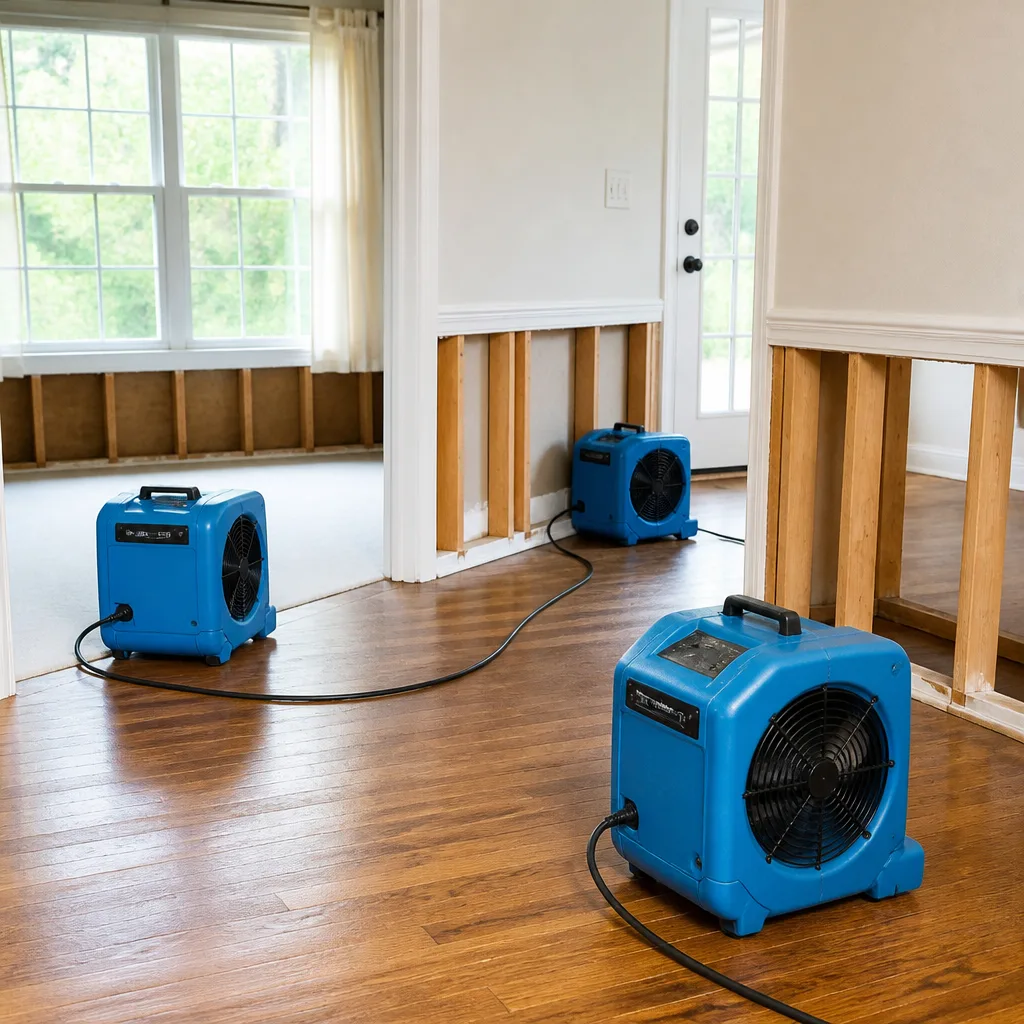
Every mitigation job in Corona gets a drying log with daily moisture readings, psychrometric data, and photo documentation. That’s not a luxury. When your adjuster reviews a slab leak claim, they want to see that the drying target was reached and verified. We run Dri-Eaz dehumidifiers sized to the cubic footage of the affected area, not a one-size-fits-all count. Typical water mitigation in Corona lands between $1,800 and $5,500 depending on how many rooms the slab leak migrated under and whether baseboard removal is required.
Flooded Basement in Corona
A Flooded Basement in Corona is usually a storm-water event tied to the city’s older river-adjacent neighborhoods, where aging clay drain lines back up during atmospheric river storms. Homes near the Santa Ana River corridor – especially the mid-century tracts off Sixth Street and points north – sit low enough that saturated ground pushes water through foundation cracks and floor drains. This water is category 3 by definition: it has been in contact with ground soil, storm runoff, and possibly sewage. The correct response is not just extraction. It’s full removal of affected drywall, insulation, and carpet, followed by antimicrobial treatment and structural drying.
Category 3 Storm-Water Response
When storm water backs up into a Corona basement, the first 24 hours determine whether you lose drywall or framing. We extract standing water with truck-mounted units, cut away saturated drywall to expose the wall cavity, and remove insulation that has wicked contamination. Then we treat all exposed framing with an EPA-registered antimicrobial and run the drying array. Skipping the antimicrobial step in a category 3 loss is how homes end up with musty basements that never fully recover. Expect $2,200 to $7,000 for a typical category 3 basement response in Corona, with the higher end reflecting finished basements where drywall and flooring removal is extensive.
Drain Line Backup and Flood-Cut Protocol
Many older Corona homes run original clay or cast-iron drain lines that have cracked, bellied, or root-intruded over 50-plus years. During heavy winter storms, those lines back up into basements and ground-level bathrooms. Our crews handle the water damage side after the drain issue is addressed, and we know the flood-cut protocols for this housing stock: cut 18 to 24 inches above the water line, not a conservative 12. Corona’s slab homes wick moisture higher than you’d expect because of the thermal mass of the concrete itself.
Trusted Brands We Service in Corona
We stock parts and consumables for the equipment running in hundreds of Corona homes right now: Dri-Eaz dehumidifiers, Phoenix air movers, and Injectidry drying mats configured for slab-edge and wall-cavity applications. That matters because if a dehumidifier fault-codes on day three of a drying cycle, a Corona homeowner shouldn’t have to wait for a part from a warehouse in another county. Our service trucks carry replacement filters, hoses, and sensors. When you call us for water damage restoration in Corona, the brand on the equipment is the same one your insurance adjuster would specify if they wrote the recommendation themselves.
See the difference
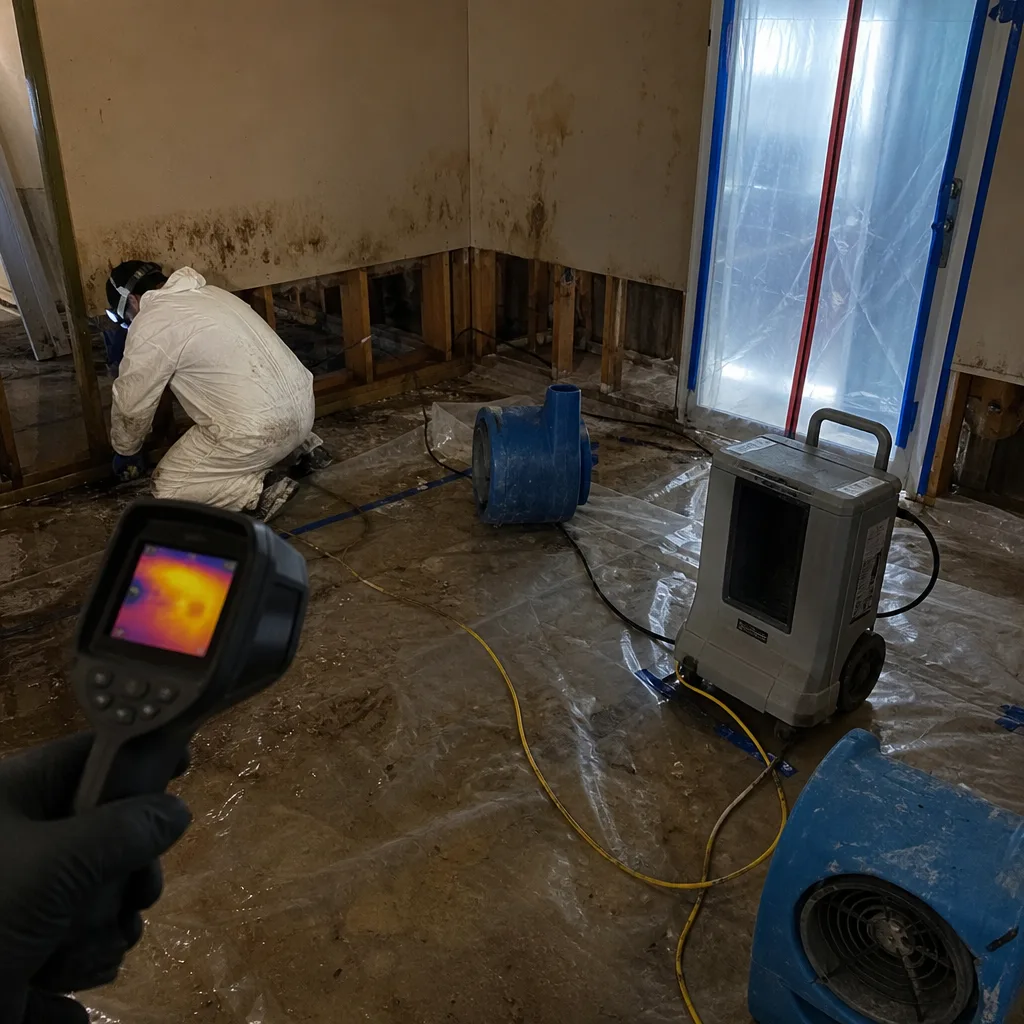 Before
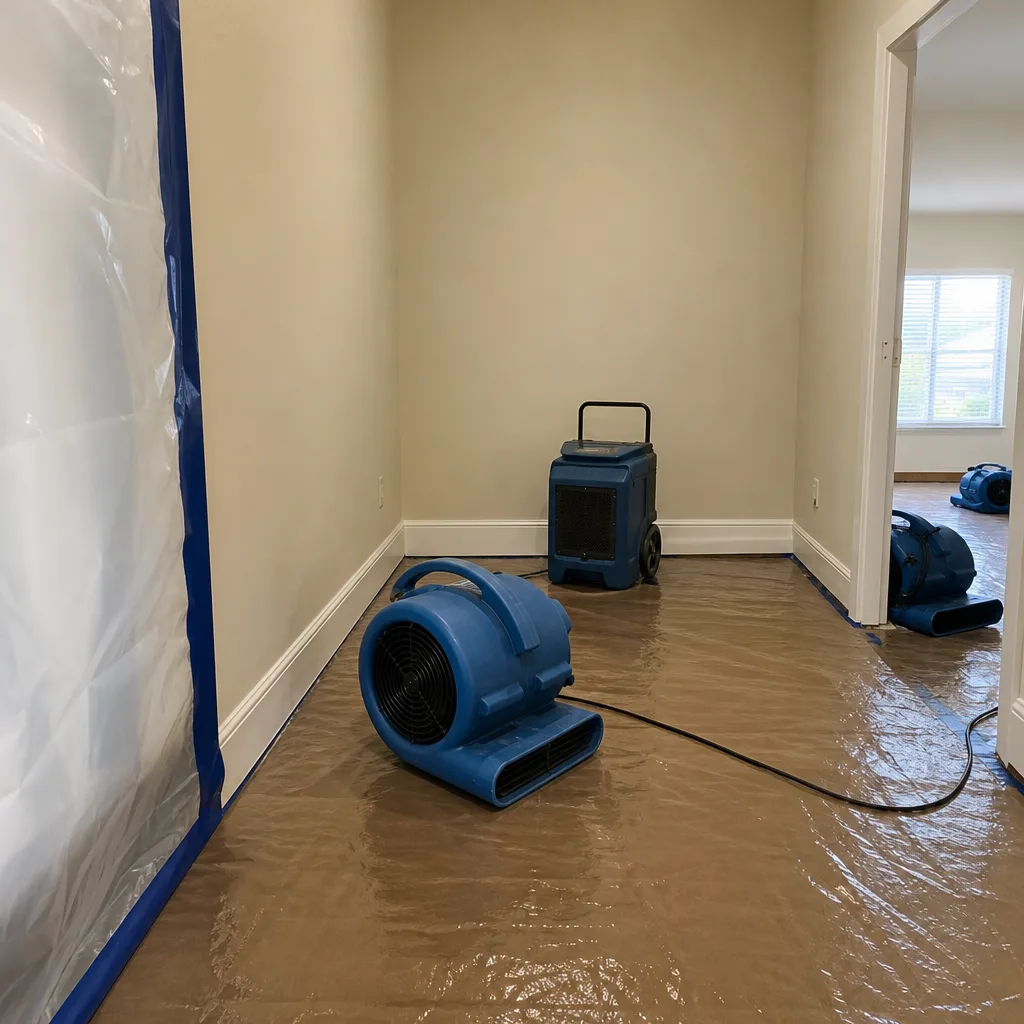 After
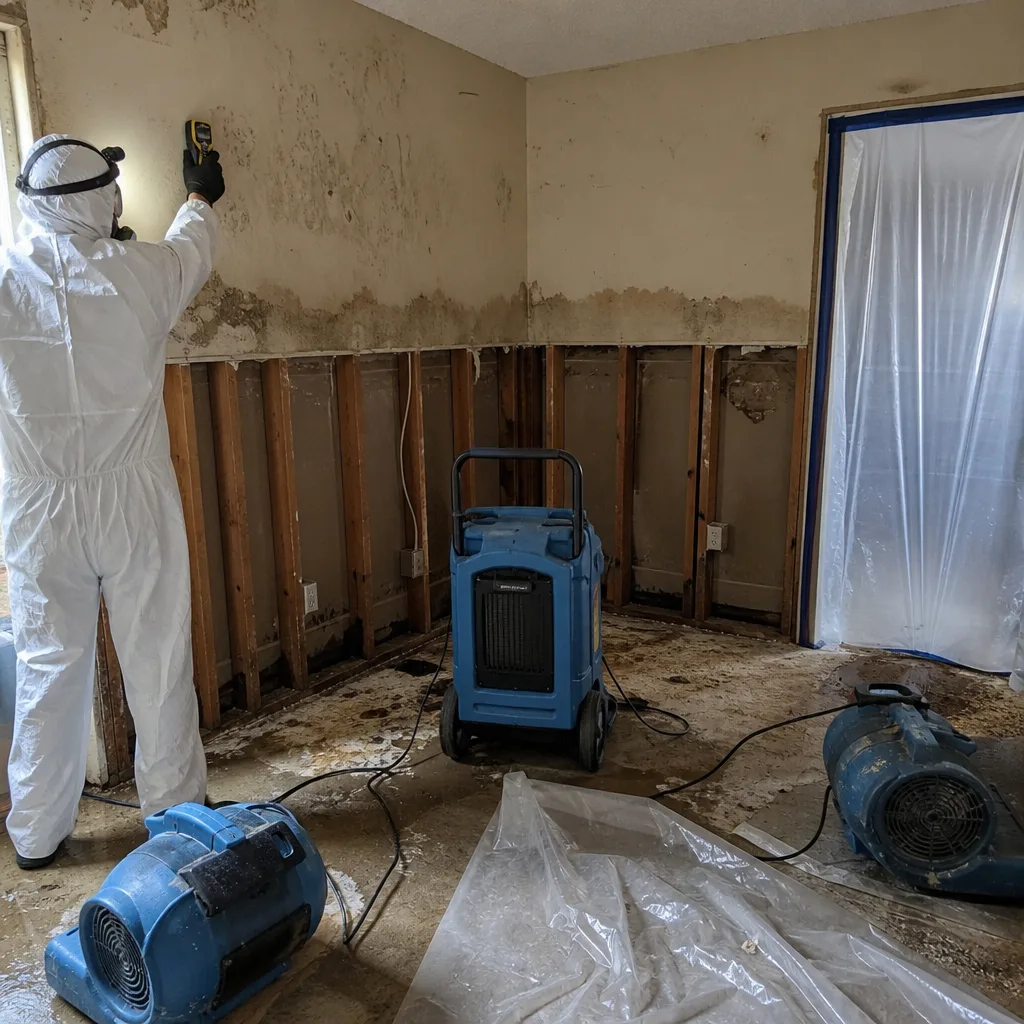 Before
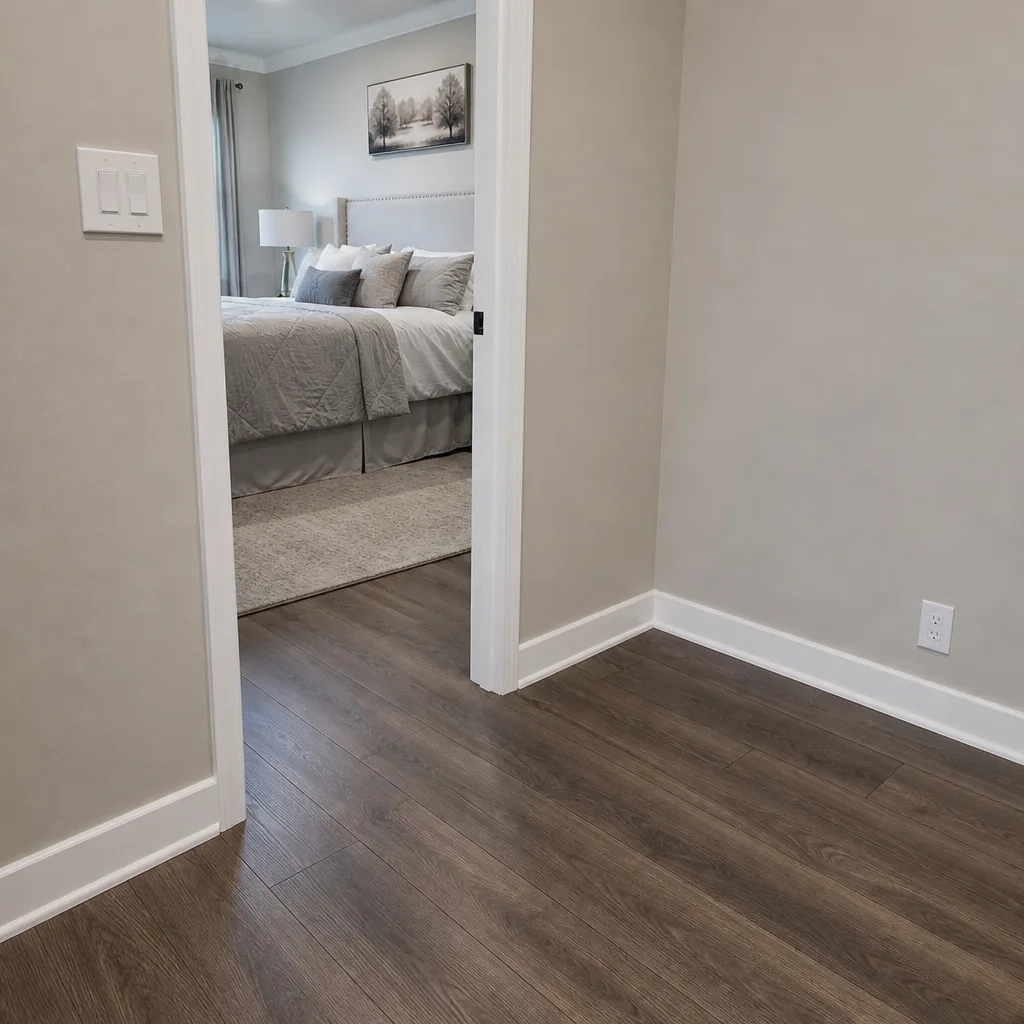 After
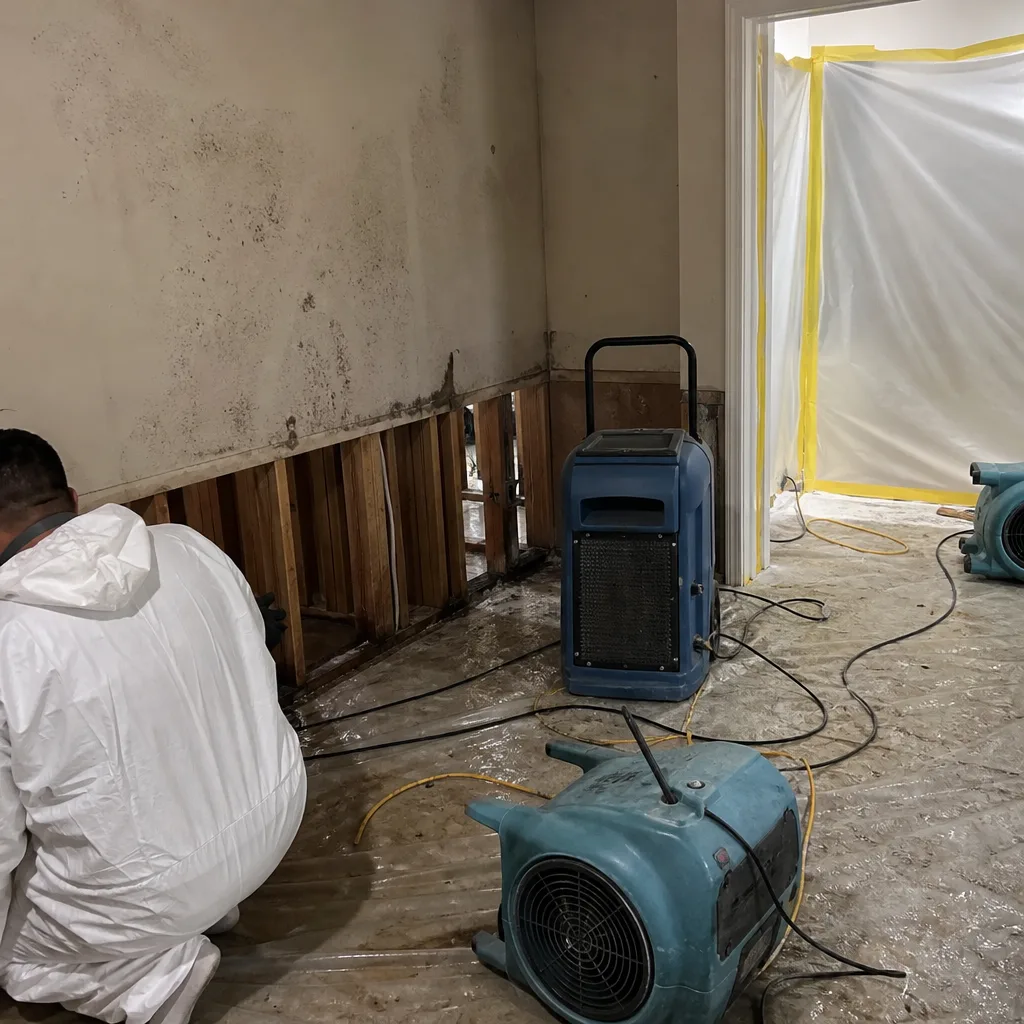 Before
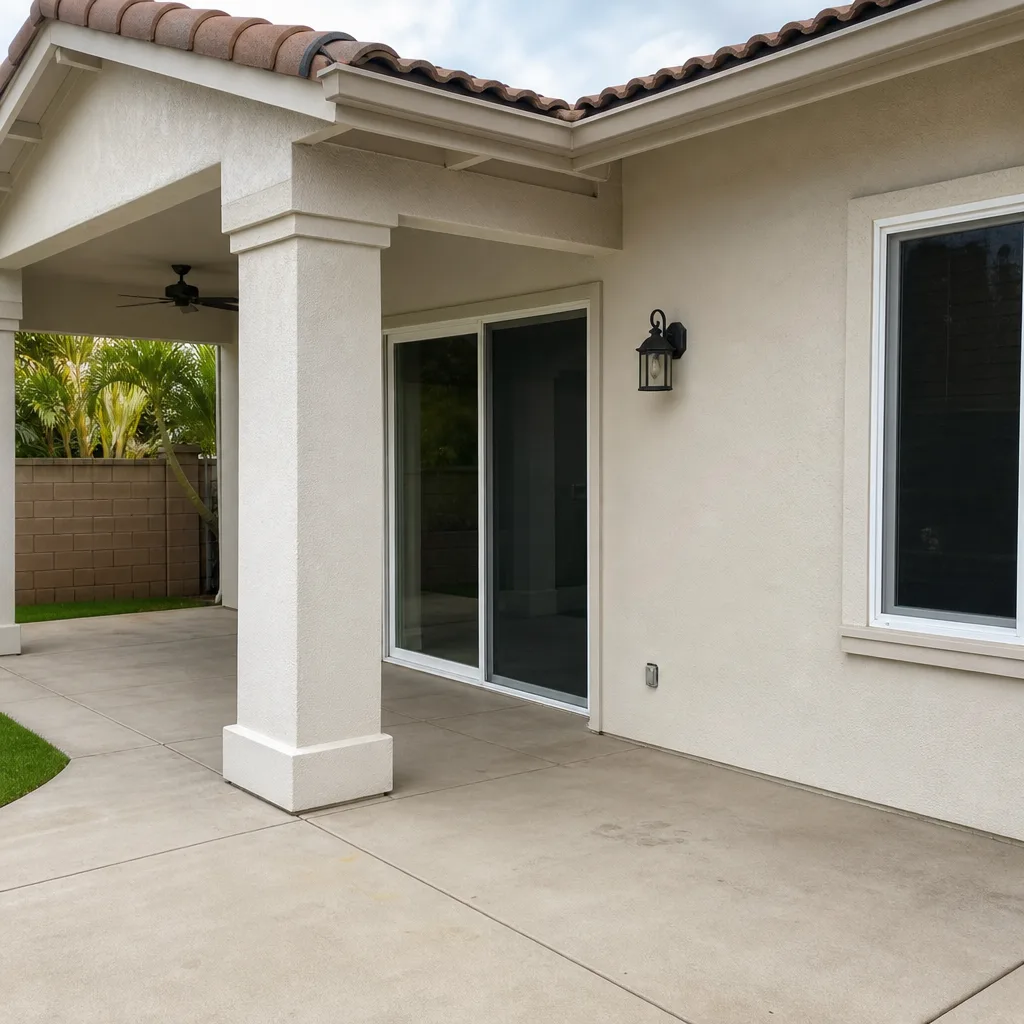 After
Common Water Damage Restoration Problems We See in Corona Homes
- Under-slab copper pinhole leaks. Corona’s older core runs decades-old copper supply lines under poured slabs, and mineral content in the local water accelerates pinhole corrosion. The leak goes unnoticed for weeks because water wicks under carpet and vinyl instead of pooling.
- Second-floor supply failures in south Corona. The 1980s to 2000s stucco-and-tile homes south of the 91 freeway put bathrooms and laundry rooms on the second floor, and when those braided supply lines or drain pans fail, water cascades through the ceiling below within minutes.
- Atmospheric river overland flooding near the river. Homes in the lower-lying tracts near the Santa Ana River face drain-line backups and groundwater intrusion during intense winter storms, and the water carries silt, debris, and contamination that requires full removal rather than extraction alone.
- Attic insulation trapping moisture after roof leaks. Hillside homes in south Corona often have original builder-grade flex duct and blown-in insulation that soaks up roof-leak water and hides it from view, creating concealed mold growth in the attic cavity that surface drying never addresses.
We responded to a 1960s single-story stucco home off Sixth Street near the Santa Ana River where a pinhole leak in a copper slab line had quietly saturated the pad for weeks. Our techs used moisture mapping and thermal imaging to trace the migration under the slab, then set up containment and structural drying with Dri-Eaz dehumidifiers and air movers. After water extraction and antimicrobial treatment, drying logs confirmed the assembly reached pre-loss condition without a full floor tear-out.
That’s the difference between a restoration pass and a guess. Slab leaks in Corona’s older core don’t announce themselves. They hide under flooring and wick through the concrete thermal mass until baseboards buckle or the smell gives it away. Finding the full migration path is what keeps a $3,000 mitigation from becoming a $20,000 full-floor replacement.
Pricing for Water Damage Restoration in Corona, CA
Water damage restoration in Corona breaks down across a few categories: emergency extraction of standing water runs $450 to $900 for a single affected room, while full water mitigation with structural drying typically lands between $1,800 and $5,500 depending on the square footage and whether baseboards or drywall come out. Flooded basements with category 3 storm water run higher – $2,200 to $7,000 – because the removal scope includes drywall flood-cuts, insulation removal, and antimicrobial treatment. Slab leaks are the wild card: a single-room slab leak response may run $2,000 to $4,500, but a slow under-slab leak that migrated under three rooms of vinyl or carpet can push past $9,000 before any flooring replacement enters the picture. What moves the final number in Corona, more than anything, is how early the leak was caught. Early slab leak calls with minimal migration stay under $3,000. Six-week-old leaks do not.
Estimates are free, and we’ll give you a written scope before any work starts. Call (833) 589-7005 and we’ll route a crew to your Corona address with equipment staged for the specific housing type – slab core, second-floor south Corona, or river-adjacent flood zone.
We Also Serve Cities Near Corona
Our crews routinely handle water losses across the surrounding Inland Empire communities, including Home Gardens, El Cerrito Corona, Eastvale, and Norco. If you’re in one of those cities and need Water Damage Restoration with the same protocol-driven approach we bring to Corona, call us at (833) 589-7005 – response times to these adjacent areas are typically under 90 minutes.
Serving Corona, CA — Our Local Coverage Area
We’re based in the Corona area and know this community well. Use the map below to see our service coverage — if you’re nearby, we can almost certainly help.
FAQs About Water Damage Restoration in Corona
Yes. In Corona’s older tract homes, the sound of running water with all fixtures off is the classic signature of an under-slab supply line leak, usually a pinhole in decades-old copper. The water is migrating through the slab and into flooring, baseboards, and wall cavities – often without any visible pooling. Shut off your main valve and call us at (833) 589-7005. We’ll map the migration with moisture meters and thermal imaging before any tear-out happens, and a plumber will need to isolate and repair the leak itself while we handle the water damage side.
Yes. Storm water that has run over ground, through foundation cracks, or backed up through drain lines is category 3 water – it carries silt, bacteria, and potentially sewage. The restoration protocol for category 3 in Corona is full removal of affected drywall, insulation, and porous flooring, followed by antimicrobial treatment and structural drying. You cannot extract-and-dry a category 3 basement in this neighborhood and expect a healthy outcome. Call (833) 589-7005 right away; the longer saturated drywall sits, the more of it has to come out.
Mold colonization typically begins within 24 to 48 hours of a water event, and in south Corona’s attic cavities and second-floor ceiling assemblies, it can move faster because heat trapped in the attic accelerates growth. If a roof leak or second-floor supply failure has soaked insulation or drywall, the drying window closes fast. Our drying arrays run from day one, and we document moisture readings daily so you’re not guessing whether the assembly actually dried to pre-loss condition.
Yes. Every water damage restoration job we perform in Corona includes daily drying logs with moisture content readings from affected materials, psychrometric data from the drying environment, and photo documentation from before, during, and after. This is the documentation standard insurance adjusters expect, and it’s what protects your claim from being underpaid or scrutinized later. We coordinate directly with your adjuster and provide the records in a format they can use without back-and-forth.
We run Dri-Eaz dehumidifiers, Phoenix air movers, and XPOWER extraction units – commercial-grade equipment, not rental-store or consumer alternatives. For under-slab and wall-cavity drying specific to Corona’s slab-on-grade housing, we use Injectidry systems that pull moisture from within framing and under flooring without unnecessary demolition. Call (833) 589-7005 for a free estimate and we’ll size the equipment to your specific loss, not a generic room count.
Call OC Restoration Co for Water Damage in Corona
If water is flowing, time is demolition. Call (833) 589-7005 and we’ll dispatch an IICRC-certified crew to your Corona address with commercial extraction and drying equipment ready to run. We’ll give you a written scope before any work starts, document every step for your insurance claim, and stand behind the drying to protocol. Allen Burkhart and the OC Restoration Co team are ready when you need us.
Written by Allen Burkhart, Owner at OC Restoration Co, serving Corona since the company’s founding.