
 Water damage drying
 Fire & smoke cleanup
 Mold remediation
 Storm response
 Sewage cleanup
 Reconstruction
Free visual inspection and a written scope of work before any mitigation begins - photos, moisture readings, and drying logs go in your claim file
The scope we write is the scope we bill. Anything new gets shown to you, in writing, before we touch it.
Get your free estimateFast, Reliable Water Damage Restoration Across Rancho Cucamonga
Water damage restoration in Rancho Cucamonga typically costs $1,800 to $6,500 for a full scope, with emergency water extraction alone running $500 to $1,200. Most jobs can begin the same day you call, because we keep crews staged across the Inland Empire and know the fastest routes into every part of the city, from the 91737 foothills down to the 91701 corridors. This is a city where water behaves differently than it does thirty miles west. Flash floods off the San Gabriels, Santa Ana wind-driven rain through stucco cracks, and post-fire ash that mixes with winter moisture all create damage patterns we’ve mapped block by block. If water is spreading through your home right now, call (833) 589-7005. We answer live, and we’ll tell you exactly what to do while we dispatch a crew to Rancho Cucamonga.
Key Takeaways for Rancho Cucamonga Homeowners
- Water extraction and drying in Rancho Cucamonga run $1,800 – $6,500 depending on square footage and how far water migrated through slab-on-grade construction.
- Santa Ana wind events cause a specific type of water damage here: wind-driven rain entering through lifted stucco cracks and shed tile roofs.
- Homes in the 91737 and 91739 foothill zip codes face a compounding risk when wildfire ash mixes with rain, creating hidden moisture in attics and walls.
- We use Injectidry structural drying systems that pull water from inside wall cavities without cutting out drywall, so 1980s and 1990s tract homes can often avoid major demolition.
- Call (833) 589-7005 for a free estimate. We’ll give you a written scope before any work starts.
Restoration work we handle
Why OC Restoration Co Is Rancho Cucamonga’s Preferred Water Damage Restoration Company
Rancho Cucamonga homeowners call us after the water wins: a burst supply line in a 1994 tract home off Haven Avenue, a failed water heater in a slab-on-grade garage near Victoria Gardens, a Santa Ana wind event that sheared tiles off a roof in the 91739 foothills. We’ve worked those neighborhoods. We know that homes built during the city’s 1980s through 2000s building boom share plumbing layouts and roof penetrations block by block, so when we arrive at a water damage call, we already know where to look for the source and where the water traveled.
Our team is IICRC-certified, which means every technician is trained to documented restoration industry standards, not informal company habits. We’re also active members of the Restoration Industry Association (RIA) and IFA, networks that hold us to continuing education requirements and a professional code of ethics. For Rancho Cucamonga homeowners mid-claim, that matters: insurance adjusters recognize these credentials, and our photo-documented, protocol-driven process gives them what they need to process your claim cleanly. Allen Burkhart leads our operations, and he holds every crew to the same standard: a written scope before work begins, daily moisture readings logged, and no demolition beyond what’s necessary.
Water Damage Repair in Rancho Cucamonga
Water Damage Repair in Rancho Cucamonga usually means restoring what the water touched: drywall, insulation, baseboards, flooring, and sometimes cabinetry in kitchens and bathrooms. A homeowner typically needs this after the standing water is gone but the materials are still saturated, warped, or stained. In this city, the most common repair call involves slab-on-grade construction where water runs under baseboards and into wall cavities, wicking up drywall before you see a stain on the interior side.
Repair costs in Rancho Cucamonga run $800 to $3,500 for typical water-damaged drywall and trim replacement, and climb higher when tile or hardwood flooring is involved. We approach repair as the final phase of a full restoration, not a patch job. That means we verify moisture levels are back to pre-loss condition before we hang new drywall, because sealing moisture behind a patch is how hidden mold starts in this dry climate’s wall cavities.
Drywall and Trim Restoration
The most visible part of most repairs. We cut out only what’s saturated, match texture and paint on the stucco-tract interiors common across Rancho Cucamonga, and leave the room ready for paint. In many 1980s and 1990s homes, original drywall texture is a hand-troweled or orange-peel finish, and matching it properly keeps repair work invisible.
Slab and Baseplate Drying
When water runs under a wall on a slab foundation in Rancho Cucamonga, the baseplate and bottom plate wick moisture upward. We install Injectidry mats that pull water out through the drywall itself, avoiding the need to cut open the wall in many cases. This is the difference between a two-day repair and a two-week rebuild for a lot of tract homes here.
Water Mitigation in Rancho Cucamonga
Water Mitigation in Rancho Cucamonga is the step that stops further damage: extraction, containment, structural drying, and dehumidification. You need it the moment water intrusion stops being a trickle and starts saturating building materials. In this city, mitigation often races against two things: the dry Santa Ana winds that can actually accelerate evaporation on surfaces while trapping moisture deeper inside walls, and the winter storm bursts that come fast and leave water in places you won’t see for days.
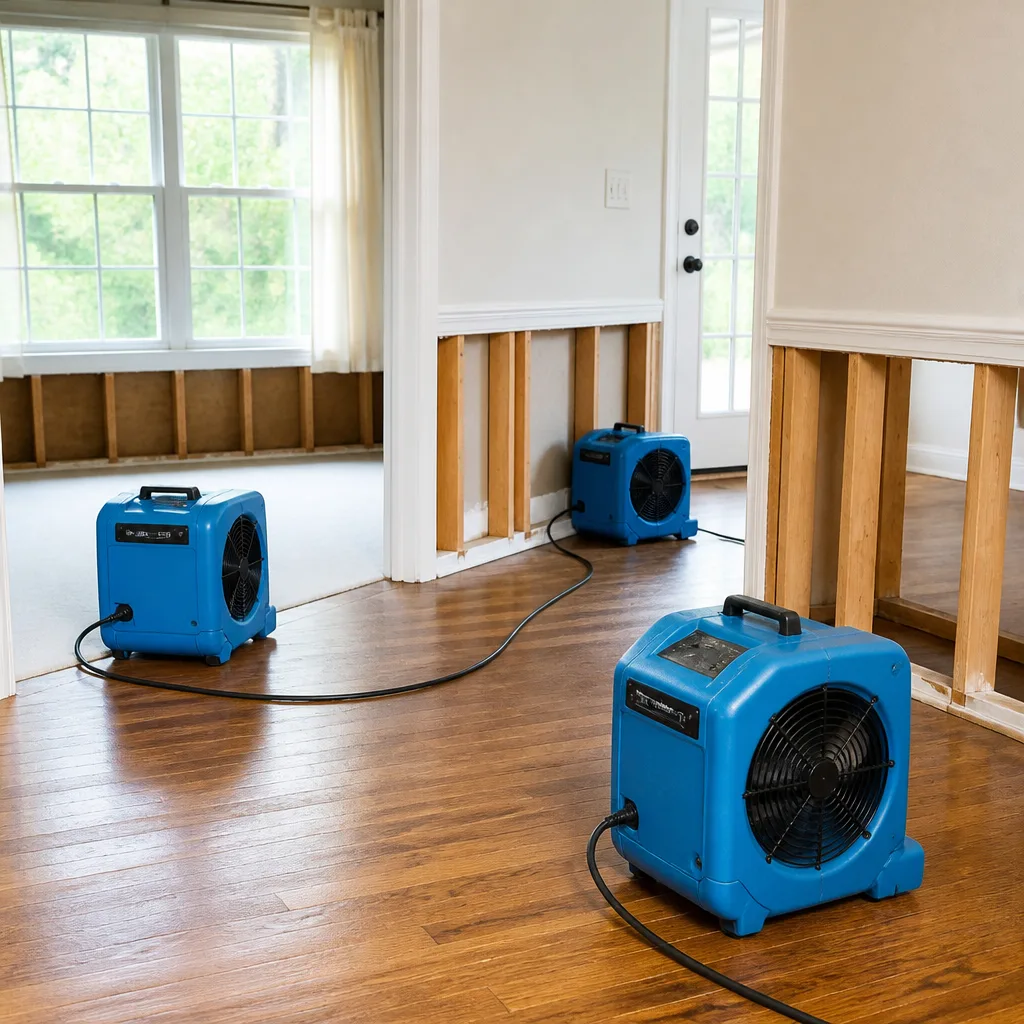
Mitigation in Rancho Cucamonga runs $1,200 to $4,000 for a typical single-room water event, and higher when multiple rooms or the attic are involved. We use commercial-grade equipment from Dri-Eaz, Phoenix, and Injectidry. These aren’t rental-shop machines. They’re the same dehumidifiers and air movers used by national restoration firms, sized for fast structural drying rather than surface evaporation. The goal is to get your home’s moisture levels documented back to normal, not just to make things feel dry.
Containment and Controlled Drying
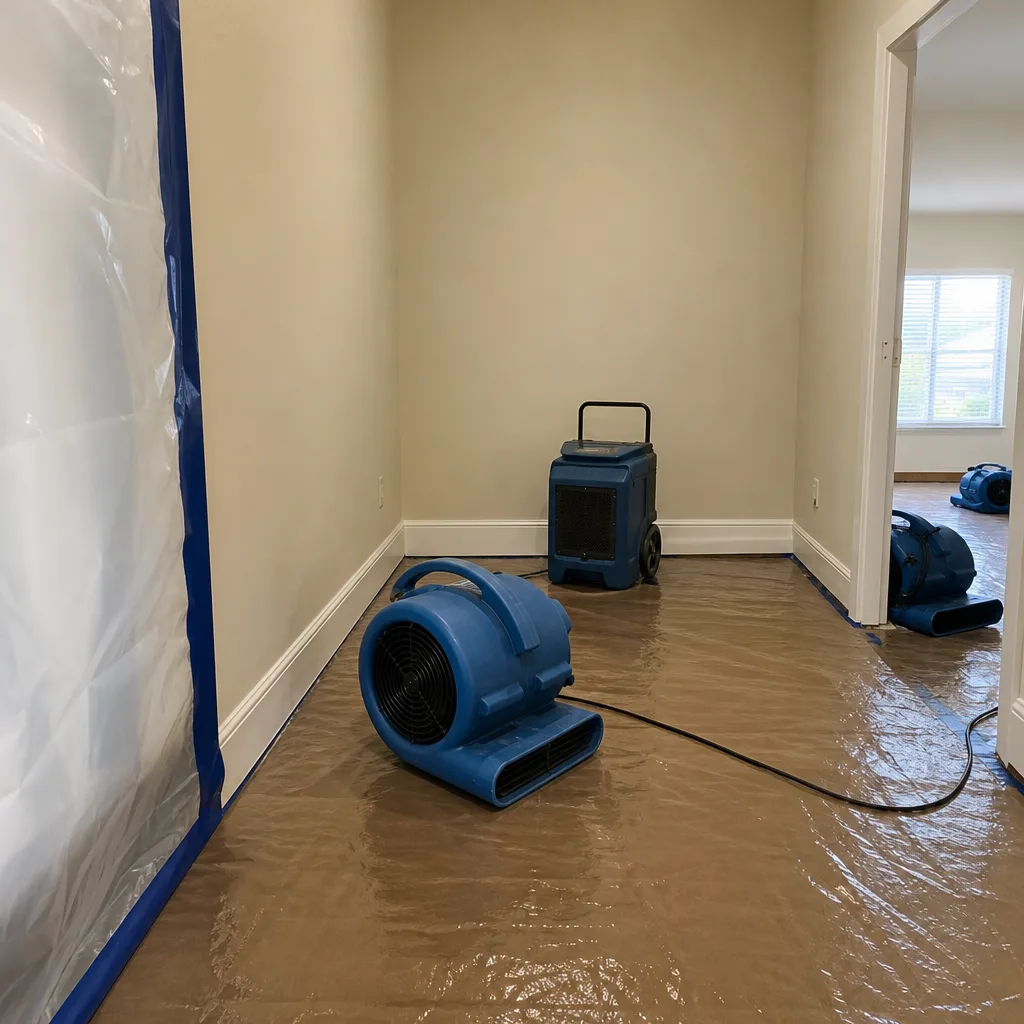
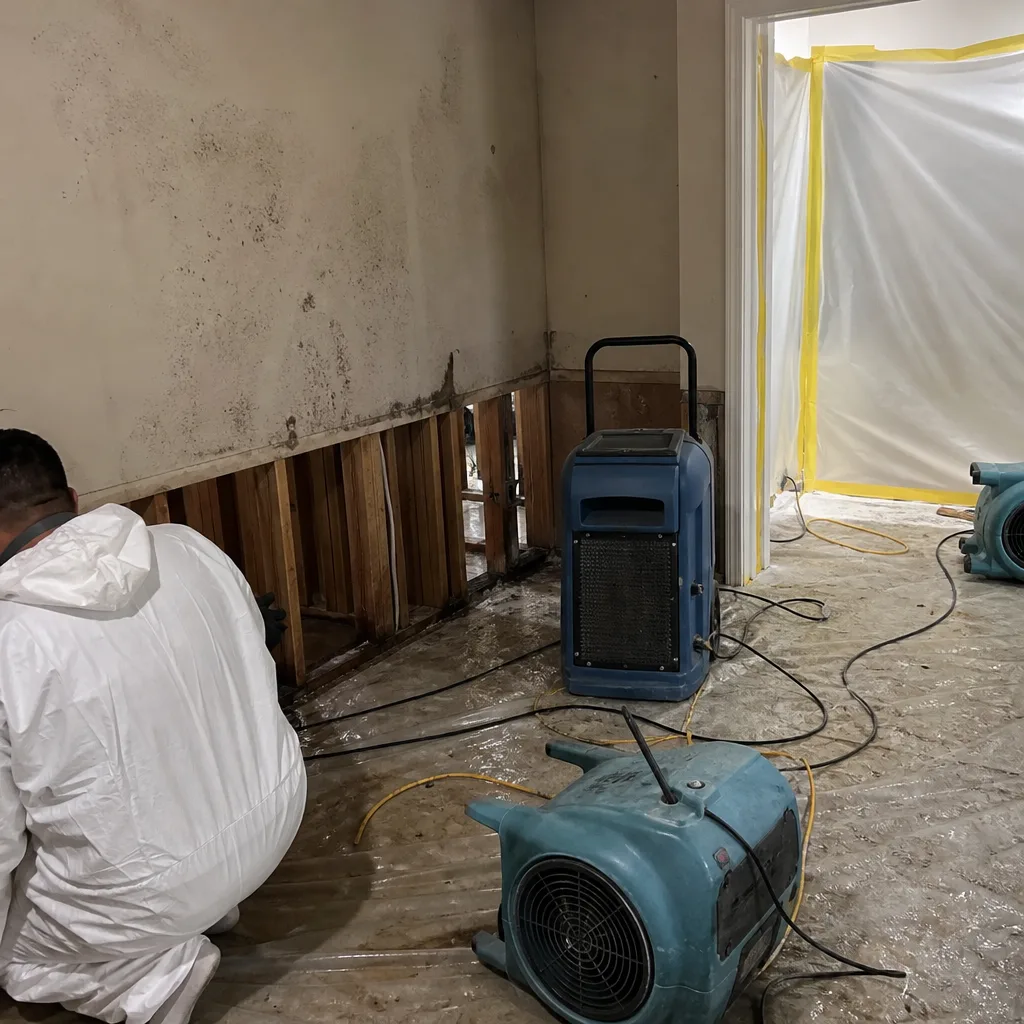
We seal off affected areas, set up negative air pressure where needed, and place dehumidifiers and air movers according to the IICRC’s water restoration standard. In Rancho Cucamonga’s stucco tract homes, this often means drying wall cavities through small access points rather than removing whole sheets of drywall.
Moisture Mapping and Documentation
We log moisture readings daily, not on a clipboard but digitally, so your insurance adjuster and you both see the drying curve. That documentation is standard on every job. When a wall goes from 28% moisture content back to 8% over four days, you can see the data, and so can your adjuster.
Trusted Brands We Service in Rancho Cucamonga
Rancho Cucamonga’s housing stock is heavily 1980s through 2000s tract construction, so our service calls are usually independent of brand loyalty: the enemy is time and water, not a manufacturer’s defect. But we regularly work on water heaters and plumbing fixtures from Rheem, Bradford White, Moen, Delta, and Whirlpool, and our field crews carry common fittings and supply lines on the truck. That shortens the turnaround for Rancho Cucamonga customers by eliminating parts runs across the city. If you’ve got original builder-grade plumbing from a 1996 master-planned development off Baseline Road or a newer system from the Victoria Gardens area, we can assess it on site and start mitigation without waiting on parts.
Common Water Damage Restoration Problems We See in Rancho Cucamonga Homes
- Stucco cracks at penetrations: The Mediterranean and Spanish-style tract homes that dominate this city develop hairline cracks at stucco joints, hose bibs, and electrical penetrations. Santa Ana-driven rain forces water into those cracks at an angle, and the first sign of damage is often a soft wall or a musty smell, not a visible stain.
- Shed tile roofs from Santa Ana winds: Tile roofs look durable but they rely on underlayment, which degrades under UV and repeated wind lift. When a Santa Ana event strips tiles and underlayment together, water runs into attic insulation and down wall cavities, showing up as ceiling stains days later.
- Post-fire ash intrusion in foothill homes: After a foothill fire, fine ash collects in attic vents and on tile roofs in the 91737 and 91739 zip codes. When winter rains arrive, that ash traps moisture against surfaces and creates a hidden reservoir that promotes mold inside wall cavities, even in homes that never saw a flame.
- Slab-on-grade water migration: Most homes here sit on concrete slabs, so water from a burst supply line or overflowing fixture spreads horizontally under flooring and wicks upward through bottom plates. By the time you see it on the surface, it has already traveled further than you’d think, which is why we moisture-map before we start drying.
See the difference
 Before
 After
 Before
 After
 Before
 After
The Block-by-Block Failure Pattern of Rancho Cucamonga’s Tract Housing
Here’s something you won’t read on a generic water damage restoration page. Rancho Cucamonga’s 1980s and 1990s master-planned tracts were built fast, and they were built in phases. A single developer might put up two hundred homes in a single year using the same floor plan, the same plumbing rough-in, the same roof penetrations, and the same stucco application method. That means a water damage failure on one street is not a one-off. It’s a signal.
When we get a call about a water heater flood or a wind-driven rain intrusion on one block, we often find the same failure point in neighboring houses days or weeks later. A lifted stucco crack at a garage penetration on a home off Day Creek Boulevard tells us that every home on that side of the street with the same elevation and exposure is vulnerable. A failed supply line at a specific copper fitting in a 1997 tract near Victoria Gardens means other homes in that phase share the same weak point. Coastal LA’s housing stock is too varied to produce these patterns. Rancho Cucamonga’s is not. That’s why our crews know this city block by block, and why we dry and repair with those patterns in mind.
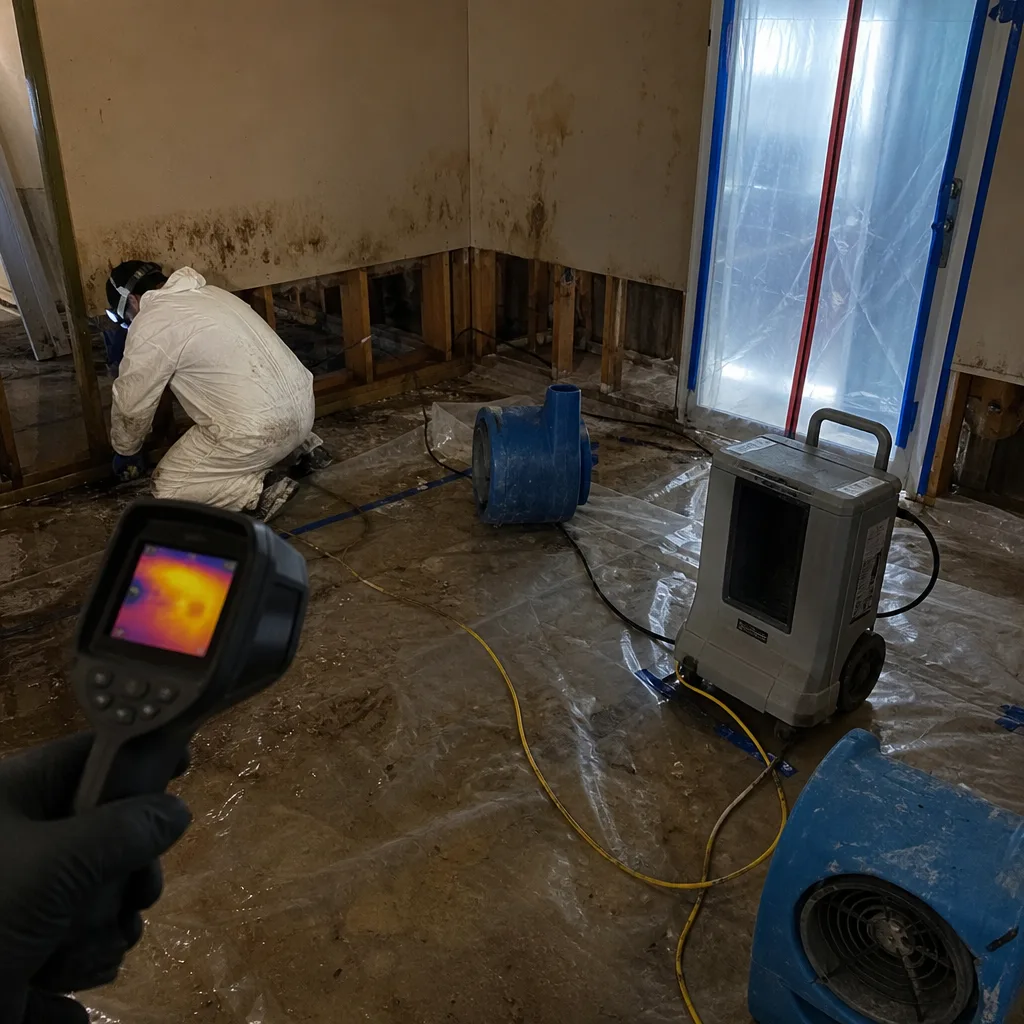
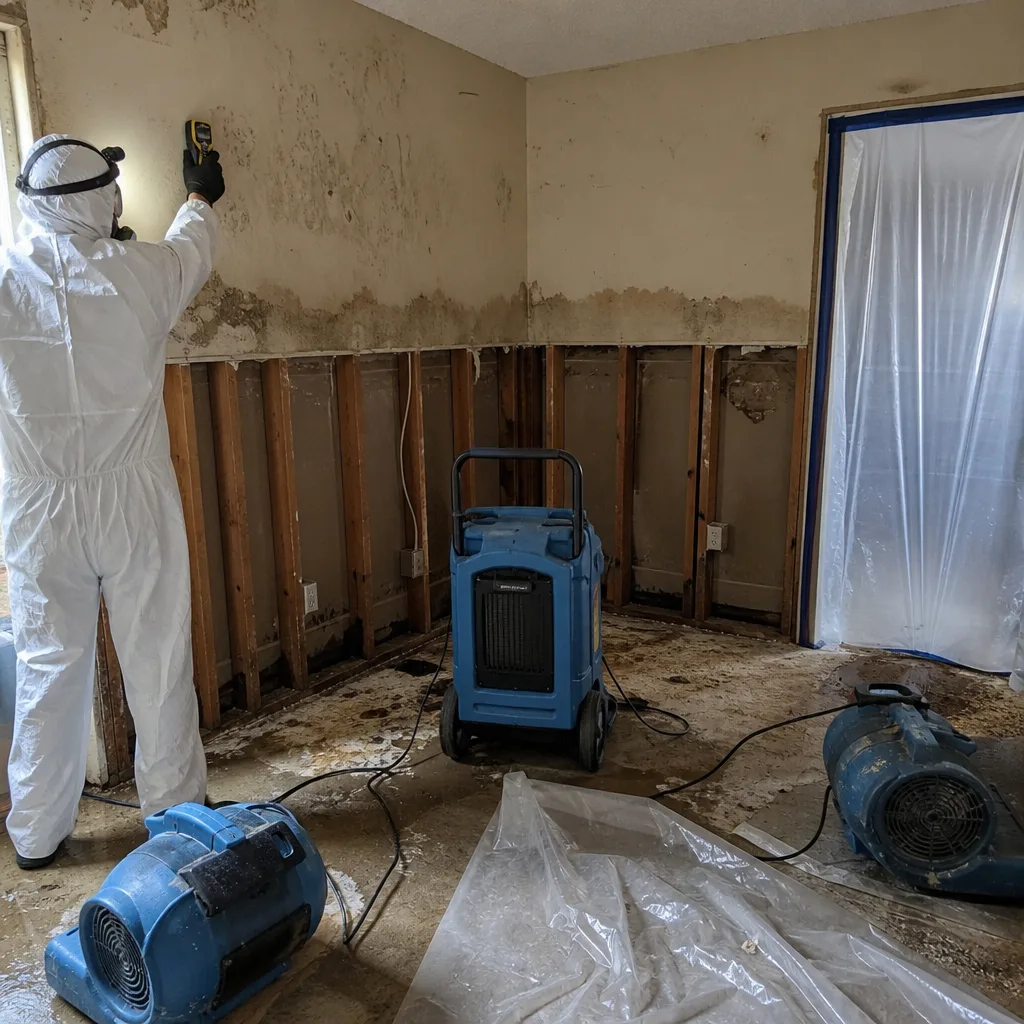
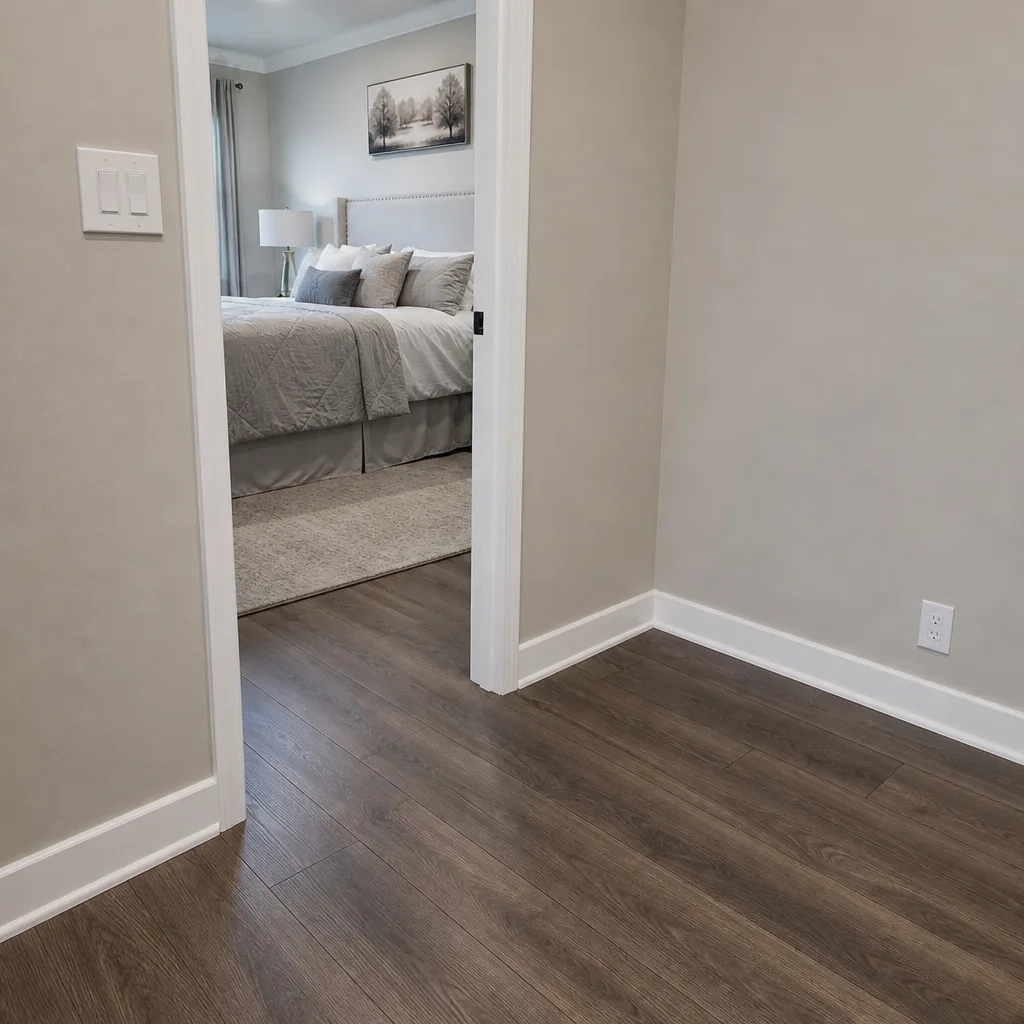
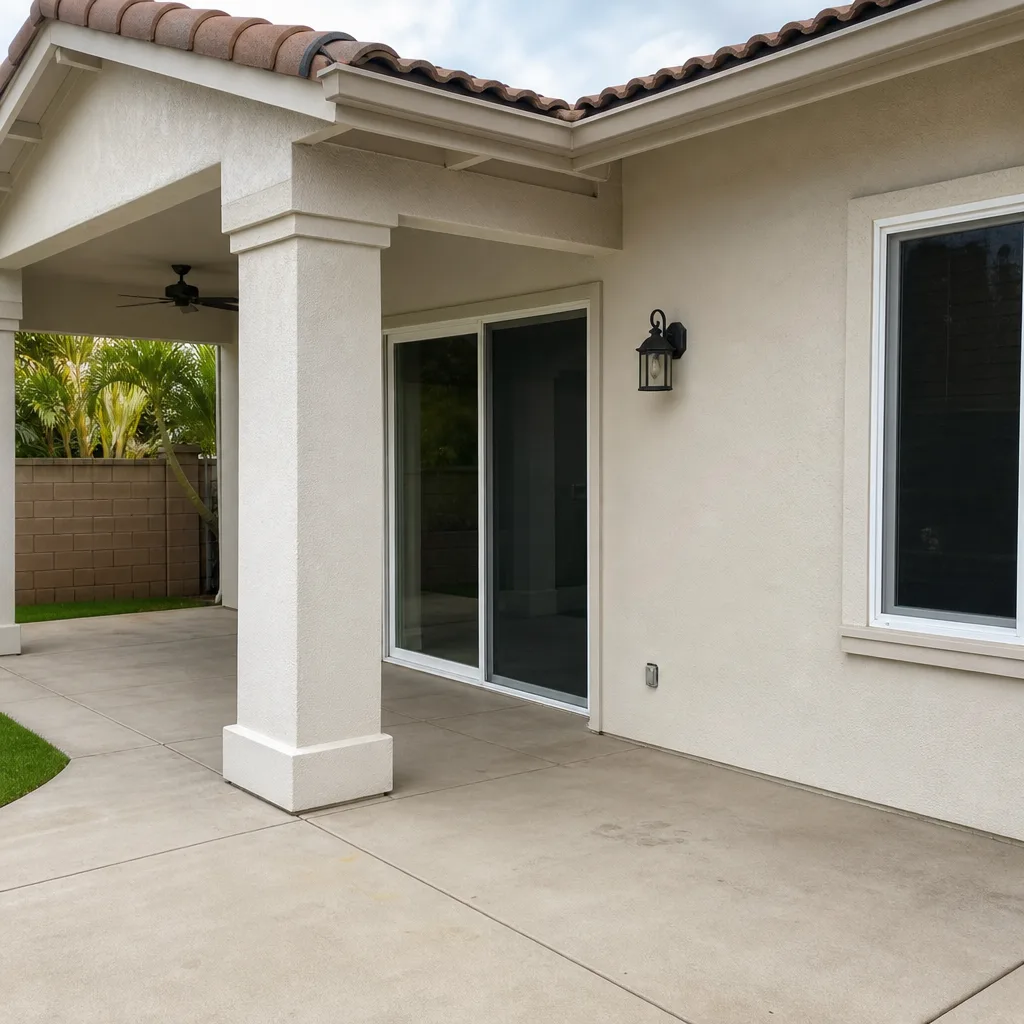
After a Santa Ana wind event sheared tiles off a 1990s stucco tract home near Day Creek Boulevard in the 91739 foothills, wind-driven rain penetrated a lifted stucco crack at the garage penetration and saturated the slab-on-grade drywall. Our crew performed water extraction, set up containment, and used Injectidry mats to dry the wall cavity without demolition, logging moisture readings daily to document return to pre-loss condition.
Pricing for Water Damage Restoration in Rancho Cucamonga, CA
An emergency water extraction call in Rancho Cucamonga runs $500 to $1,200 for a single room or garage overflow. Full structural drying with containment and dehumidification on a typical kitchen or bathroom flood runs $1,200 to $3,500. A complete restoration including repair and rebuild after a supply line break or Santa Ana wind intrusion typically lands between $1,800 and $6,500. These are real ranges based on jobs we’ve performed in this city, not national averages. What moves the number: square footage affected, whether water reached wall cavities or subfloor, how long before extraction began, and whether your 1980s home has original drywall that needs matching or a full wall replacement. Call (833) 589-7005 for a free estimate. We’ll send a written scope before any work starts so you know exactly what you’re paying for.
We Also Serve Cities Near Rancho Cucamonga
Our crews work throughout the Inland Empire, including Rancho Cucamonga and every surrounding community. If you’re in San Antonio Heights, Upland, Ontario, or Fontana, we handle Water Damage Restoration with the same IICRC-certified protocols and commercial-grade drying equipment. The same crews that know the block-by-block patterns of Rancho Cucamonga’s tract housing work these neighboring cities every week.
Serving Rancho Cucamonga, CA — Our Local Coverage Area
We’re based in the Rancho Cucamonga area and know this community well. Use the map below to see our service coverage — if you’re nearby, we can almost certainly help.
FAQs About Water Damage Restoration in Rancho Cucamonga
Rancho Cucamonga sits on alluvial fan deposits at the base of the San Gabriels, which means rainfall runs off fast and drainage channels fill quickly. Homes built on slabs here are prone to water running toward foundations and slab penetrations during intense winter rain bursts. We factor your lot’s drainage and slope into every mitigation plan, because water pooling against a slab is a different problem than water inside the house, and both need to be addressed. If you’re seeing water intrusion during storms, call (833) 589-7005 for an assessment.
Santa Ana winds don’t just blow; they drive rain horizontally and lift tile roofs. Rain that enters through wind-opened cracks and lifted tiles travels behind stucco and into attics, saturating materials that never show a visible stain. That’s why so many Rancho Cucamonga homes need mitigation after a wind event, even when the roof looks intact from the ground. Our crews know where wind-driven water enters these specific house types and how to dry those hidden cavities. Call (833) 589-7005 if you suspect wind-driven water got in.
Foothill mudflow water is almost always Category 3, meaning it’s contaminated with soil, debris, and potentially sewage from overwhelmed drainage channels. Category 3 water requires full containment, antimicrobial treatment after extraction, and disposal of saturated porous materials in most cases. This isn’t a mop-and-fan situation. If mudflow water entered your home, call (833) 589-7005 immediately and keep family members away from the affected area.
Yes, in many cases. The wall cavities in 1980s track homes respond well to Injectidry structural drying, which pulls moisture out through small access points rather than cutting out entire sheets of drywall. The key is acting within the first 24 to 48 hours, before the bottom plates and studs wick water into the building envelope. We’ve dried hundreds of Rancho Cucamonga homes with original plumbing and framing intact. Call (833) 589-7005 and we’ll tell you honestly whether your home is a candidate.
After foothill fires, fine ash settles into attic vents and tile roofs and works its way into homes that never saw a flame. When winter rain mixes with that ash, it creates a damp, contaminated layer inside wall cavities and attic insulation. We treat this as a water damage restoration issue with an additional particulate cleanup component: extraction, HEPA air cleaning, and drying, followed by assessment of whether insulation or drywall needs replacement. If you smell smoke inside your home after a foothill fire, call (833) 589-7005 for an inspection.
Call OC Restoration Co for Water Damage Restoration in Rancho Cucamonga
If you’re standing in water or watching a ceiling stain grow, the next hour matters. Our IICRC-certified team, led by Allen Burkhart, is ready to dispatch to Rancho Cucamonga right now. We’ll assess the damage, document everything for your insurance adjuster, and give you a written scope before any work starts. We use the same commercial-grade drying equipment the national firms use, but we work as a local crew that knows this city’s houses block by block. Call (833) 589-7005 for a free estimate. We’ll answer live and tell you exactly what to do next.
Written by Allen Burkhart, Owner at OC Restoration Co, serving Rancho Cucamonga and the Inland Empire with IICRC-certified water damage restoration, mold remediation, and fire damage restoration.