
Last updated October 31, 2026
 Water damage drying
 Fire & smoke cleanup
 Mold remediation
 Storm response
 Sewage cleanup
 Reconstruction
Free visual inspection and a written scope of work before any mitigation begins - photos, moisture readings, and drying logs go in your claim file
The scope we write is the scope we bill. Anything new gets shown to you, in writing, before we touch it.
Get your free estimateDamage Restoration Cost Breakdown: The Corona Homeowner’s Reference for 2026
Here’s a number most Corona homeowners never hear until it’s too late: the average gap between a restoration company’s initial estimate and a final insurance settlement in California runs about $4,200. That gap isn’t because contractors are dishonest. It’s because mitigation, remediation, and reconstruction get bundled into one number that collapses under an adjuster’s line-item review. In Corona, where homes range from 1960s stucco-frame ranchers to early-2000s tract builds, what you’ll actually pay depends on factors most estimates never explain. This guide breaks restoration costs down phase by phase, using current 2026 labor rates for Riverside County, so you know what’s reasonable before you sign anything. For more context, see our Damage Restoration Warning Signs: A Corona Homeowner’s Reference Guide.
Restoration work we handle
Quick Answer
Water damage restoration in Corona typically runs $2,800 to $7,500 for a standard single-room event in 2026, while mold remediation averages $2,200 to $6,800 depending on square footage and cavity penetration, and fire damage restoration usually lands between $4,500 and $35,000 based on the extent of smoke and structural involvement. The final number depends heavily on whether your policy covers replacement cost or actual cash value, how much demolition is required, and how thoroughly the drying process is documented.
Table of Contents
- Phase 1: Emergency Mitigation Costs in Corona
- Phase 2: Structural Drying and Equipment Charges
- Phase 3: Mold Remediation When It’s Triggered
- Phase 4: Reconstruction Costs and Why They’re Priced Differently
- Why Identical Jobs Cost Different Amounts in Corona
- Reading Your Invoice: Legitimate Equipment Charges vs. Red Flags
- Using Xactimate to Cross-Check Your Estimate
- Depreciation, Recoverable Depreciation, and California Claims
- Common Mistakes to Avoid
- When to Call a Professional
- Frequently Asked Questions
- The Bottom Line
Phase 1: Emergency Mitigation Costs in Corona
Mitigation is the first response: stopping the water, extracting standing water, and preventing the damage from spreading. In Corona, this phase typically costs $800 to $2,500 for a standard room affected by a supply-line leak or appliance failure. The work usually happens within hours of your call, and it’s priced per hour plus equipment and disposal fees.
What you’re paying for in mitigation includes emergency dispatch, water extraction with truck-mounted or portable extractors, removal of saturated carpet and pad, baseboard removal, and initial sanitizing treatment. For a Category 3 water event, which means sewage or flood water, the cost runs higher because affected porous materials must be treated as contaminated. Corona’s water supply comes through a mix of municipal and local wells, and hard water mineral content can accelerate corrosion on older galvanized pipes, which is why we see April through October leak spikes in the older neighborhoods south of the 91 freeway.
Mitigation costs in Riverside County have risen about 11% since 2023, driven by labor rates for IICRC-certified technicians and the disposal fees at county facilities. A two-bedroom water event in Corona will typically require 4 to 6 hours of extraction labor and 1 to 2 truckloads of debris.
Phase 2: Structural Drying and Equipment Charges
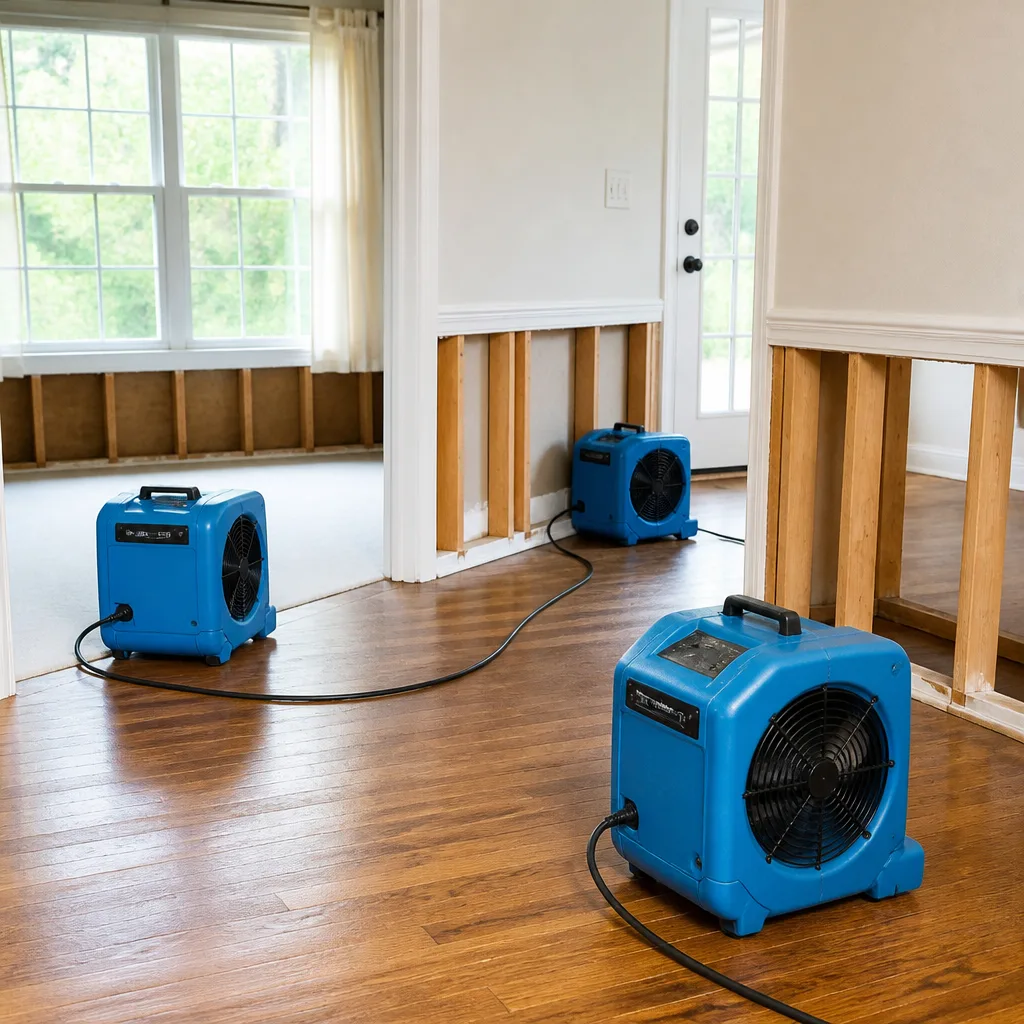
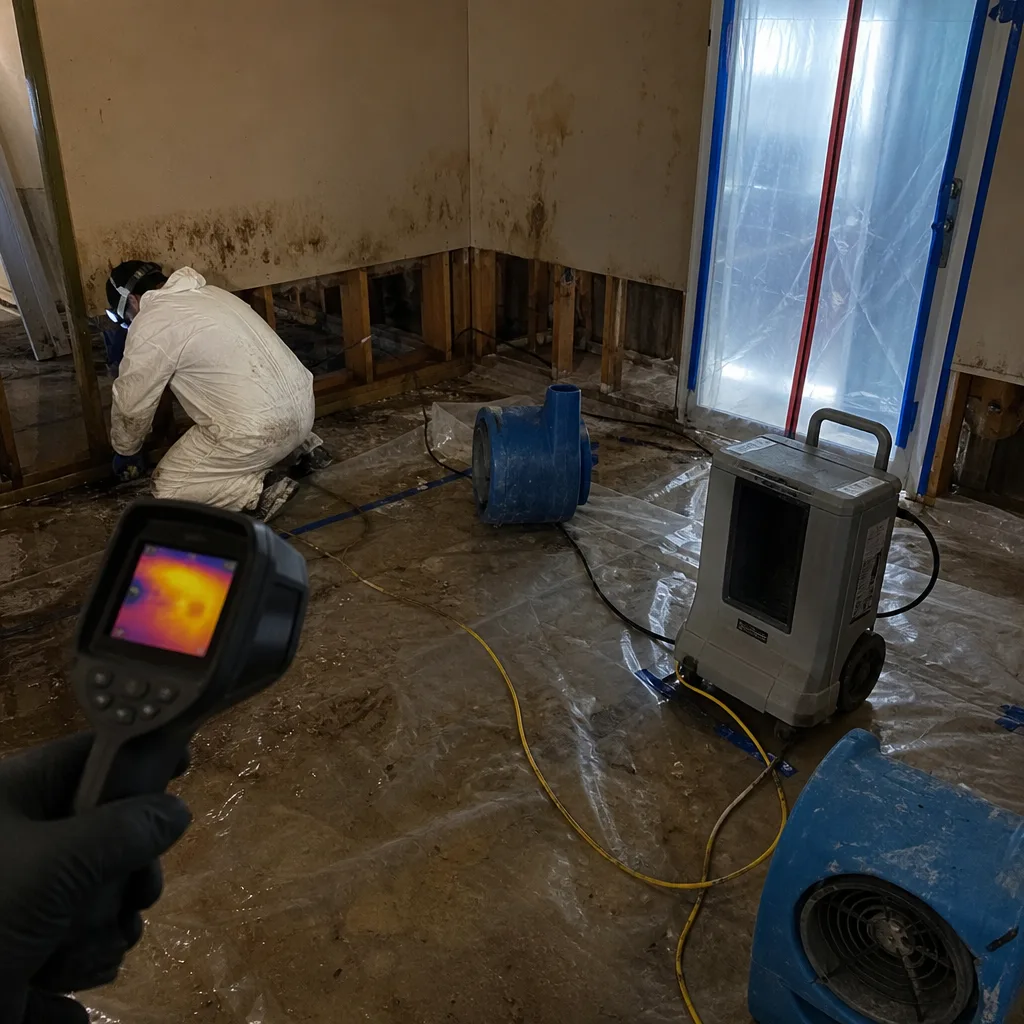
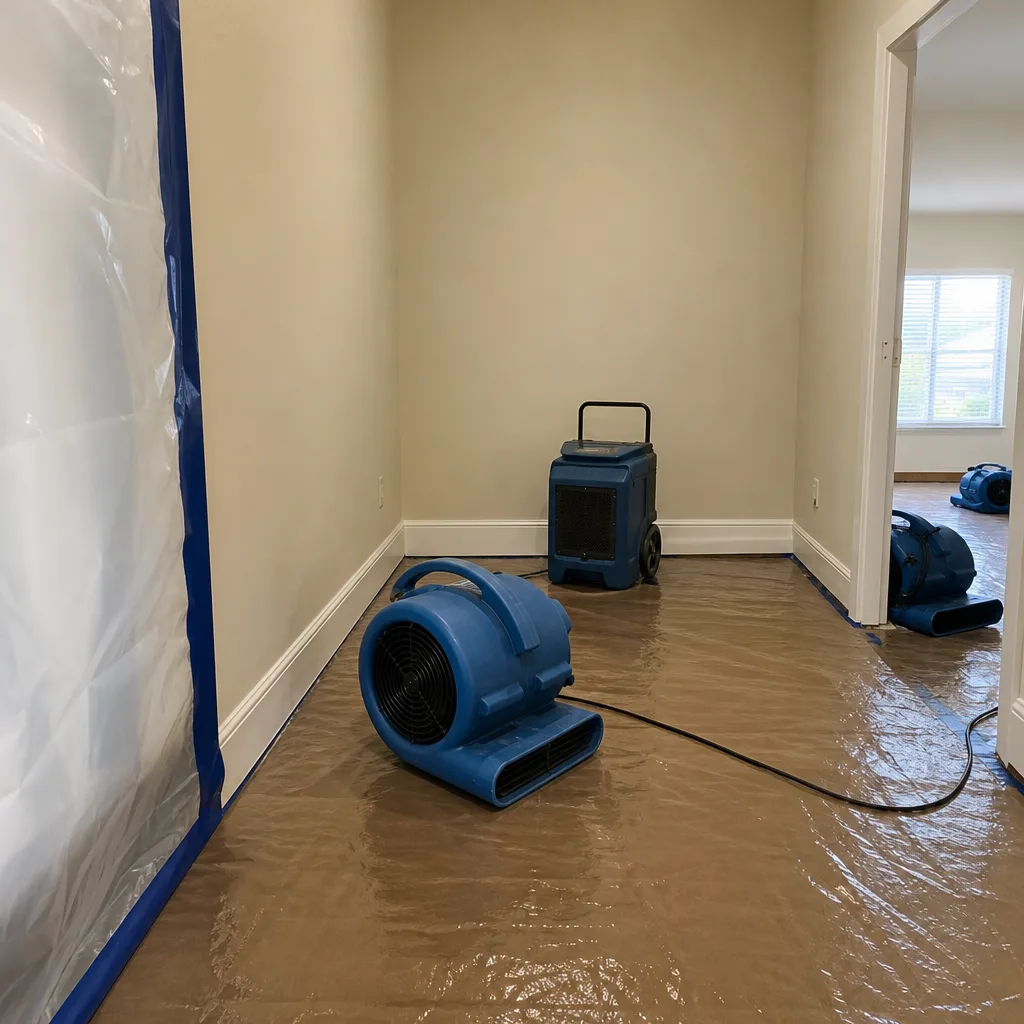
After extraction comes the phase most homeowners don’t understand: structural drying. This isn’t just running fans. It’s placing commercial-grade dehumidifiers, air movers, and sometimes Injectidry mats that pull moisture from inside wall cavities without ripping out drywall. In Corona, structural drying typically costs $1,200 to $3,800 including monitoring visits.
The equipment counts as legitimate line items. LGR (low-grain refrigerant) dehumidifiers from Dri-Eaz or Phoenix remove moisture at a rate consumer dehumidifiers can’t touch. Air movers create the airflow that carries moisture out of walls and flooring. We run our drying plans for three to five days on average in Corona’s climate, where summer temperatures routinely hit the high 90s and low humidity accelerates drying, while winter months with higher relative humidity can extend the timeline by 24 to 48 hours.
What drives the cost in this phase is how many units are deployed and for how many days. A standard 12×14 room might need 2 air movers and 1 LGR dehumidifier. A two-story home where water traveled through a ceiling into a lower-level wall cavity can require 6 to 8 air movers, 2 dehumidifiers, and Injectidry mat systems. The daily monitoring visits, where technicians take moisture readings to confirm drying is progressing, are billable at $75 to $150 per visit in this market.
Phase 3: Mold Remediation When It’s Triggered
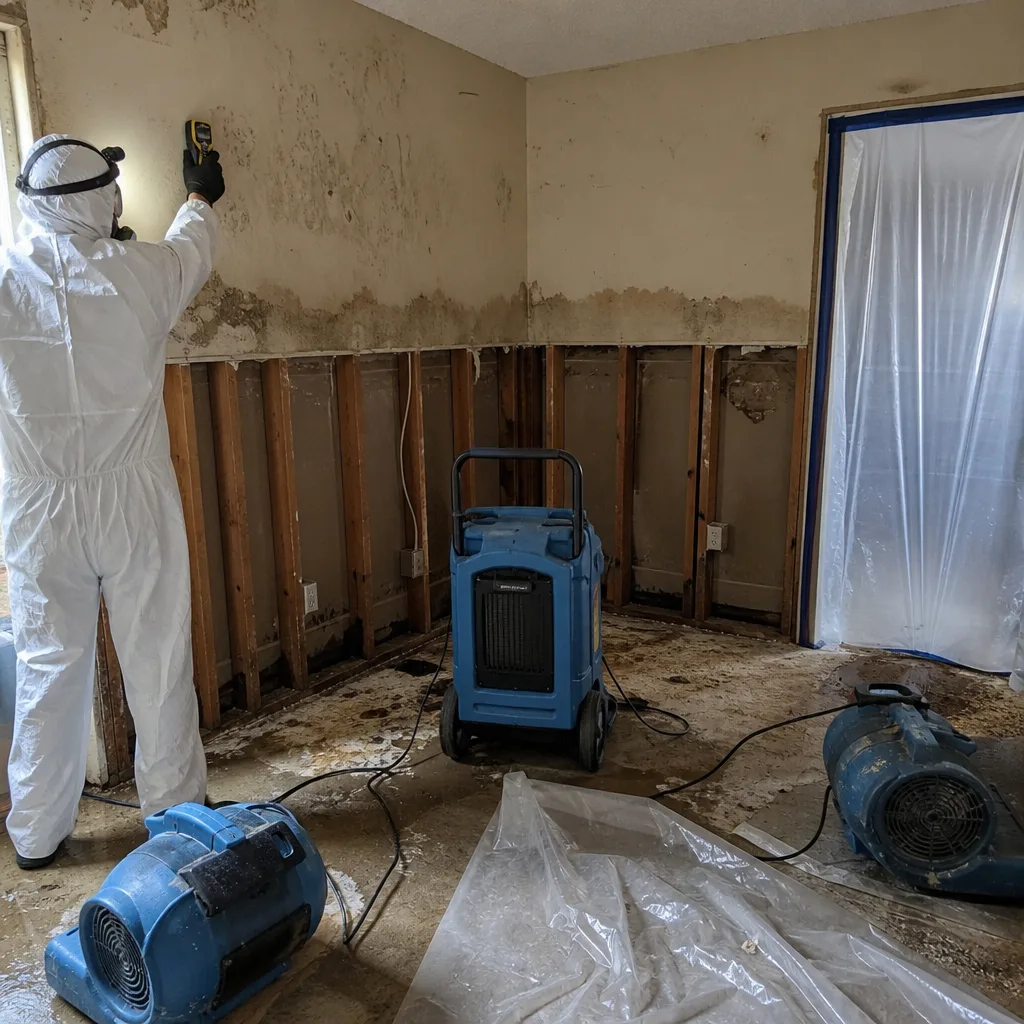
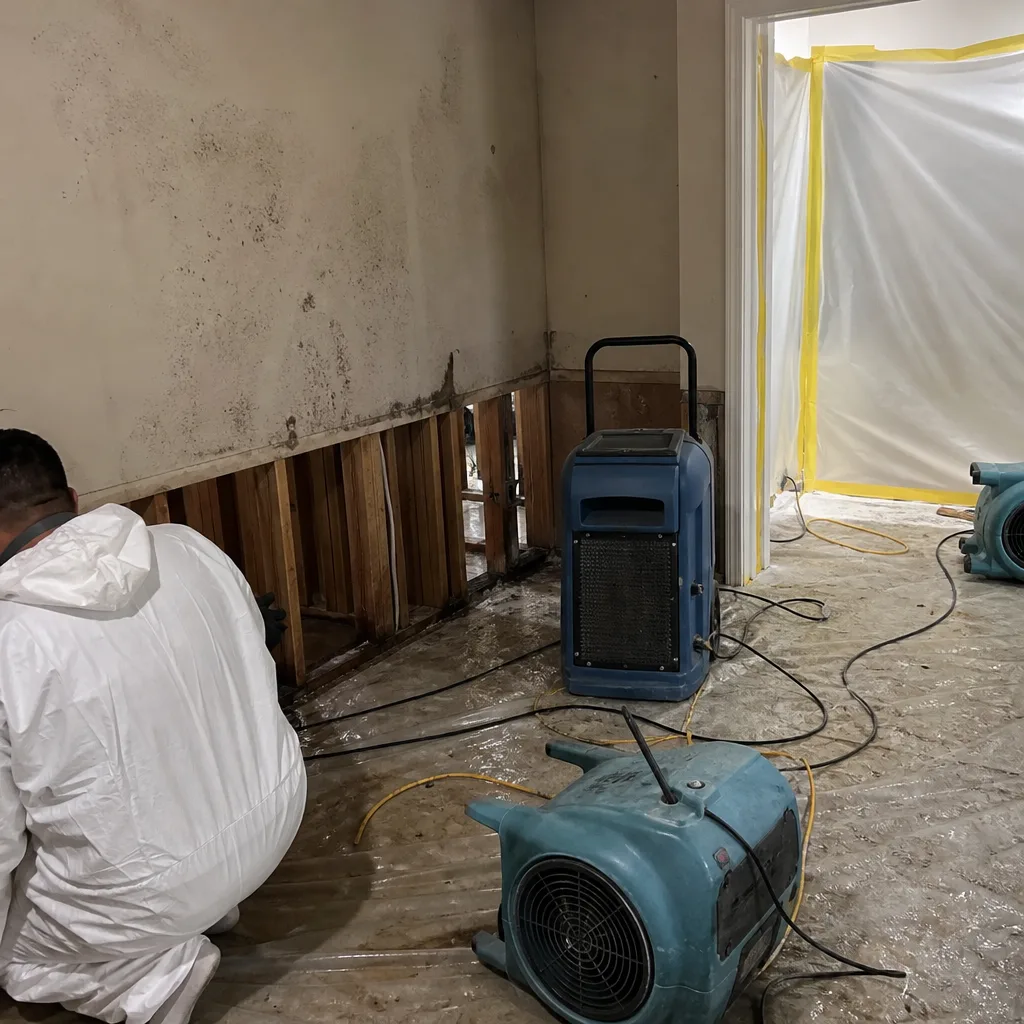
Mold remediation is where estimates start to vary wildly, because mold is only “triggered” under specific conditions: moisture present for 24 to 48 hours or more, an organic food source, and temperatures above 60 degrees. In Corona’s inland heat, those conditions develop quickly. If your water event went unnoticed for a weekend, or if you had a slow leak inside a wall, mold remediation becomes a separate line item.
Corona mold remediation typically costs $2,200 to $6,800 for areas up to 100 square feet, with larger contamination running $80 to $140 per affected square foot. Containment is the big cost driver here: HEPA air scrubbers running continuously, negative air pressure, and plastic sheeting to isolate the work area. The IICRC S520 standard governs how mold work should be performed, and companies that skip containment pass those savings on as a lower bid that usually fails the adjuster’s protocol review.
Here’s where equipment names you’ll see on invoices matter. B-Air and XPOWER HEPA air scrubbers are standard professional units that run $45 to $75 per day each. If you see “air purifier rental” without a brand or model, ask what equipment was actually used. In our mold remediation work, we document every unit with serial numbers and daily readings, because that’s what survives an adjuster’s review.
Phase 4: Reconstruction Costs and Why They’re Priced Differently
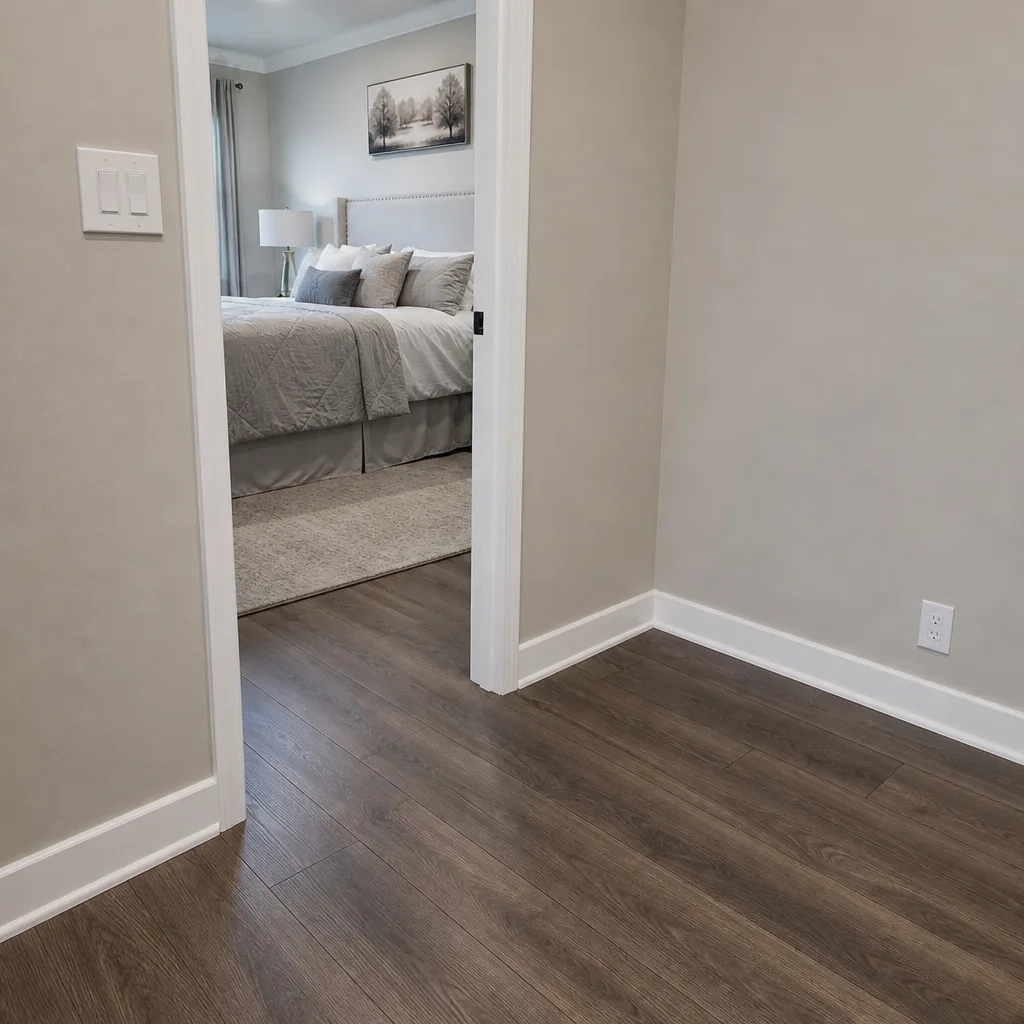
Once the property is dry and clear, reconstruction begins. This is the phase where pricing logic changes entirely. Mitigation and drying are emergency services priced by the hour and day. Reconstruction is scoped, estimated, and scheduled like a remodel. In Corona, reconstruction after a water event typically runs $4,000 to $25,000+, and we do not promise same-day service on this phase because that’s not how qualified work gets done.
What you’re paying for: drywall replacement, insulation, paint matching, baseboards, flooring, and possibly cabinet or vanity replacement. Corona’s construction stock creates specific costs. Homes built before 1978 in the older Corona neighborhoods may have textured ceilings that require matching. Stucco exteriors are common and hold up well, but interior damage from a roof leak travels through the stucco’s weep screed and into framing in ways that block construction doesn’t, and block homes in the area’s mid-century tracts may hide moisture behind furring strips.
Labor rates for reconstruction in Riverside County are running $65 to $105 per hour for skilled trades in 2026, up about 9% from two years ago. That’s the number behind most reconstruction line items, and it’s why identical-looking rooms can produce $4,000 and $9,000 bids: one contractor is quoting repaint-grade drywall, the other is matching pre-existing texture.
We handle reconstruction as part of water damage restoration, but the same principles apply across our fire and mold work. The key difference between us and a general contractor is that our teams document every step for your insurer.
Why Identical Jobs Cost Different Amounts in Corona
Two houses on the same Corona street can produce wildly different restoration estimates for the same amount of water. Here’s what actually drives the difference:
- Age of home and building materials. Post-1990 construction typically uses standard 1/2-inch drywall and 2×4 framing. Pre-1970 homes may have lath-and-plaster walls, which dry slower, cost more to repair, and require specialty matching when patched.
- Construction type. Stucco-frame homes dominate Corona’s newer subdivisions, while the older downtown and western areas include block construction. Block absorbs less moisture but transfers it differently into wall cavities, and block homes often have furring strips that create a slow-drying air gap.
- Accessibility of affected cavities. A kitchen leak under a slab foundation means the plumber cuts through concrete, while a crawlspace home lets technicians access from below. Raised foundation homes in Corona’s older neighborhoods often dry faster and cost less because of that access.
- Containment complexity. An open-plan 2020 tract home set up for containment might take under two hours. A 1950s ranch with multiple doorways, archways, and connected rooms can take four times as long, and that time is billed.
- Carpet versus hard surface. Carpet and pad are routinely removed and replaced after Category 2 or 3 water. Hardwood and engineered wood can sometimes be dried in place with specialty mats, but the labor and equipment cost for that drying often approaches the cost of replacement.
Ask any contractor to show you which of these factors applies to your estimate. The ones who can’t answer that question are the ones who lose to the adjuster’s review.
Reading Your Invoice: Legitimate Equipment Charges vs. Red Flags
Restoration invoices are dense, and that’s partly by design. Here’s how to separate legitimate charges from billing inflation:
Legitimate equipment line items:
- LGR dehumidifier days at $95 to $160 per unit per day. These units pull 80 to 140 pints per day at AHAM conditions, and they’re essential for structural drying. You should see the number of days matched to moisture readings.
- Air mover days at $30 to $55 per unit per day. A standard room needs 2 to 4 units. If you see 10 units for a hallway, that’s questionable.
- HEPA air scrubber days at $45 to $75 per unit per day, required for mold containment and for any fire restoration work. B-Air and XPOWER are common professional brands.
- Injectidry or drying mat days at $100 to $200 per mat per day, used for in-place drying of hardwood floors or wall cavities when demolition is avoidable.
- Moisture monitoring visits at $75 to $150 per visit, typically 1 to 2 visits over 3 to 5 days of drying.
Red flags that signal billing inflation:
- Vague “equipment fee” line items with no unit count or daily rate.
- “Drying time” charged without corresponding moisture readings or drying logs.
- Ozone machine charges on a water job. Ozone is for fire odor, not water damage.
- Emergency after-hours rates charged when the water event was reported during business hours.
- “Trip charges” from a local company serving the same county, especially if the charge exceeds $75 each way.
Our invoices break out every unit, every day, and every reading. We do that because insurance adjusters in Riverside County increasingly request drying logs and photo documentation before approving payments, and incomplete documentation is the most common reason legitimate claims get reduced.
Using Xactimate to Cross-Check Your Estimate
Xactimate is the estimating software most insurance adjusters use, and you don’t need to hire a public adjuster to use it for a sanity check. Here’s the step-by-step process:
- Request a line-item estimate from your restoration company. If they can’t produce one, that’s your first signal to keep looking. Every legitimate provider can export an itemized scope.
- Ask your adjuster for the Xactimate estimate they’re working from. In California, you have a right to see the scope of work and pricing your insurer is using to evaluate your claim.
- Compare the two documents line by line. Look for line items on the contractor’s estimate that don’t appear on the adjuster’s version. Those are the items that need justification, not deletion.
- Check the unit pricing. Xactimate publishes price lists by zip code. Corona falls in the Inland Empire pricing zone. If your contractor is charging 40% above Xactimate rates for the same line, ask why. There are legitimate reasons: specialty access, code upgrades, or unusual construction details.
- Flag missing operations. Common omissions on adjuster estimates include debris disposal, permit fees, and overhead and profit. These are recoverable in California when licensed contractors are performing the work.
You don’t need to master Xactimate. You need to be able to read enough of it to have an informed conversation with both your contractor and your adjuster. That alone changes the negotiation.
Depreciation, Recoverable Depreciation, and California Claims
California policies are usually replacement cost policies, which means your insurer pays to replace damaged items with new equivalents. But insurers typically issue the first check based on actual cash value, which subtracts depreciation for age and condition. The difference between that first check and the full replacement cost is called recoverable depreciation, and you only get it if you complete the work and submit receipts.
Here’s how it works in practice in Corona:
- Your 12-year-old carpet is damaged beyond salvage. Replacement cost is $3,200. Depreciation is $1,900. Your insurer issues a check for $1,300.
- You have the carpet replaced. You submit the final invoice to your insurer. Your insurer releases the additional $1,900.
- If you never replace the carpet, you never collect the recoverable depreciation.
What to document to recover full depreciation: photos of the damaged materials before removal, an itemized invoice from your restoration contractor with completed work dates, and proof of payment. California law doesn’t set a specific deadline to claim recoverable depreciation, but most policies require the work be completed within 180 days of the loss event. Talk to your adjuster about your specific policy.
One more California-specific note: if you have a mortgage, your insurance check will be made out to both you and your lender. Your lender holds the funds in escrow and releases them in draws as work progresses. This is standard and shouldn’t delay restoration work if you’re working with a contractor who understands how to provide progress documentation.
Common Mistakes to Avoid
- Signing an assignment of benefits without reading it. AOBs give the contractor the right to bill your insurer directly and can limit your control over the claim. Read the document. If you don’t understand it, ask for a copy to review before signing.
- Waiting for adjuster approval before starting mitigation. California policyholders have a duty to mitigate damages. Most policies require you to prevent further damage whether or not an adjuster has visited. Delaying water extraction can turn a $4,000 claim into a $15,000 mold claim.
- Accepting a verbal estimate. If the estimate isn’t written, it doesn’t exist for insurance purposes. Always request a written scope of work with line items.
- Hiring a contractor who isn’t IICRC-certified. The IICRC sets the standards for water restoration and mold remediation. A contractor who isn’t certified may not follow those standards, and the adjuster will notice.
- Replacing flooring before the subfloor is dry. This is the most common reconstruction mistake we see in Corona. Moisture readings need to show the subfloor below acceptable thresholds before new flooring goes down. Skipping this step means mold under your new floor within months.
- Discarding damaged materials without photographing them first. Your insurer needs proof of what was damaged and why it was removed. Take photos of everything before it goes in the dumpster.
- Paying the full contract price before work is complete. A reasonable deposit is standard. Full payment before completion is not. Hold back 10 to 20 percent until you’ve walked the finished work and confirmed it meets the written scope.
When to Call a Professional
Call a professional restoration company the moment you discover standing water that covers more than a few square feet, a water event that’s been active for more than 24 hours, any water that could be sewage or from an outside flood source, visible mold growth larger than 10 square feet, or any fire event that left smoke damage beyond a small cooking incident. These situations all involve health risks or structural damage that requires commercial equipment and documented protocols. OC Restoration Co offers free estimates in Corona, and we respond to calls at (833) 589-7005 with a real person, not a call center.
Frequently Asked Questions
Water damage restoration in Corona typically costs $2,800 to $7,500 for a single-room event in 2026, including extraction, structural drying, and basic reconstruction. Larger events involving multiple rooms or contaminated water run higher. Call (833) 589-7005 for a free estimate specific to your situation.
California homeowners insurance covers sudden and accidental water damage, such as a burst pipe or appliance overflow, but excludes gradual damage from long-term leaks or unresolved maintenance issues. Flood damage requires separate flood insurance, which matters in Corona during the winter storm season when local drainage systems can back up. For preparation tips, read our Damage Restoration Emergency Preparedness Guide for Corona Homes.
Structural drying in Corona typically takes 3 to 5 days during summer months when inland temperatures are high and humidity is low, and up to 7 days in winter when higher relative humidity extends the drying curve. Commercial LGR dehumidifiers and air movers from brands like Dri-Eaz complete the process faster than consumer equipment.
Mitigation is the emergency work that stops damage from spreading: water extraction, equipment setup, and initial drying. Restoration is the work that returns your property to pre-loss condition, including drywall replacement, painting, and flooring. The two phases have different pricing structures and should be itemized separately on any legitimate estimate.
Insurance covers mold remediation only when the mold resulted from a covered water event that was reported promptly. Mold from long-standing humidity or a slow leak that went unreported is typically excluded. Photographing the source of the water and documenting when you discovered it strengthens your position with your adjuster.
Compare your contractor’s line items against the adjuster’s Xactimate estimate, ask for daily equipment logs and moisture readings, and verify that unit pricing falls within the Inland Empire pricing zone. A fair estimate breaks out mitigation, drying, and reconstruction separately, and it arrives in writing. If you have questions about an estimate you’ve received, call (833) 589-7005 and we’ll review it with you.
Most restoration companies, including OC Restoration Co, provide free estimates for damage evaluation and scopes of work. Any company asking for payment before assessing your damage is outside the standard practice in the Riverside County market.
Look for IICRC certification, active RIA membership, written scopes of work, documented drying logs, and experience with insurance claims. IFA affiliation signals a commitment to industry accountability. Commercial-grade equipment from Dri-Eaz, Phoenix, XPOWER, and B-Air tells you the company is set up for serious work, not side jobs.
The Bottom Line
Restoration costs in Corona are driven by three things: how fast the water is stopped, how thoroughly the drying is documented, and how transparently the estimate is itemized. The $4,200 gap between initial estimates and final settlements shrinks when your contractor writes scopes that adjusters can verify. Our job is to make sure you’re not caught in that gap. We’re IICRC-certified, we run commercial-grade equipment you can see on the invoice, and we handle water, mold, and fire under one roof. When you’re ready to talk numbers, call us at (833) 589-7005.
Written by the team at OC Restoration Co, serving Corona since 2017. Explore more guides & resources from our team.
See the difference
 Before
 After
 Before
 After
 Before
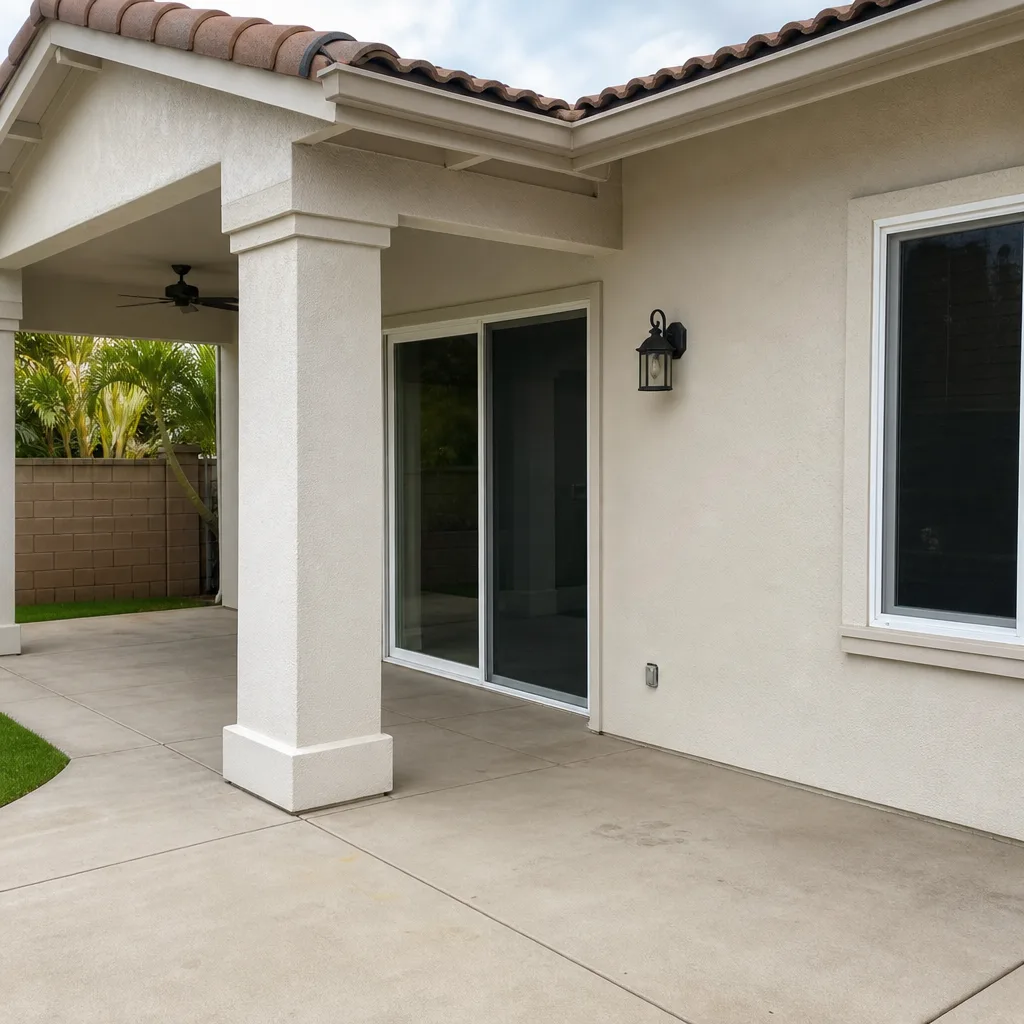 After