
Last updated October 31, 2026
 Water damage drying
 Fire & smoke cleanup
 Mold remediation
 Storm response
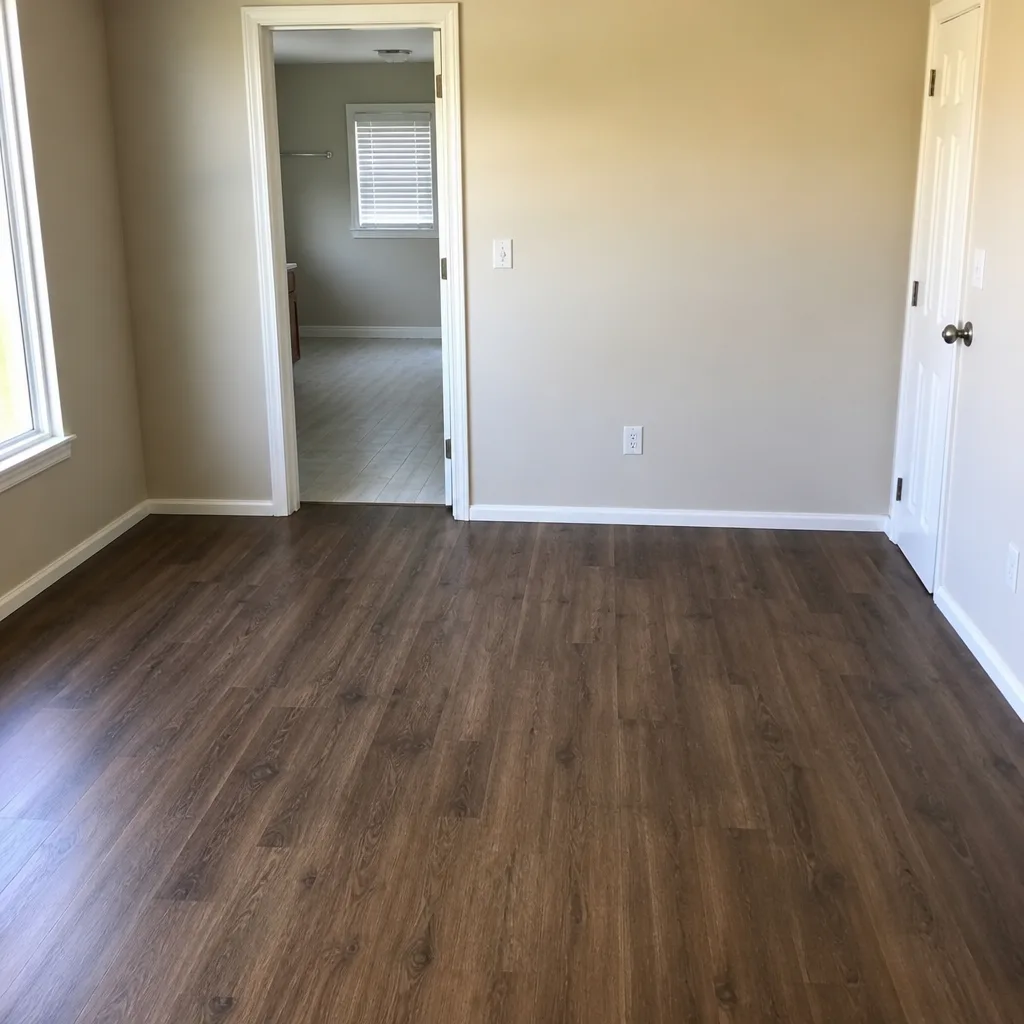 Sewage cleanup
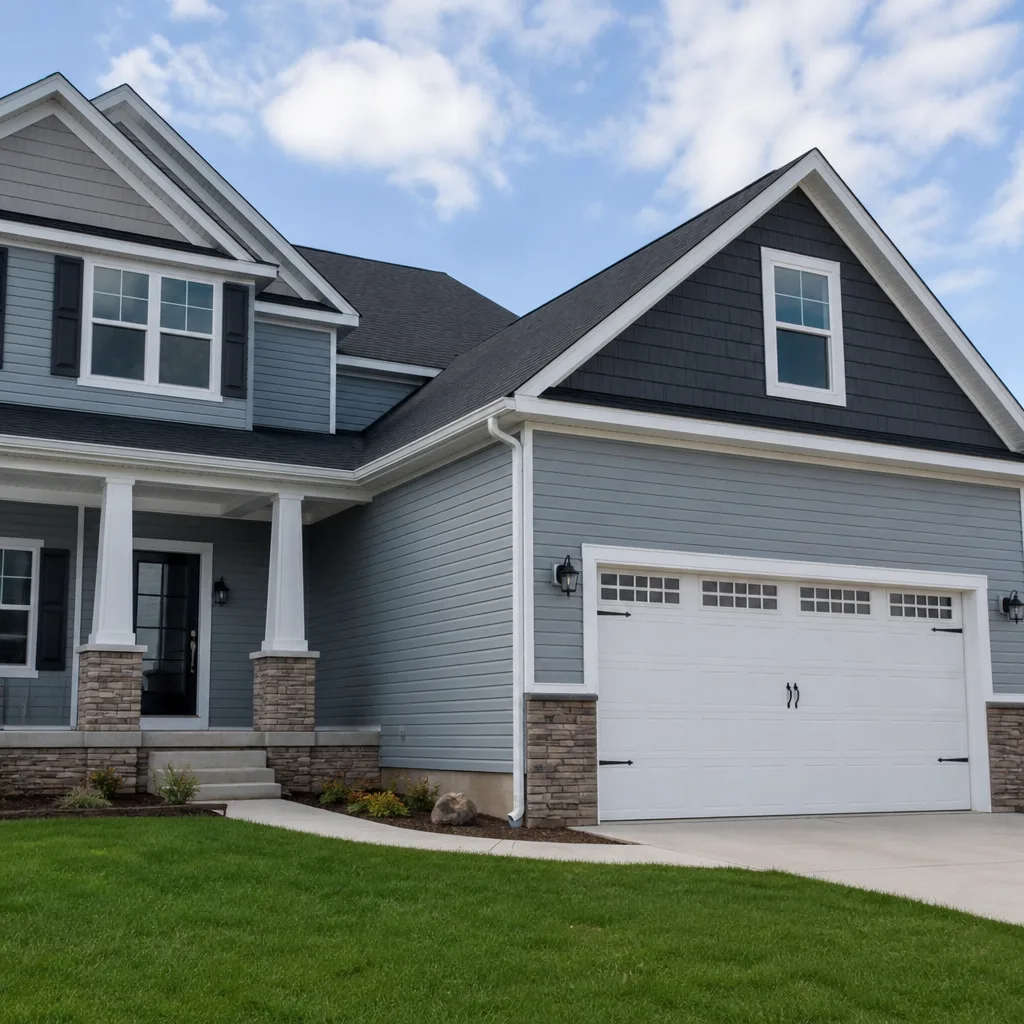 Reconstruction
Free visual inspection and a written scope of work before any mitigation begins - photos, moisture readings, and drying logs go in your claim file
The scope we write is the scope we bill. Anything new gets shown to you, in writing, before we touch it.
Get your free estimateThe Complete Water Damage Restoration Guide for Corona Homeowners
Most homeowners treat water damage as a cleanup problem: extract the standing water, run a fan, and life goes on. But in Corona, where stucco exteriors and wood framing meet the Inland Empire’s swing between desert-dry afternoons and cool, damp mornings, that approach is how a $900 extraction turns into a $14,000 mold and rot claim six months later. This guide is built from years of working in homes across Corona, from Sierra del Oro to South Corona, and it will teach you how water actually behaves in a Southern California structure. You’ll learn what drying standards apply, what equipment actually matters, what your insurance provider expects to see, and how to tell the difference between a contractor who guesses and one who measures. We are OC Restoration Co, and this is what we want every Corona homeowner to know before they ever have to call us.
Quick Answer
Our Water Damage Restoration services in Corona are a building-science process, not a janitorial one: the IICRC S500 standard defines when a structure is actually dry, and hitting those numbers in a stucco-clad, wood-framed Southern California home requires deep-cavity drying methods and psychrometric monitoring that consumer fans and dehumidifiers cannot achieve. Homeowners should begin mitigation within 24 to 48 hours, document every step for insurance, and hire an IICRC-certified firm that uses commercial-grade equipment like Dri-Eaz and Injectidry rather than rental-store substitutes.
Restoration work we handle
Table of Contents
- Why Corona’s Climate Doesn’t Dry Your Home the Way You Think
- IICRC S500: The Standard That Defines “Dry”
- The Stucco Wall Problem: Corona’s Hidden Drying Trap
- The Insurance Documentation Timeline Corona Homeowners Must Follow
- Why Equipment Brands Matter: Dri-Eaz, Phoenix, XPOWER
- Psychrometric Logging: How to Verify the Contractor Is Measuring, Not Guessing
- Structural Drying vs. Surface Drying: What Injectidry Actually Does
- The Water-to-Mold Clock: How Fast Damage Escalates in Corona
Why Corona’s Climate Doesn’t Dry Your Home the Way You Think
The Inland Empire’s low ambient humidity is a double-edged sword. On a typical August afternoon in Corona, relative humidity can dip to 10 or 15 percent. That accelerates surface evaporation so effectively that a wet drywall panel can feel bone-dry to the touch within hours. Homeowners take that tactile cue and assume the problem is solved. It is not.
Here’s what happens inside the wall cavity. Water from a supply line break or an overflow moves down the inside of the stud bay, soaks the bottom plate, wicks into the drywall, and saturates insulation. The exterior stucco, a cementitious material with low vapor permeability, traps that moisture in place. The interior side dries quickly because the air in the room is dry, but the back of the drywall, the studs, and the sill plate stay wet for weeks. That’s the exact condition mold needs: a food source, the right temperature range, and sustained moisture at the material surface.
In our experience across Corona neighborhoods from Eagle Glen to Horsethief Canyon, the homes that develop hidden mold problems after “successful” water damage cleanups are almost always stucco-clad structures where the drying plan only accounted for the exposed surfaces. A proper restoration reads moisture at multiple wall depths with penetrating or non-invasive meters, comparing the exterior-facing material readings against the interior-facing ones until they converge. If only one side is measured, a contractor can declare a wall dry when the stud behind it is holding 20 percent moisture content. That stud will not dry on its own in a Southern California autumn, when overnight humidity climbs and daytime temperatures drop. It will quietly rot, and eventually that rot becomes a smell, a stain, or a floor that feels spongy along the baseboard line.
The lesson: in Corona, surface dryness is the least useful metric in the room. What matters is deep-cavity moisture equilibrium, documented with readings over time.
IICRC S500: The Standard That Defines “Dry”
The Institute of Inspection, Cleaning and Restoration Certification publishes the S500 Standard and Reference Guide for Professional Water Damage Restoration. It is the most widely accepted reference for what constitutes a properly dry structure in North America, and it is the document your insurance adjuster will reference when evaluating whether a contractor did the job correctly. When we say our technicians are IICRC-certified in water damage restoration, what that means functionally is this: we dry to a documented standard, not to a feeling.
The S500 establishes four categories of water and four classes of water intrusion, and a moisture measurement protocol rather than a time-based “let it sit for three days” approach. A dry structure under S500 means building materials have returned to their pre-loss moisture levels, verified with calibrated meters, before equipment is removed. That is a higher bar than most homeowners realize.
Here are the water categories as defined by the standard, which every Corona homeowner should understand, because they affect everything from equipment selection to whether a carpet can be saved:
- Category 1: Clean Water. From a broken supply line, a faucet overflow, or rain that enters without contacting contaminated surfaces. The lowest-risk category, but time-sensitive because it degrades quickly.
- Category 2: Gray Water. Contains significant contamination from sources like a washing machine discharge, a dishwasher overflow, or a sump pump failure. Can cause discomfort or sickness if ingested.
- Category 3: Black Water. Grossly unsanitary, typically from sewage backup, river flooding, or any source that has contacted feces or harmful pathogens. This is a health hazard and requires specific disposal, antimicrobial treatment, and often removal of affected porous materials entirely.
The class of water intrusion is a different axis, describing how much water exists and how much of the structure is saturated. A Class 1 loss is a small, contained area with low absorption. A Class 4 loss, which we encounter more often in Corona homes where water sat undiscovered for days, is a deep saturation of hardwood, plaster, concrete, or crawlspace materials that requires low-humidity drying chambers and long-duration equipment runtime. Class 4 losses are the reason a homeowner’s “quick cleanup” from a big-box rental dehumidifier is not just insufficient, it is actively misleading.
When a contractor tells you they dry to IICRC S500 standards, the verifiable version of that claim includes: equipment placement calculated by the square footage of affected materials, daily moisture readings recorded in a log, and a drying goal expressed as a target moisture content for each material type. Anything less specific than that is not standard-compliant drying, no matter how many box fans are running.
The Stucco Wall Problem: Corona’s Hidden Drying Trap
Corona is a stucco town. Walk through South Corona, Corona Hills, or the neighborhoods around Santana Park and count the wood-sided houses; you won’t need your second hand. Stucco is the exterior finish on the overwhelming majority of homes built in the Inland Empire since the 1980s, and it has a property that almost no residential water damage guide addresses directly: it is a two-coat cementitious system that breathes very, very poorly.
Wood siding, common in coastal and Pacific Northwest markets where most national restoration guidance was written, allows vapor to move outward through the cladding as the wall cavity dries. Stucco does not. It seals moisture inside the wall like a lid on a jar. That matters for two reasons.
First, it changes the drying plan geometry. In a wood-sided home, a restoration crew can often achieve S500 drying goals with air movers inside and a dehumidifier running, because moisture escapes through the exterior cladding as well as the interior surfaces. In a stucco-clad Corona home, exterior release is minimal, so all the drying energy must be directed inward. That means more air movement at the baseboards, more dehumidification capacity per square foot, and often the creation of a contained drying chamber with the interior air pressure controlled. If a contractor treats a stucco home like a wood-sided home, the wall stays wet twice as long.
Second, stucco can hide the leak that caused the problem. Corona’s seasonal Santa Ana winds drive rain horizontally against exterior walls at speeds that overwhelm traditional weather-resistive barriers. When water intrudes behind stucco at a window flashing or a penetrations like a hose bib, it does not show on the exterior surface. The first visible sign is often inside: paint bubbling at the windowsill, a musty smell in a closet that backs up to an exterior wall, or carpet that feels damp along a wall plate. By the time that interior signal appears, the framing behind the stucco has likely been wet for weeks or months.
The corrective approach is what we call a stucco-aware assessment: probing non-invasively along the entire run of an exterior wall, not just at the visible wet spot, and comparing moisture readings from the interior face against the exterior sheathing behind the stucco. In Corona, where evening marine air from the Santa Ana River corridor raises interior humidity at night, the contrast between day and night readings can be the earliest warning that a wall is not drying the way the room conditions suggest.
The Insurance Documentation Timeline Corona Homeowners Must Follow
Insurance claims for water damage are won or lost on documentation. Adjusters are not adversarial by default, but they are bound by policy language, and the policy language says the homeowner must mitigate further damage from the moment of loss. In practice, that means the clock starts the second water is discovered, and every day of delay that results in more damage is a day your claim can be reduced.
Here is the documentation timeline we recommend to every Corona homeowner, and it is the same sequence we have walked through on hundreds of claims in Riverside County:
- Day 0: Discovery. Stop the source if you can do so safely. Shut off the water at the fixture or at the main. Photograph everything before moving anything: standing water, wet walls, wet contents, the area under sinks, visible staining on ceilings. Video is fine, but still photos with time and date stamps are the gold standard for adjusters.
- Day 0 continued: Notify. Call your insurance carrier or log into their portal and open a claim. Record the claim number. If the damage is from a supply line break, note the water category as clean; if it is from a sewer line or an overflowing toilet, state that clearly, because it changes the coverage and the restoration protocol dramatically.
- Day 1: Mitigation begins. A professional mitigation team should be on site within 24 to 48 hours at the latest. In Corona’s warm, dry summer conditions, surface materials will appear to recover quickly, but the wall cavities and subfloor will not. Photograph the moisture meter readings during the initial assessment. That baseline is the single most important piece of evidence in the claim.
- Days 2 to 5: Daily readings. Insist that the restoration contractor logs moisture readings daily, creates a drying chamber if structural drying is required, and documents the equipment in place with photos. Your adjuster may not ask for that log immediately; they will ask for it if the claim is ever disputed.
- Days 3 to 7: Contents inventory. For any damaged contents (rugs, books, electronics, furniture), photograph each item before disposal. Create a written list with approximate value and age. The California FAIR Plan and most standard homeowners policies will require proof of loss, and “I threw it away because it was wet” is not proof.
- Days 7 to 14: Drying completion and scope review. When the contractor declares the structure dry, that declaration should be backed by a final set of moisture readings showing the structure at pre-loss moisture content. This is when demolition and reconstruction scope is confirmed, and it is the moment most claim disputes begin. A written, line-item scope agreed before work begins protects both you and your adjuster.
One more thing: direct-billing arrangements between your restoration contractor and your insurance carrier are normal. We coordinate directly with adjusters in Corona and across Riverside County, providing photo documentation, moisture logs, and S500-compliant drying charts, because an adjuster who sees a documented process is an adjuster who approves a claim.
Why Equipment Brands Matter: Dri-Eaz, Phoenix, XPOWER
The equipment aisle at a home center will sell you a wet-dry vacuum and a plastic box fan. Neither one will dry a saturated wall cavity in a Corona home. The difference between professional restoration equipment and consumer-grade substitutes is not cosmetic or incremental; it is the difference between hitting an S500 drying goal in five days and never hitting it at all.
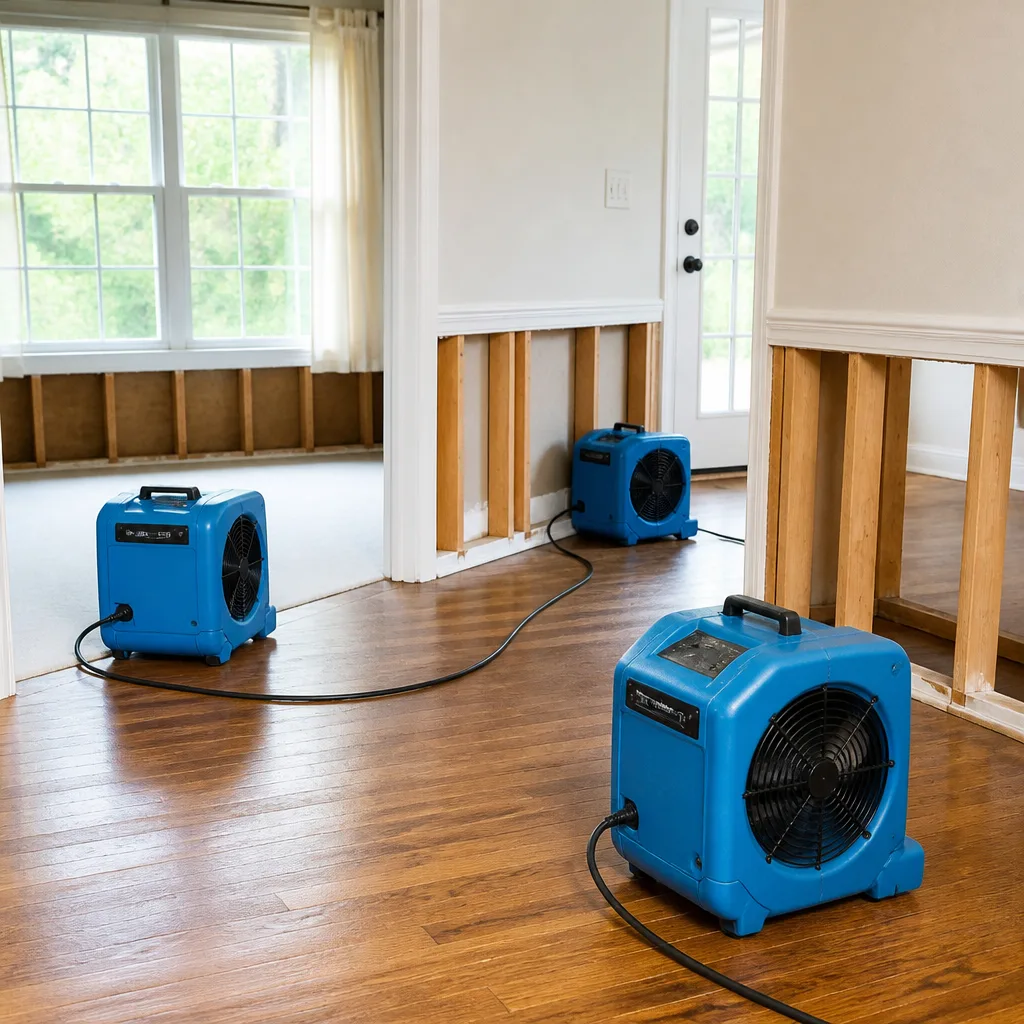
Dri-Eaz is the reference standard in low-grain refrigerant dehumidifiers used in residential restoration. Their units pull moisture from the air at levels that make a home improvement store dehumidifier look like a toy. In a post-extraction drying chamber, where the air needs to be consistently below 40 percent relative humidity to drive moisture out of structural lumber, a Dri-Eaz LGR (low-grain refrigerant) dehumidifier is the tool that gets you there. A big-box dehumidifier might drop room humidity to 50 or 55 percent and plateau, leaving the wall cavity wet indefinitely.
Phoenix builds high-performance air movers and dehumidifiers designed for continuous commercial use, the type of equipment that runs for 72 hours straight without overheating. Their axial air movers create the laminar airflow pattern that keeps saturation-level evaporation moving across a wet wall surface. XPOWER produces industrial air scrubbers and negative air machines that filter airborne particulates during drying, which matters when you have a water loss in a closet or crawlspace that is already hosting mold spores.
Why should any of this matter to a Corona homeowner who just found water on the kitchen floor? Because these are the tools that accomplish what a restoration contractor’s invoice says they accomplished. A professional crew using Dri-Eaz dehumidifiers and Phoenix air movers can document the micron-level filtration and the CFM coverage behind their drying plan. A crew that brings two rental-store fans cannot. The equipment is the proof that the standard is being met.
We do not use consumer or rental-grade equipment. Our drying fleets in Corona are built around Dri-Eaz and Phoenix dehumidifiers and air movers, plus XPOWER air scrubbers when air quality is a factor. It is one of the first things an insurance adjuster looks for without asking, because a company that invests in professional equipment is a company that follows professional protocols throughout the rest of the job.
Psychrometric Logging: How to Verify the Contractor Is Measuring, Not Guessing
Psychrometry is the science of moist air: how much water vapor air holds at a given temperature, and how quickly that air will accept moisture from a wet surface. A psychrometric log is a written record of temperature, relative humidity, and specific humidity (or grains per pound of dry air) inside the drying chamber, taken at regular intervals. It is the difference between a contractor who says “we ran fans for four days and it feels dry” and a contractor who can show you the air environment was actually pulling moisture out of the structure at the rate required by S500 standards.
Here is what a psychrometric log tells us in a Corona setting. On a hot August afternoon, the air inside a house with no air conditioning might be 88 degrees and 25 percent relative humidity. That air has a specific humidity around 50 grains per pound. A wet wall cavity, at its surface boundary, is sitting at a much higher vapor pressure. The differential drives moisture out of the wall into the room air, which is good. But when the sun goes down and Corona’s overnight marine air pushes outdoor humidity up, if the dehumidifier in the room is undersized, that room humidity climbs, the vapor pressure differential collapses, and drying stalls. A psychrometric log catches that stall on day two, not day seven. A contractor without a log cannot see it at all.
When you are vetting a restoration contractor in Corona, here are the questions to ask that separate the professionals from the pretenders:
- “Do you take daily psychrometric readings inside each drying chamber, and will you share that log with me?” A yes with a data sheet is the right answer. A blank stare is not.
- “What is your drying goal in specific humidity terms for this room?” The correct answer involves a target number. A vague “until it’s dry” is not a goal.
- “Are you measuring moisture content at multiple depths in the wall assemblies?” If they only measure the drywall face, they are missing the structural lumber behind it.
- “How do you account for Corona’s nighttime humidity swings in your drying plan?” This question tells you whether the contractor understands the local climate or is running a generic playbook.
In our restoration work in Corona, every drying plan includes daily psychrometric logging as a standard deliverable. It is the same data set we provide to insurance adjusters, and it is the reason our drying decisions are based on measured vapor pressure gradients rather than optimism.
Structural Drying vs. Surface Drying: What Injectidry Actually Does
The ceiling of most consumer-level water damage response is surface drying: extracting visible water, placing a fan or two, and letting time do the rest. Structural drying is a different undertaking entirely, and it is where the scope of a water loss is decided. The more material that can be dried in place, the less that must be demolished and rebuilt, and in a Corona real estate market where construction costs are material, that difference is worth thousands of dollars.
Injectidry is a system of high-pressure air injection that dries wall and ceiling cavities from the inside. It works by forcing filtered, warm air into sealed cavities through small injection ports, driving moisture out through the path of least resistance. In a stucco-clad Corona wall, where exterior release is blocked, that path is the interior surface, and the Injectidry system is configured to push that moisture out where the dehumidifiers and air movers can capture it.
Here is what that looks like in practice. A supply line breaks inside the wall behind a first-floor bathroom in a Corona Hills home. The initial extraction gets the visible water. The baseboards are pulled, and the drywall is drilled with small holes at the base of the wall cavity, where moisture collects. Injectidry panels connect to those holes and push warm air through the stud bay, while Dri-Eaz dehumidifiers pull the moisture-laden air out of the room. The alternative is to strip the drywall entirely off the framing and replace it, which adds days of demolition, months of reconstruction, and significant expense to the file. Injectidry is how we expand drying in place as far as it safely goes, preserving the original structure rather than converting every water loss into a full remodel.
Not every wall is a candidate for structural drying. If the drywall is saturated through both faces, or if the wall cavity contains contaminated water, removal is the correct call. But in Corona, where stucco homes are the norm and demolition is expensive, the ability to dry in place with a targeted structural drying system is one of the highest-value capabilities a restoration contractor can offer.
The Water-to-Mold Clock: How Fast Damage Escalates in Corona
There is a commonly repeated figure in the restoration industry: mold begins to grow within 24 to 48 hours of a water intrusion. The reality, as with most things, is more nuanced, and it matters for Corona homeowners who discover a slow leak that has been active for days or weeks.
Mold growth requires four conditions: moisture, a food source, a suitable temperature, and time. Corona’s climate makes the temperature condition unusually favorable for mold year-round. Even in December, interior temperatures rarely drop below the 60-degree threshold where mold activity slows significantly. In July and August, when interior temperatures routinely reach the low 80s, a wet wall cavity is an ideal incubator. The 24-to-48-hour guideline is not a guarantee that mold will appear; it is a warning that once spores find a wet, warm, dark surface, colonization can begin quickly and spread faster than most homeowners expect.
The practical takeaway for Corona is this: any water loss that is not professionally dried within the first few days is a mold risk that grows with every passing night. That is true for Category 1 clean water and doubly true for Category 2 or 3 water that entered through a toilet overflow, a washing machine, or a storm drain. The water itself may be contaminated, and the environment it creates is a perfect home for the secondary damage that turns a $2,000 drying job into a $20,000 mold remediation plus reconstruction project.
This is also the point where the scope of restoration expands beyond water damage. Mold remediation is a separate protocol with its own IICRC standard (the S520), and it often must be completed before reconstruction can begin. For homeowners in Corona who want a single contractor to handle the entire cascade from water intrusion to mold clearance to rebuild, our team at OC Restoration Co handles water damage, mold remediation, and fire damage restoration under one relationship. That coordination matters when your wall is open, your family is displaced, and the adjuster is asking for three separate scopes from three separate contractors.
Common Mistakes to Avoid
- Waiting to see if it dries on its own. In Corona’s dry daytime air, surfaces will appear to recover quickly, which creates false confidence. Behind the drywall, the stud cavities are holding moisture that will not dry on its own before mold begins to form.
- Using rental-store equipment on a Category 2 or 3 loss. Consumer-grade dehumidifiers cannot achieve the low relative humidity required for structural drying, and they do not filter the contaminated air that gray and black water losses create.
- Skipping the initial moisture mapping. A professional assessment will map the full extent of saturation, often finding water that traveled much farther than the visible stain suggests. Without that map, the drying plan is incomplete from day one.
- Treating stucco walls like wood-sided ones. Exterior stucco traps moisture inside the wall assembly, meaning more drying energy must be directed to the interior and more time may be required. A generic drying plan fails here.
- Not photographing everything before disposal. The insurance claim depends on proof of loss. Once water-damaged contents are thrown away, they are gone from the evidence record, and the claim payout shrinks accordingly.
- Hiring a contractor who cannot document drying goals. If the contractor does not take daily moisture and psychrometric readings, they are guessing. Guessing is expensive in a Corona home.
See the difference
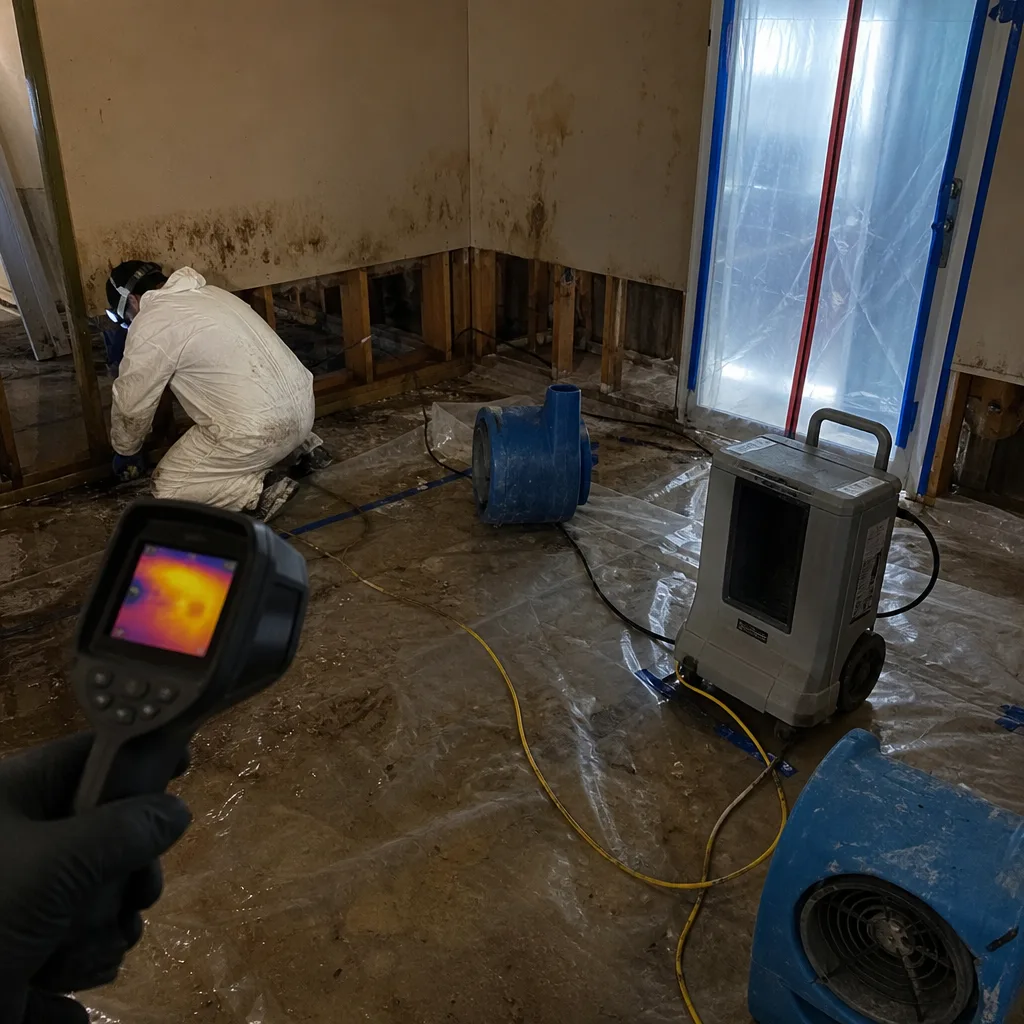 Before
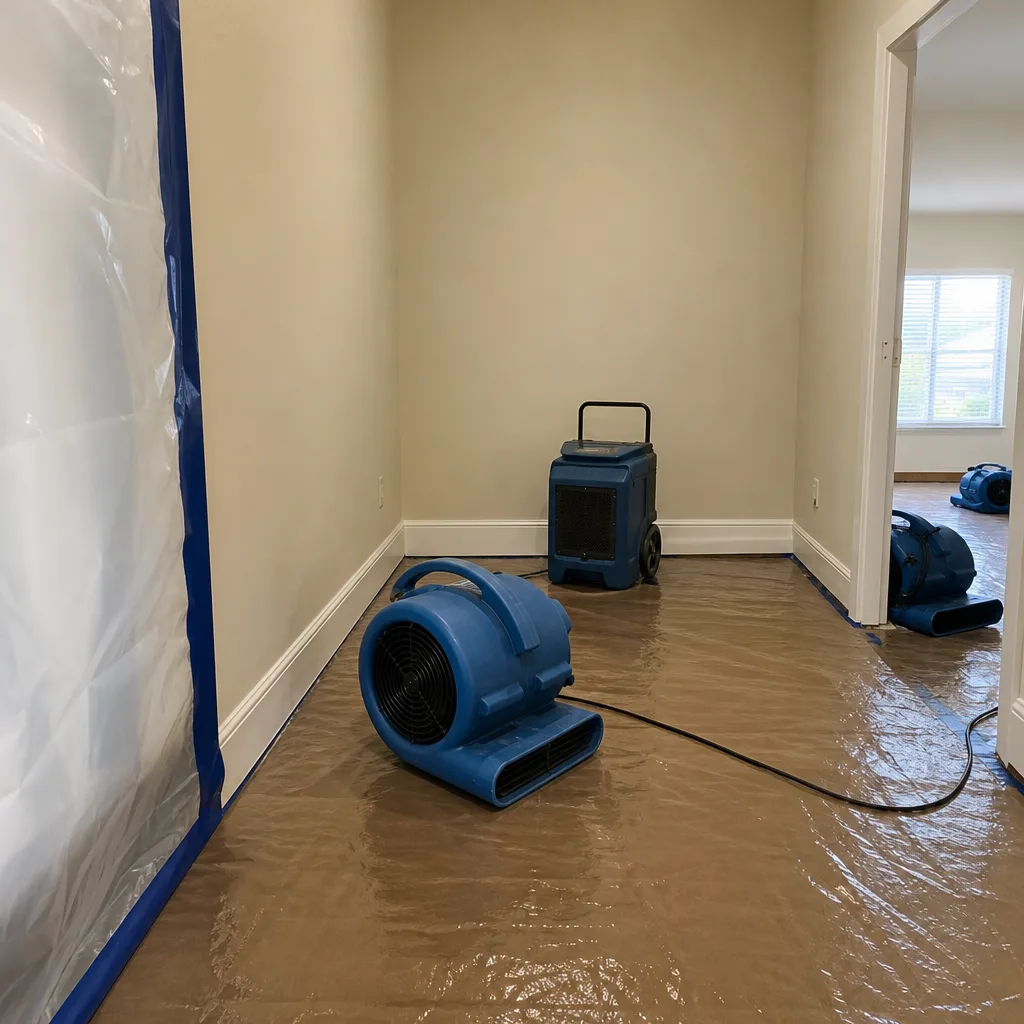 After
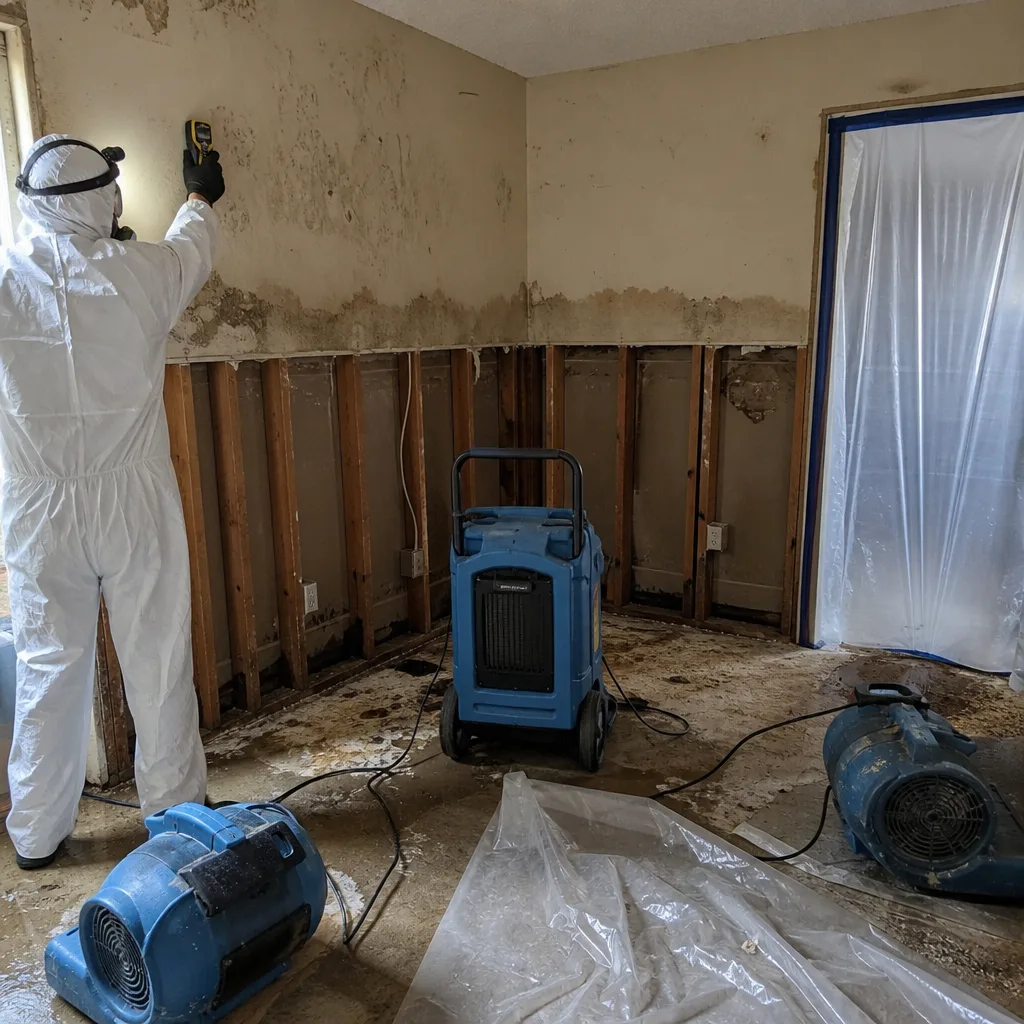 Before
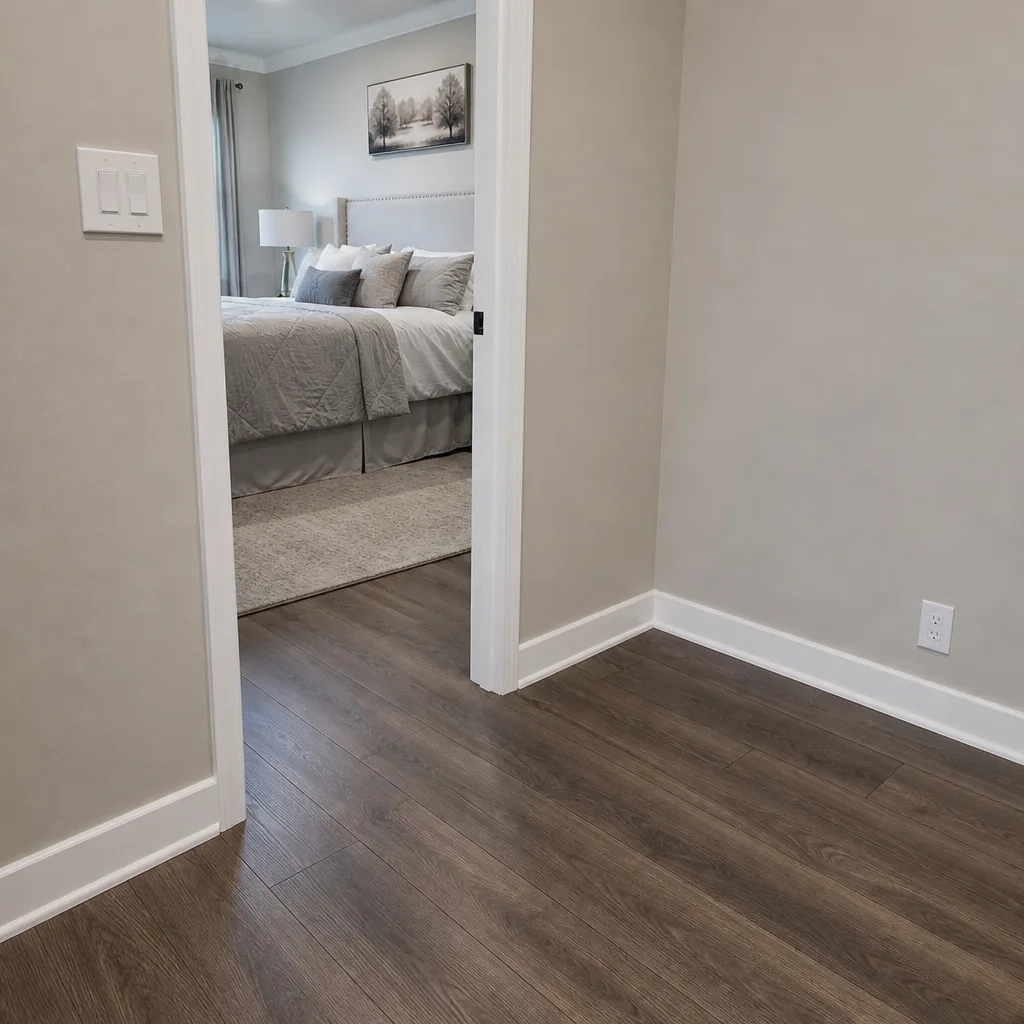 After
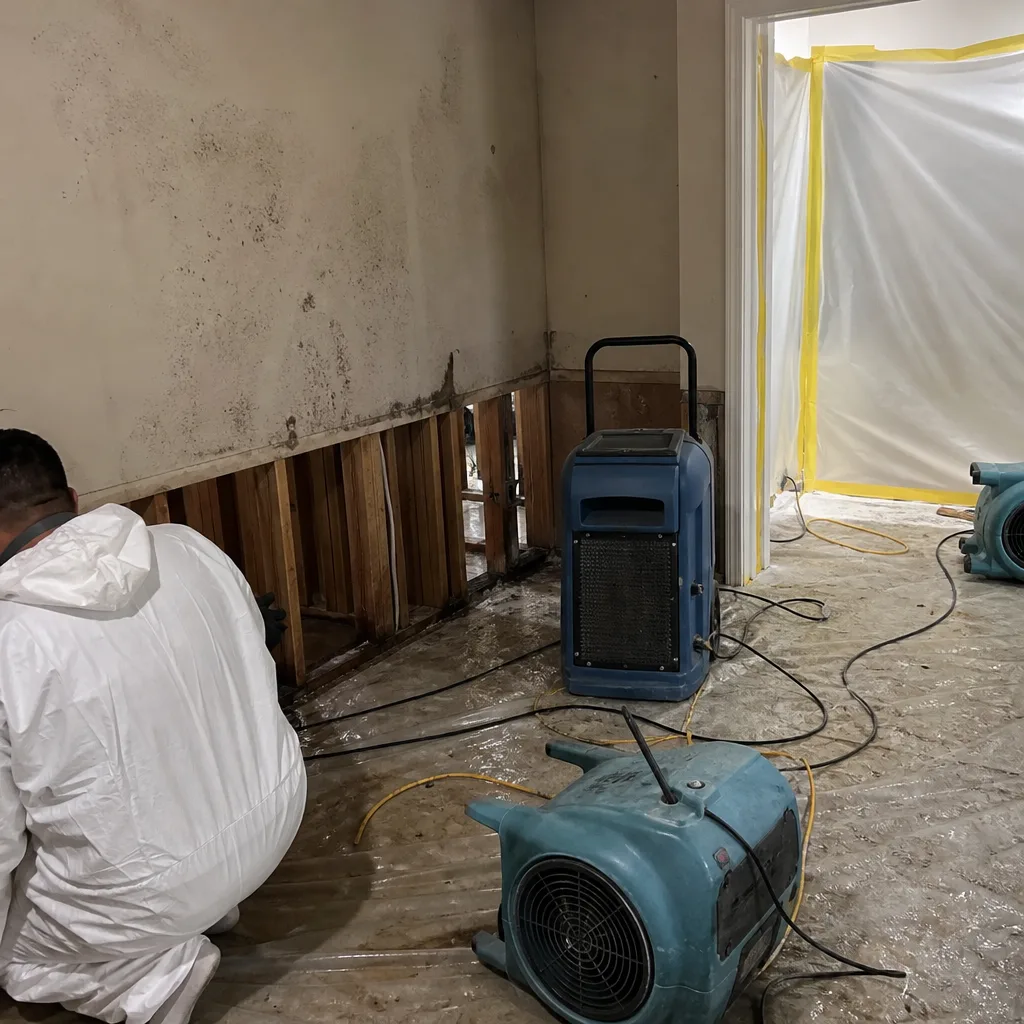 Before
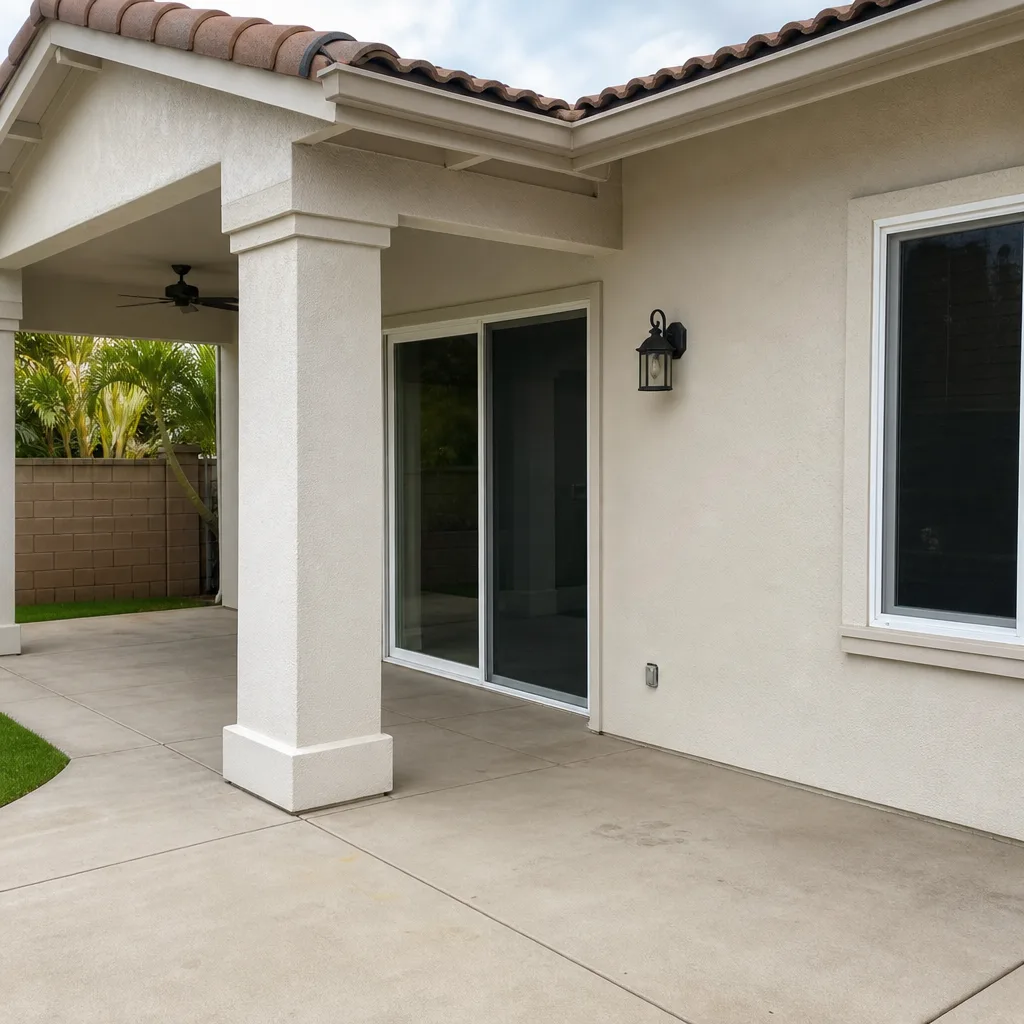 After
When to Call a Professional
Call a professional water damage restoration company the same day you detect any of the following: water standing on flooring for more than a few hours; water that has come into contact with sewage or any drain line; water intruding into a wall cavity from a ceiling leak or a foundation seep; a persistent musty odor in a space that recently got wet; or visible discoloration or bubbling paint on a wall or ceiling that suggests hidden moisture. A slow leak behind a stucco wall, common in Corona, can run for weeks before the first visible evidence appears, and by then the structural damage is already done. OC Restoration Co offers free estimates in Corona. Call (833) 589-7005 and we will assess the extent of the damage, map the moisture, and give you a written scope before any drying work begins.
Frequently Asked Questions
Typical structural drying takes 3 to 5 days for a contained water loss in a Corona home, including daily moisture monitoring, air movement, and dehumidification, with the clock starting when equipment is placed, not when the water first appeared. Structural drying with Injectidry systems may extend that window by a day or two if wall cavities are being dried in place; a Category 3 loss involving contaminated water will take longer because contaminated materials must be removed and disposed of before drying the remaining structure begins.
Most standard homeowners policies cover sudden and accidental water damage from sources like a burst supply line, an overflowing tub, or a failed water heater, but exclusions for gradual leaks, pre-existing wear, or flooding from exterior water require review of the specific policy. Document everything and call your adjuster on day one; the mitigation work you do to prevent further damage is generally a covered and expected obligation under the policy’s language.
Water damage restoration in the Corona area typically ranges from roughly $1,200 for a small, contained Category 1 loss with extraction and drying to $8,000 or more for a multi-room, Category 2 or 3 loss requiring structural drying, demo, and rebuild scope. For a detailed analysis, see our Damage Restoration Cost Breakdown: The Corona Homeowner’s Reference for 2026. The single biggest cost variable is whether wall cavities and subfloor require structural drying versus demolition and replacement, which is why accurate moisture mapping on day one determines the entire budget. Call (833) 589-7005 for an exact quote after a free on-site assessment; estimates are free and written before work begins.
If the mold growth results from a covered water loss and is addressed as part of the claim, many homeowners policies include mold remediation coverage with specific sub-limits, which vary significantly by carrier and often sit between $1,000 and $10,000. The key to maximizing coverage is tying the mold directly to the covered water event with documentation, timing, and moisture logs, and we coordinate that documentation directly with adjusters.
For more guides & resources on living through restoration, for most Category 1 clean water losses in Corona, homeowners can stay in the home as long as affected areas are sealed off with containment and equipment noise is manageable during the day. For Category 3 losses involving sewage or significant mold growth, temporary relocation is often recommended while contaminated materials are removed and air is scrubbed.
The only way to verify wall-cavity dryness is with a calibrated moisture meter reading at multiple depths, comparing interior drywall face readings against the structural lumber behind it, and confirming that both have returned to pre-loss levels as defined by the IICRC S500 standard. A professional psychrometric log will show the air conditions that drove the drying process; if your contractor cannot produce those readings, the wall’s dryness cannot be verified.
The Bottom Line
Water damage restoration in Corona is a race against time that most homeowners lose by trusting surface signals instead of measured data. The dry air that makes the Inland Empire comfortable is the same dry air that hides moisture inside stucco walls until mold and rot force the issue. The difference between a complete restoration and a claim dispute six months later comes down to one decision: whether the contractor drying your home is following a documented standard, using professional-grade equipment, and proving dryness with numbers rather than assertions. That is the work we do at OC Restoration Co, from our water damage restoration work in Fallbrook to our mold and fire restoration across Riverside County. Call (833) 589-7005 for a free estimate and a written scope, and let us dry your home to the standard it deserves.
Written by the team at OC Restoration Co, serving Corona since 2017.